

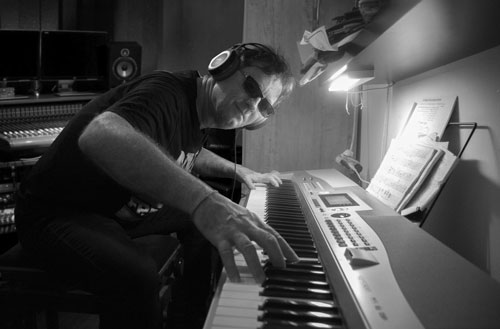
Grief, betrayal, gentrification, and grace — nothing is off the table on this extraordinary debut. With “Some Folk,” Paul Robert Thomas proves that folk music still has the power to shake you to your core.
There is a rare kind of honesty at work on Paul Robert Thomas‘ 53rd album “Some Folk” – the kind that doesn’t flinch, doesn’t flatter, and doesn’t waste a single word. Released on June 10, 2026, through London’s Swiss Cottage Recordz, with publishing by Studio City’s Unlimited Sounds LLC in conjunction with Budde Music and licensing by Audiosparx of Florida, this ten-track collection is a deeply considered work of folk songwriting that earns its emotional weight through precision, craft, and a fearlessness that is increasingly rare in contemporary roots music. Strummed acoustic guitars, expressive fiddles, and the richly textured vocals form the musical backbone of an album that moves effortlessly between historical reckoning, spiritual yearning, and intimate personal pain.
The album opens with the upbeat and immediately arresting “Camden Town 60’s Child”, a biting, vibrant critique of gentrification and the commodification of counterculture. Through the eyes of an aging “sixties child” reduced to selling postcards of a romanticized past, Paul Robert Thomas strips the era of its utopian mythology, exposing the 1960s as a decade marked by “wars and hate” as much as idealism. Mocking “hippies and punks in your designer shoes,” the song dismantles nostalgia with surgical wit, painting Camden’s radical soul as something long since swallowed by a “ghetto for the rich.” It is a potent, bittersweet opener that signals immediately the kind of songwriter Thomas is: one who looks clearly at the world and refuses to be charmed by its prettier lies.
“Gonna Get Drunk on the Moon” follows as a standout acoustic allegory of emotional exhaustion. Here, Paul Robert Thomas depicts a dissolving relationship through imagery of extraordinary delicacy, love melting “like a sugar cube in the rain” as the protagonist fights both internal despair and external modern anxieties. The moon, traditionally a symbol of romance, is reclaimed as a metaphor for cosmic detachment and mental sanctuary. Getting drunk on it is not a surrender; it is an imaginative act of survival, a resilient refusal to drown in rough seas.
“A Man of No Tomorrow” deepens the album’s introspective vein with a harrowing gothic folk soliloquy. A weary soul trapped in the dark tomb of his own memories, the narrator invokes the myth of Lot’s wife – “I can’t look back I’ll turn to stone” – to illustrate the paralyzing weight of a troubled past. As footsteps and flickering lights signal an encroaching end, Paul Robert Thomas crafts something genuinely chilling: a meditation on mortality that finds a strange, luminous peace in accepting the inevitable.
The album’s philosophical ambition rises further on “The Boy is Father to the Man”, an anthemic, foot-stomping declaration that borrows Wordsworth’s paradox and transforms it into a manifesto of personal agency. Confronting global inequality and the sting of unspoken cruelty, the track asserts with defiant clarity: “I was given this day / No man shall take it away.” It is triumphant folk at its most purposeful, demanding moral clarity from both its narrator and its listener.
“Am I Good Enough” offers one of the album’s most soul-stirring moments: a portrait of profound intimacy marked equally by healing and insecurity. The narrator credits a lover with restoring their fractured soul, yet beneath devotion that “knows no bounds” runs an agonizing undercurrent of self-doubt. Paul Robert Thomas juxtaposes spiritual resurrection against a fragile, recurring question, exposing the razor-thin boundary between ecstasy and emotional peril. It is raw, beautiful, and entirely human.
“The Jester and the Saviour” shifts the tone with a brilliant surreal allegory over a mid-tempo acoustic groove. Seated between irreverent distraction and self-sacrificing righteousness, Thomas‘ narrator navigates the dual forces that pull at every human life, ultimately warning both archetypes that “you can’t come back” to a world already changed. Witty, insightful, and quietly urgent, it is a meditation on comedy and tragedy that urges listeners to transcend both extremes and simply search for the light.
The album’s emotional and moral centerpiece arrives with “The Band Plays On”, a harrowing folk ballad confronting the horrors of the Holocaust with quiet, devastating power. The trains, the camp orchestra, and the infamous, deceptive gate inscription “Work sets you free” are rendered with visceral precision, as the haunting repetition of violins playing on becomes a metaphor for forced complicity and survival amid absolute evil. Paul Robert Thomas does not editorialize; he does not need to. The imagery indicts global apathy entirely on its own, a warning that looking away is the very mechanism by which history’s darkest cycles endure. It is an extraordinary piece of songwriting.
“By the Light” follows as a transcendent secular hymn, its narrator navigating an existential landscape that stretches from “the circle of ice to the ring of fire” in search of divine guidance and moral anchor. Reverent and repetitive in the best tradition of the spiritual, the song transforms personal desolation into profound purpose through its plea for illumination. Here, Paul Robert Thomas captures the eternal human impulse toward faith – not as doctrine, but as the simple, urgent need for something to follow through the dark.
“The King’s Shilling” is a masterclass in subverting historical trope for emotional effect. The shilling, traditionally a token of royal conscription, becomes in Paul Robert Thomas’ hands a cruel symbol of a hidden, sinful love between a monarch and a helpless maid-in-waiting. The King’s hollow promise that the coin “will grow” is linked with heartbreaking precision to an illegitimate child, a legacy of abandonment worn around a baby’s neck. The shift from romantic devotion to bitter ruin is rendered with an economy of language that makes the track all the more devastating.
The album closes with the gut-wrenching “He Hurt My Baby”, a portrait of parental grief so raw and consuming it shatters any notion of easy forgiveness. Against a backdrop of apocalyptic imagery — a black sky, a “frozen Ark,” bleeding angels – Thomas traces a psychological journey from helpless sorrow to righteous, unrelenting vengeance. The gallows trap door looms as the song’s chilling final image, and with it “Some Folk” ends not on resolution but on something truer: the reality that some wounds transform a person entirely, turning protective love into an eternal, unforgiving war.
“Some Folk” is a remarkable album. Paul Robert Thomas writes with the authority of a storyteller who has wrestled seriously with history, mortality, faith, love, and loss – and who has emerged with something to say about all of them. This is folk music at its most purposeful and most alive.
OFFICIAL LINKS:
http://www.youtube.com/paulie56il
https://lespaulsthepauls.bandcamp.com/music
https://www.facebook.com/paullyricist
https://www.instagram.com/paullyricist