

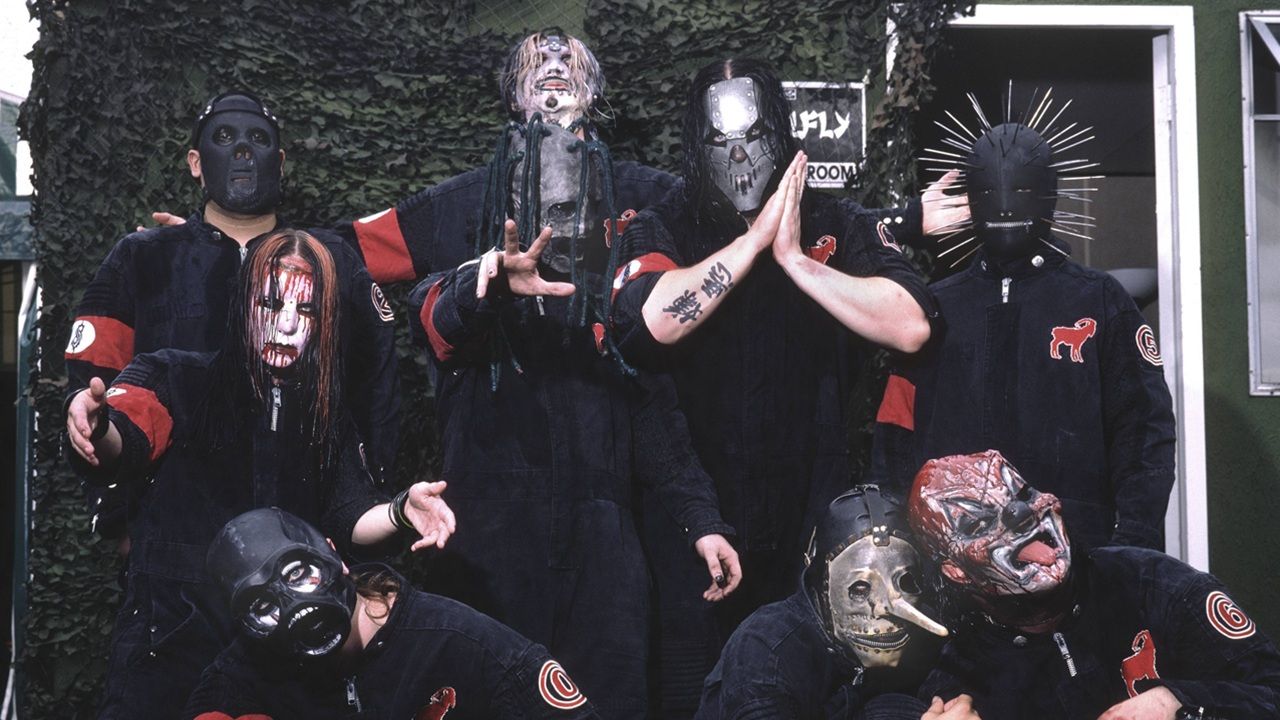
It’s no exaggeration to say that Slipknot’s Iowa changed the metal landscape. Twenty-five years on from its release, it’s impossible not to see Gojira playing the Olympics, Knocked Loose popping up on late-night TV or Bring Me The Horizon becoming a chart-topping, arena-filling act without tracing it all to the Iowan nine-piece’s own second album, still the most extreme record to top the UK charts.
Reuniting with Ross Robinson – no stranger to landscape-altering releases thanks to his work on Korn’s debut and Sepultura’s Roots – they increased the intensity and made their extreme metal allegiances even more obvious, yet still continued to thrive in the mainstream. To celebrate 25 years of this landmark release, Hammer sat down with Ross to explore the story behind how the album was made.
After the success of Slipknot, was there ever a discussion about whether going heavier for album #2 was a good idea?
“I’ve never done a record with an intention of hits or thinking about what the listener is going to do. That’s just not part of the equation. It was just, ‘How can we go deeper?’ Roadrunner really wanted another Spit It Out, but we were looking to help Norway burn some more churches. We wanted to join that extreme metal club!”
What made Slipknot different to the other bands you’d worked with previously?
“I just connected so much with their music – I wasn’t doing Korn or Limp Bizkit anymore, I’d disconnected from that world. But then here come Slipknot that’s something totally fresh. Later you’d get all the copy bands, your Papa Roaches or whatever, everybody was blazing on top of the charts and taking over, and I was out. Slipknot were the answer to all of that, partially because they were so isolated from it all.
Success was hard on those innocent Beavises
Ross Robinson
“At the time for me, I felt like I was stepping back into my 80s thrash roots. They were pretty much the only band using double-bass [drums] at that point who weren’t in the underground. But it was the ferocity, too – they were more ferocious than anybody else. Nobody on planet Earth could step up to that level. They had this extreme voice as a unit.”
The band have talked about how much tension there was between them all around the time of Iowa. Did you see much of that?
“I did get a complaint from Paul [Gray, bassist] or maybe Joey [Jordison, drummer] at one point before we recorded, where they were like, ‘We’re just not getting along. We’re gonna break up.’ So I flew out to them. Corey [Taylor, frontman] took me out and was showing me Stone Sour stuff. It was like, ‘Erm, this is cool… but it’s not Slipknot.’
“That transition from having this vision from nothing, to it becoming so extreme as far as success and everything goes… Nobody goes to school for it, there’s no education for how to deal with everybody suddenly kissing your butt no matter what you do or say. Girls that would never have looked at you, suddenly paying you all this attention… it’s very confusing. It was tough on these innocent Beavises!”
Were there any flare-ups in the studio? Were you called on to mediate?
“It could be tough. Some of the guys would be doing so much, while others had to wait around for ages to do anything. There was some anxiety in that. That’s all part of that confusion surrounding a monster that big. I’m older than them a little bit and I think they trusted my experience. But as somebody who didn’t want anything from them beyond making some great music, I could just be honest with them and say what I felt.”
What part of recording sticks out most to you?
“I remember that the title track, Iowa, came from this jam. They came in one day with these bottles of [buzz-inducing cold medication] NyQuil – the only time anybody was actually under the influence in the studio. They wanted me to drink it but I had to work, so I was like, ‘Fuck that shit!’
“They pounded that bottle and we went into this room in Sound City where Fleetwood Mac recorded, Nevermind was made and whatever. There’s a side room that’s supposed to be haunted, all mouldy and shitty, covered in this carpet. I stuffed the whole band in there, opened the door so we could get some room mic and just talked about ideas.
“They started jamming and there was this vibe and presence that was the foundation for the whole album. I’m pretty sure that the version you hear on the record is exactly how it went down at the time – we recorded it in one take. What metal band on planet Earth jams like a jazz band on record?”
Corey’s said he ended up rolling around naked on the floor, cutting himself with glass, recording that. How true is that?
“I remember he did that on vocal overdubs, but I can’t remember if it was Iowa specifically that he did it for. He had to strip his soul all the way. I do remember seeing him naked a lot. We’d get all woo-woo around the lyrics, go deep into the meaning and the tone of everything, so I’d have chills by the time I hit record.
Joey said my broken back was the best thing that happened for them
Ross Robinson
The dude is a clear vessel for whatever comes through him – I called him ‘the bulletproof neck’, because he had this big, thick fucking neck that never quit on him no matter how much he put it through.”
While the album was being recorded you broke your back in a motocross accident. Is it true you only took one day off and then just came back in?
“Yeah.”
Wasn’t there a point where you thought, ‘Fuck it, somebody else can do this’?
“No, that’d be impossible. It was actually really good for the record because the guys were being taken out in Hollywood, hanging out with all these big stars and shit. When I broke my back and showed up anyway, it put a very next-level diligence into those guys. Joey said to me later, ‘It was the greatest thing that ever happened to us.’ It was really tough – I’d get home and just lie there watching The Big Lebowski until I passed out. I was in so much pain, but I’d get to the studio and it’d be, ‘Let’s get it the fuck on!’”
What was the hardest part of doing that?
“I remember we spent almost a month just getting the drums edited. We were razor-blading and pasting these bits of tape because there weren’t computer tools to do that. So I’d be there marking every tom, kick and snare on the record, which was a big job in itself because of how Joey plays. My secret was to cut these little slivers out, so it almost sounded rushed and even more extreme. I was doing that on a fresh broken back, then by the time we got to guitars I was finally able to sit down properly again.”
Why pick People = Shit as the first proper song on the album? It’s hardly easing people in gently.
“Well, the whole ‘Here we go again, motherfucker!’ thing was Corey’s genius. There’s always this thing inside of me that wants to compete with anything they can do at a live show. I always wanted to capture them at their deepest, most full-tilt slam so they couldn’t just easily top the record. The easiest way to do that was to make it almost violent, with shit flying through the air and having fun making chaos.
“We weren’t going, ‘Let’s make this sound good.’ Fuck that! Does it give you chills? Does it make you laugh or cry, do you get scared? I wanted people to worry they were going to die listening to this record!”
What was the most difficult part to record?
“Vocal overdubs could be tough. The bar was set so high with the band slamming together – when you’re that extreme, it gets difficult, especially when you’re on your own and trying to get back into the zone. There was a lot going on with Corey at the time too – he’d be going out pretty much every night and had this little fanbase of people he hung out with.
You wanna feel Joey and Paul? Press play. It’s right there.
Ross Robinson
“Weirdly, the easiest one to get in the zone was when Sid’s [Wilson, turntables] grandfather passed away, and I’d asked him to do some overdubs for the background of People = Shit. He was so distraught, sad, hurt and was just crying. I was like, ‘You’re doing backgrounds today’ and he nailed it.”
Isn’t he also doing that on (515) too?
“They’re actually outtakes of the backgrounds we recorded for People = Shit. It’s the sound of true unfiltered grief, but also the sound of pure love.”
What impact did it have on the metal scene at the time?
“I didn’t really get time to appreciate it, because I was making other records. I was out of the loop when it comes to statistics. I’d just get the occasional email like, ‘Hey, buddy!’ It’s crazy to me how big it is now, though – I think it’s bigger now than it was when it was actually released. I miss Joey and Paul so much, so those guys getting to live on through that is a dream.”
Twenty-five years on, what do you consider to be the legacy of Iowa?
“Fearlessness. They jumped into the unknown and did the exact opposite of what a bean-counter would want them to do, but still got multi-platinum status with this record. We were treading new water with this, but it gave me the same excitement thrash did in the 80s.”
Why are we still talking about it today?
“When you’ve got a band slamming as hard as they possibly fucking can, not giving a damn about mistakes or perfection, it creates a living, beating heartbeat that has something infinite to say, no matter how many times you’ve heard it. Mystical things happen – you’ll hear something different every time you hear it, because none of that stuff was planned out.
“Before we did this interview, I played a couple of tracks and it’s still so alive – a living, breathing force. It holds the essence of my friends’ lifeforce, you know? If you want to know if life can last forever, or you wanna feel Joey and Paul? Press play. It’s right there. It’s so beautiful.”