

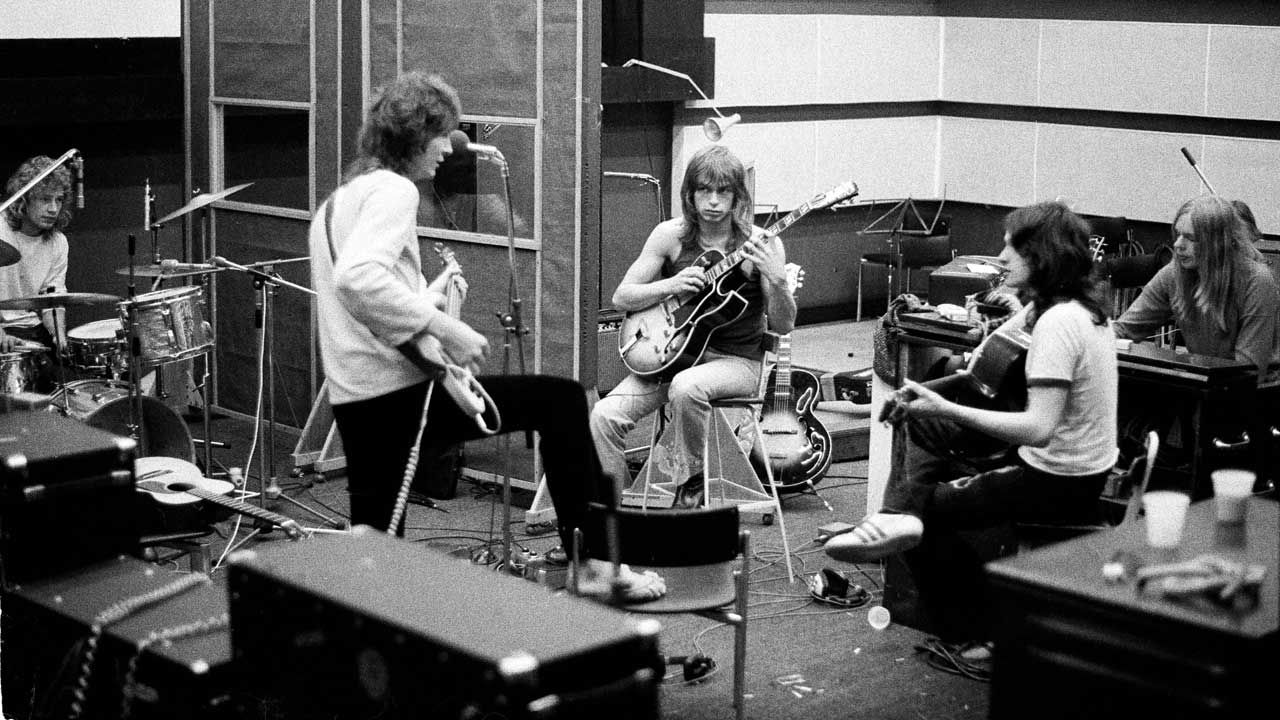
Yes entered what most die-hard fans would consider their golden era in 1971 with their fourth album. Fragile was their first record to feature former Strawbs keyboardist Rick Wakeman, and by then the brilliant, eccentric Steve Howe was firmly in place as their guitarist and contributing composer.
Yours Is No Disgrace and Starship Trooper had hinted at the progressive potential of the band on their previous offering The Yes Album, and while they were touring that record, fresh inspiration struck.
Their bus was headed from Aberdeen to Glasgow when singer Jon Anderson noted not just the magical Scottish countryside, with its mountains and lochs, but also the remarkable number of roundabouts they were having to negotiate. Howe recalled that he and Anderson wrote the song in their hotel room in Scotland, collating all the lyrical and musical ideas they had.
“We had all these bits of music,” he said later. “I was big on intros back then, and the classical guitar intro I came up with for Roundabout was one of the most signature things.”
While preparing for the Fragile recording sessions at Advision Studios in London, the pair presented the germ of the idea to the other members of Yes for input.
“The way Yes worked, it would end up seamless,” said Waleman. “We’d all bring along bits of the jigsaw, then between us we’d slot the pieces in. If a piece didn’t work, it would get slung away. Glueing it together became my job, in a strange way. All these little bits would be in different keys so we’d need chords over it. Bill said, ‘That’s Rick’s job. He went to the Royal College Of Music. We didn’t. He studied orchestration. We didn’t.’
Wakeman’s reversed piano chord ushered it in, while Chris Squire’s typically funky, fidgety bass and Bill Bruford’s tricky, jazz-inflected drums gave the whole song movement as it progresses suite-like through its unpredictable structure. Howe’s tender classical guitar and tough R’n’B electrics vie with Wakeman’s burbling synths and organs, and the helium-high Anderson recites his lovable stoner-pastoral lyrics about the landscape that inspired them.
Its virtuosic complexity couched in catchy melodies and wreathed in Anderson’s hippiespiritual spell, Roundabout encapsulates all the hallmarks that would see Yes hailed as one of the founding acts in the progressive rock movement.
The song was selected as Fragile’s opener and lead single, with Atlantic’s cut-and-shut radio edit compacting the song from its majestic eight and a half minutes into just over three. But it worked.
“Atlantic took out the scissors and cut it into a hit record… thankfully!” Anderson told Prog in 2016. “We were shocked at first, but now I think it was a gift. I remember we were driving through Pennsylvania and it came on the radio, and none of us knew it had been edited. We all sat up and said: ‘Wait a minute! What’s going on?’ But of course it became a big breakthrough record for us, so thank you! Without that hit, Yes might not have stayed around very much longer.”
The single didn’t trouble the UK chart, but it did them great favours in the US the following January, hitting No.13 on the Billboard Hot 100.
Yes have existed in many incarnations in the half-century since they made this thrilling and influential signature piece, but this fan favourite and live staple has been a consistent presence in their canon.
In 2017, when Yes were finally inducted into the Rock and Roll Hall of Fame, they opened their performance with Roundabout, with Rush man Geddy Lee stepping in for Chris Squire, who had died two years previously.
“Chris Squire was one of the most inventive-sounding bass players ever,” Lee told a press conference. “So to play his parts… I mean, it’s one thing to mimic his parts – you can mimic anything if you practice it – but to write those parts is sheer brilliance. It was a great honour for me to step in.”