Yolagi occupies a distinctive space where music, spirituality, mindfulness, and holistic wellness converge. With more than 30 years of musical experience and a deep understanding of sound as both an artistic and transformative force, the sound healer, meditation guide, and holistic wellness practitioner has developed an immersive approach to music that invites listeners to slow down, breathe, reconnect, and turn inward. Drawing inspiration from the rich traditions of the Caribbean and African Diaspora, including Taíno Indigenous traditions and Yorùbá spirituality, Yolagi thoughtfully brings ancestral wisdom into contemporary healing experiences.
Her creative practice extends far beyond conventional music-making. Working with more than 20 therapeutic instruments, including crystal singing bowls, gongs, chimes, frame drums, ocean drums, rain sticks, Native flutes, rattles, tuning forks, hand percussion, voice, and chanting, Yolagi creates expansive sound journeys designed to encourage relaxation, emotional release, nervous system regulation, spiritual renewal, and inner balance. Her expertise across multiple wellness modalities, including Kundalini Reiki, Kundalini Yoga, hypnotherapy, ancestral healing, crystal healing, meditation, and intuitive life coaching, has further shaped a multidimensional practice centered on compassion, intentionality, and authentic connection.
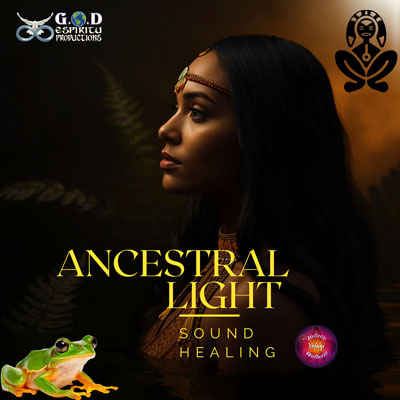
Following the release of her meditative EP Be Calm, Be Gentle, Yolagi is now unveils Ancestral Light, an ambitious new album inspired by ancestral wisdom, sacred rhythms, healing frequencies, and the enduring power of sound to reach beyond words. The project represents another significant chapter in her mission to make music a pathway toward presence, restoration, and personal transformation. In this interview, Yolagi opens up about her creative evolution, the cultural and spiritual influences that inform her work, the healing philosophy behind her music, and the inspiration behind Ancestral Light, while offering deeper insight into the purpose that continues to guide her remarkable journey.
Your upcoming album Ancestral Light promises to be much more than a collection of songs. What personal experiences and spiritual discoveries inspired this project, and what journey do you hope listeners will take from beginning to end?
Yolagi: This project was inspired by the history and the journey I experienced discovering my ancestral roots. My own ancestral healing journey, taken through travel, discovered from spiritual practices, and through what I gained from life experiences. A lot of that discovery came by way of my own trauma. There was grief, early years, and a lot of loss, and a long stretch of not knowing where I actually came from, because that had been kept from me. When you grow up without culture or roots, you feel the absence before you can name it. You only know something is missing. So I went looking. Some of what came back was not information. It was a deep connection & reverence. I knew things before I could explain how.
What I found is that not everything I was carrying began with me. The grief was inherited. So was the silence. The habits and patterns I thought were simply who I was turned out to be family patterns, running long before I got here and repeating in people I never met. That changes what healing even means, because you are no longer working on a personal problem but you are working on something that has been moving down a line for generations. Those patterns are the cloud. Once you understand that a cloud is all it is, you also understand it can move. That is the journey I want listeners to take: it starts in the weight of what was handed to you, it moves through the release of it, and it ends somewhere lighter than it began.
Before the album arrives, listeners have already embraced your EP Be Calm, Be Gentle. How does that release serve as an introduction to the larger vision behind Ancestral Light?
Yolagi: Be Calm, Be Gentle is exactly what the title says. It is an instruction, and it is the one most people need before anything else can happen. You cannot release what you are carrying while your body is still braced. So the EP does the settling. It calms & soothes you, it slows the breath, it gets the nervous system to stand down long enough that something can actually move. That is where ancestral trauma begins to release from the limitations our ancestors held generation after generation, and those songs are the ones that have been guiding us through it. It is also gentler by design, a door people can walk through without needing to know anything about sound healing or ancestral work. Ancestral Light is what comes after. If the EP asks you to be calm and be gentle with yourself, the album asks you to walk the path that calm makes possible.
You describe sound as a tool for healing rather than simply entertainment. At what point in your life did you realize that music could become a form of therapy and transformation?
Yolagi: I was twelve when there was a death in my family. That is when singing became the only place I could put what I was feeling. There was so much grief and things nobody wanted to talk about, and singing was the one way any of it came out of me. It was how I got heard when no one was really listening to me. There was just one note. It landed somewhere like nothing else had ever reached, and I cried, not because I was sad, but because something moved that had been just sitting there in me with nowhere to go.
That was it. That was the moment singing stopped being something I did and became something that did something to me. Music was not a talent I had. It was how I was going to reach myself, and eventually how I would reach other people. I am still chasing that note. Every session, every recording, I am looking for the sound that does for someone else what that one did for me. The name for it came much later, when I found energy healing, yoga, Reiki, and eventually sound healing. What changed then was not what I was doing. It was that I finally understood why it worked.
Your work draws inspiration from Caribbean traditions, the African Diaspora, Taíno Indigenous wisdom, Yorùbá spirituality, and other ancestral philosophies. How do you honor these traditions authentically while creating something uniquely your own?
Yolagi: I honor them by telling the stories. Oral tradition is how these lineages survived at all — no institutions, no written record, just storytelling and song and the people who kept them. And I learned them the way they have always been taught: through chant, music, and dance. Bomba is one of several I have studied. You do not learn a tradition like that from a book; you learn it with your body until it is in you. People often expect Taíno and Yorùbá to be two separate things I am drawing from, but in the Caribbean they met and have been shaping one another for generations. That integration was handed to me, not put together by me. As for making it my own, ideas come and they come whole. I did not design them. They are given to me to move forward with, so what I create is both mine and not mine. That is how tradition stays alive: it changes hands, it changes a little each time, and it survives because of that.
With more than thirty years of musical experience, how has your relationship with sound evolved from technical musicianship into spiritual and emotional healing?
Yolagi: Thirty years of Westernized technical training as a vocalist gave me two things. One was breath, support, control, capacity which are the foundation of everything I do now. The other was music theory, and I did not appreciate that until much later. Theory gave me the structure to learn other musical systems, because once you understand how one is built, you can hear how another one is built differently.
And they are built differently. Western training treats the voice as an instrument in a room, and the measure of it is whether the sound is correct. Our ancestors did not sing for that. They sang with the elements; sound made for the earth, the water, the fire, the air, and answered by them. They sang to call, to mourn, to work, to carry out a ceremony. Nothing about it was decorative.
Learning that changed what I listen for. The technique is still there, but it is underneath now. What I am tracking is the feeling in a sound, whether it is honest, whether it is reaching. A note can be perfect and hold nothing. That is the spiritual part for me, and it is not something I add on top of the singing. It is what is left when I stop trying to sing well.
Your sound journeys incorporate over twenty therapeutic instruments, from crystal singing bowls and gongs to Native flutes and frame drums. How do you decide which instruments belong in a particular session or recording, and what role does intuition play in that process?
Yolagi: It depends on the energy and what the intention is. I let the energy tell me the intention rather than showing up with one already set. But the voice is always the majority of it. It is the original frequency & every other instrument is an extension of that, answering a sound the body already makes.
From there each one has a job. Crystal bowls open a space and settle the nervous system. The gong moves what is stuck and does not ask for permission. The frame drum is the heartbeat, the first rhythm any of us ever knew, in the womb. The Native flute carries breath and grief in a way nothing else I own does. Liking the sound of something is not a reason to use it. Training tells me what each instrument can do; intuition tells me which one to reach for, how long to stay with it, and when to stop playing altogether.
Many people first encounter sound healing with curiosity but also a healthy dose of skepticism. What would you say to someone experiencing one of your sound baths or listening to Ancestral Light for the very first time?
Yolagi: You do not have to believe anything for this to work. Sound is physical. Vibration moves through the body whether or not your mind has signed off on it, and that is not a spiritual claim and it is measurable. Sustained tone slows the heart rate and the breath, brings the brain into the slower wave states we reach in deep rest, and shifts the body out of fight-or-flight into the state where it actually repairs itself. The vibration is felt by the whole body, not just the ears. It doesn’t asks anything of you. It happens in a skeptic exactly the way it happens in anyone else. And none of that competes with the spiritual side of this for me. The measurable part and the ancestral part are describing the same thing in two languages.
So bring your skepticism with you. It is welcomed, it does not need to be checked at the door. Just lie down, let your breath flow, and pay attention to what the body does rather than what your mind decides. Most people find the body answers before the mind has caught up.
The title Ancestral Light evokes both heritage and hope. What does “ancestral light” mean to you on a personal, spiritual, and creative level?
Yolagi: Ancestral light is the light that was passed down generation after generation but never allowed to shine. It was always there but it was just kept hidden, because showing it was not safe. That is what makes it mean so much to me. Uncovering it is how I connect with who I actually am, and how I express myself the way I was always meant to. I spent a long time looking outward for permission, for approval, for someone to tell me what I was. Ancestral light is finding that light in myself instead of looking to anyone else for it.
Spiritually, it is the recognition that our ancestors are still with us, and that the light came down the same line as everything else did. Creatively, it is the whole reason there is an album. Everything on it is an attempt to make that light audible.
Your music encourages listeners to slow down in a world that constantly demands speed and productivity. Why do you believe stillness has become such an essential form of self-care today?
Yolagi: If you never stop moving, you never have to sit with what you are carrying, and everything around us is built to keep you moving. We have made a culture out of quantity instead of quality, and what gets stripped out is everything our cultures knew about how to be with ourselves and each other. Stillness is not lazy. It is self-dedication and self-preservation, taking time to honor ourselves, which we were never taught to do. And it is not a reward you earn once you have been productive enough. That idea does not come from us. It comes from a society that taught us to feel guilty for resting, guilty for caring for ourselves, guilty for stopping at all. Most of us are not rested people who occasionally get stressed. We are exhausted people who have forgotten what rest feels like. Stillness is where you find yourself again. That is what my music is for. Nobody is still on command. Sound does it for you.
Your work blends music, meditation, breathwork, energy healing, and mindfulness into one immersive experience. How do you maintain a balance between artistic expression and therapeutic intention without allowing one to overshadow the other?
Yolagi: I think that question comes from a place where art and healing are two separate professions. In the traditions I come from, they never were. The song was the medicine. Nobody sat in a ceremony wondering whether the drumming was art or therapy. It was doing both because that is what it was for.
So I am not balancing anything. I am doing one thing that our culture split into two and then asked me to reconcile. When I sing over a bowl, I am not deciding how much of it is expression and how much is treatment. There is no line there to manage.
What I do watch is whether I am staying quiet enough to hear what the room needs. That is the only real risk; not that the art will overtake the healing, but that I will fill a space that was supposed to stay open.
You’ve earned certifications in a wide range of healing modalities, including Kundalini Reiki, Hypnotherapy, Kundalini Yoga, Crystal Healing, and Past Life & Ancestral Healing. How have these disciplines expanded your understanding of what healing through music can accomplish?
Yolagi: What they gave me, more than anything, was permission to believe what I already suspected. I had spent years feeling things I could not explain and assuming that meant I was making them up. Every one of these training sessions told me otherwise. That energy is real, that it moves, that it can be moved. Hypnotherapy taught me how much a voice carries: the pacing, the tone, the space between words. Kundalini yoga taught me breath as an instrument. But the past life and ancestral work broke something open. It gave me the language for what I had already lived and once you have that language, you start seeing it in everyone who lies down in front of you.
None of it told me something I did not already feel. What it gave me was a map for terrain I had been walking blind. I had always known sound went somewhere deep in a person but what I learned was where, and why, and how to get there on purpose instead of by accident. And it showed me how far that reach goes. When sound moves something inherited, the healing does not stop with the person on the mat. It goes back down the line they came from.
You often speak about creating safe spaces where people can reconnect with themselves. Can you share a memorable story of someone whose experience during one of your sound healing sessions deeply impacted you?
Yolagi: The experiences I love most are the first-timers. Someone who has never done this before, who has no idea what is about to happen. That is the room I want to be in, because I remember my own first experience clearly. I was introduced to sound healing by Diane, who is still a friend of mine. I walked in knowing something was about to happen, and I left knowing something magical had taken place. So that is what I am watching for now, and I still see it: they get up afterward amazed, a little disoriented, searching for how to describe it. This thing has been available to them their whole life and nobody ever told them.
But the clients who keep coming back give me something else entirely. They tell me where they went, and it is never the same place twice. The journeys are wild and vivid, full of colors, places, people they had not thought about in years, whole scenes playing out. Same instruments, same room, sometimes the same session, and every person lands somewhere different and sometimes they all land in the same place. That is the part I never get used to. I am not sending anyone anywhere. Whatever they find, they brought with them.
I am forever grateful to witness that. It still takes my breath away. That is the whole reason I keep doing this.
The phrase “healing frequencies” appears throughout your work. How do you approach composing music that feels emotionally authentic while also supporting relaxation, nervous system regulation, and inner balance?
Yolagi: Frequency is the whole thing, but it is not where I start. I start from an emotion. What is this piece for, who is lying down to hear it, what are they carrying. Once I know that, the craft takes over: keeping the tempo below a resting heart rate, letting tones decay fully instead of cutting them off, avoiding sudden changes that put the body back on alert, and letting the natural rhythm of the breath set the phrasing. The frequencies serve the feeling. If you build it the other way around, you get something technically correct that no one is moved by. Some of it is deliberate down to the pairing. In the recordings I use binaural beats, where people have headphones on and the brain produces the difference between two offset tones itself. Live it works differently. Two bowls slightly apart in pitch create that same pulse in the air, and the body entrains to it, moving through different states of consciousness as it goes.
But the emotion is not only where I start. It is what the frequency is actually working on. Every person has a pitch of their own, and life knocks them out of it. Grief does it, fear does it, years of holding something in does it. The right frequency reminds the body what its own pitch was. It gives the body something to find its way back to. That is what I mean by healing frequencies. They are not embellishment on top of the feeling. They are what lets the feeling move through instead of staying stuck.
Your practice reaches people through live sound baths, retreats, private sessions, corporate wellness programs, and digital platforms. How do you adapt your approach to meet such diverse audiences while preserving the intimacy of the experience?
Yolagi: The setting changes. What I am doing inside it does not. A corporate room needs more explanation up front and a shorter, gentler session, because people are arriving from spreadsheets and have to return to them. A retreat lets me go deep and take days to do it but by the third day people have stopped acting like everything’s ok, and that is when the real work starts. A private session is the most responsive of all, because it is one person and I can follow exactly what is in front of me. And a recording has to work for someone alone in their bedroom at two in the morning with headphones on, and that person may be the most vulnerable listener of all because there is no one there to hold the space, so the sound has to do it by itself.
What I have learned is that intimacy does not come from the size of the room. It comes from being genuinely, authentically, present with whoever is actually in front of me. People can tell the difference, even with their eyes closed. Especially with their eyes closed.
Guided breathwork and vocal elements play an important role in your recordings. How do silence, breath, and the human voice become instruments of healing alongside traditional musical sounds?
Yolagi: Silence is the instrument that lets every other instrument fall. Without it you are only filling space, and a full space gives the body nowhere to go. Breath is the one part of the autonomic nervous system we can consciously take hold of. As you lengthen your exhale and the body follows, no belief is required. And the human voice was the first sound any of us ever heard. Long before we understood a single word, a voice told us we were safe and not alone. That is not metaphor; the body still responds that way. When I sing over a bowl, I am speaking to something much older than language.
Nada yoga (the Yoga of Sound) has a word for what all of it points to: anahata, the unstruck sound. Everything I play is struck; a mallet against a bowl, breath through a flute, air moving across the vocal cords. All of it is meant to lead somewhere else. You use struck sound to quiet a person enough that they can finally hear what was underneath it the whole time. That is the silence within, and it is not empty. It is what connects the microcosm to the macrocosm, the one sound that unites us back to the One. Nada opens the heart space and returns a person to their original blueprint.
As holistic wellness continues to gain worldwide recognition, what changes would you like to see in the way healthcare professionals, educators, and communities embrace sound therapy in the years ahead?
Yolagi: I would like others to be aware that this is not new. Sound has been used to heal for as long as there have been people, in nearly every culture on earth. What is being called an emerging wellness trend is actually a very old practice being remembered. That reframing matters, because it changes how seriously the work gets taken and who gets credited for it.
From there, I would like to see it offered alongside conventional care rather than positioned against it, in hospitals during treatment and recovery, in hospice, in trauma care. In schools I would like to see it given to children who cannot sit still, because most of them are not defiant, they are dysregulated, and no one has ever taught them how to come down. Most of all I want accessibility. I want this available to everyone, regardless of who they are, where they come from, or what they do.
Many artists talk about leaving a legacy through their music. Beyond the albums themselves, what legacy do you hope Be Calm, Be Gentle and Ancestral Light will leave for future generations seeking healing and connection?
Yolagi: Permission. Permission to rest, permission to grieve, permission to put down what was never theirs to carry. Most of us were never given that. I had to give it to myself first, and making these records is how I did it.
What I hope stays with someone I will never meet is simple. You come from people who survived. Whatever got them through did not stop with them & it is in you, and you can use it.
What I hope it does is meet people at the moment they need it, over and over, for as long as it exists. Music can do that in a way a person can’t. It is there on the nights when there is no one to call. The legacy is not the albums. The legacy is in the healing.
Creating deeply spiritual work can also require vulnerability from the artist. During the making of Ancestral Light, were there moments when the creative process became a healing journey for you personally?
Yolagi: I could not have made an album about releasing ancestral trauma without meeting my own. There were days when I sat down to work and something came up that I had thought was long finished, and I had to stop and take care of it before I could keep going. I had thought I was further along than I was.
Everything I provide comes from real life experiences. I have never asked anyone to go anywhere I have not been. When I make a piece about grief, it is because I have been in it. When I make something about release, it is because I had something to release. That is where the vulnerability lives, not in talking about it afterward, but in the fact that I have to be in it while I am making it.
And I have stopped thinking of that as the cost of the work. It is the work. The healing is not something that happens after the song is finished but it happens in the making, in the sitting down, in the sound coming out of me before I know what it is. Which means I cannot make one of these without being changed by it. I don’t think I would want to.
Your philosophy reminds us that healing begins from within. For listeners who may be struggling with anxiety, burnout, grief, or emotional overwhelm, what first step would you encourage them to take before pressing play on Ancestral Light?
Yolagi: Give yourself permission to do nothing for the time of the album. No multitasking, no folding laundry while it plays! That is harder than it sounds, and the guilt shows up fast. Let it show up and stay anyway. Then lie down, put a hand on your chest, and let your exhale become longer than your inhalations for a few rounds. That alone tells your body it is safe. You do not have to clear your mind or do it correctly.
And one more thing: do not press play expecting to feel better. Press play agreeing to feel. Those are different, and the second one is where the healing actually lives. If what you are carrying is heavier than music can hold and sometimes it is, please let this be one support among others, alongside people who can be there with you in person.
Looking beyond the release of Ancestral Light, how do you envision the future of Yolagi’s mission, and what new possibilities excite you most as you continue bringing together music, ancestral wisdom, and holistic wellness?
Yolagi: Honestly, what excites me most is that I do not know. Everything that has mattered in this work came without me planning it: the first sound bath I walked into, the trainings I did not expect to take, this record. I have stopped trying to create what comes next. I will keep making records, I will keep being in rooms with people, and I would like to build a community around this so it does not live or die with me. But the thing I am most looking forward to is whatever I have not thought of yet. That is usually where it comes from.
And when I picture the future of it, I do not really picture myself in it. I picture somebody I will never meet putting this on at the end of a hard day and something in them finding the calm. That is the whole mission. Everything else is just how I get there.
OFFICIAL LINKS:
Website: https://www.yolagi.net
Website: https://www.yolagi.com
Facebook: https://www.facebook.com/YolagiHolisticWellnessLLC
Instagram: https://www.instagram.com/yolagi_holistic_wellness
TikTok: https://www.tiktok.com/@yolagiholistic
YouTube: https://youtube.com/@yolagiholisticwellness588
For booking & Media inquiries contact Hipsta Booking & Marketing Agency
Email: msbookingagent504@gmail.com