
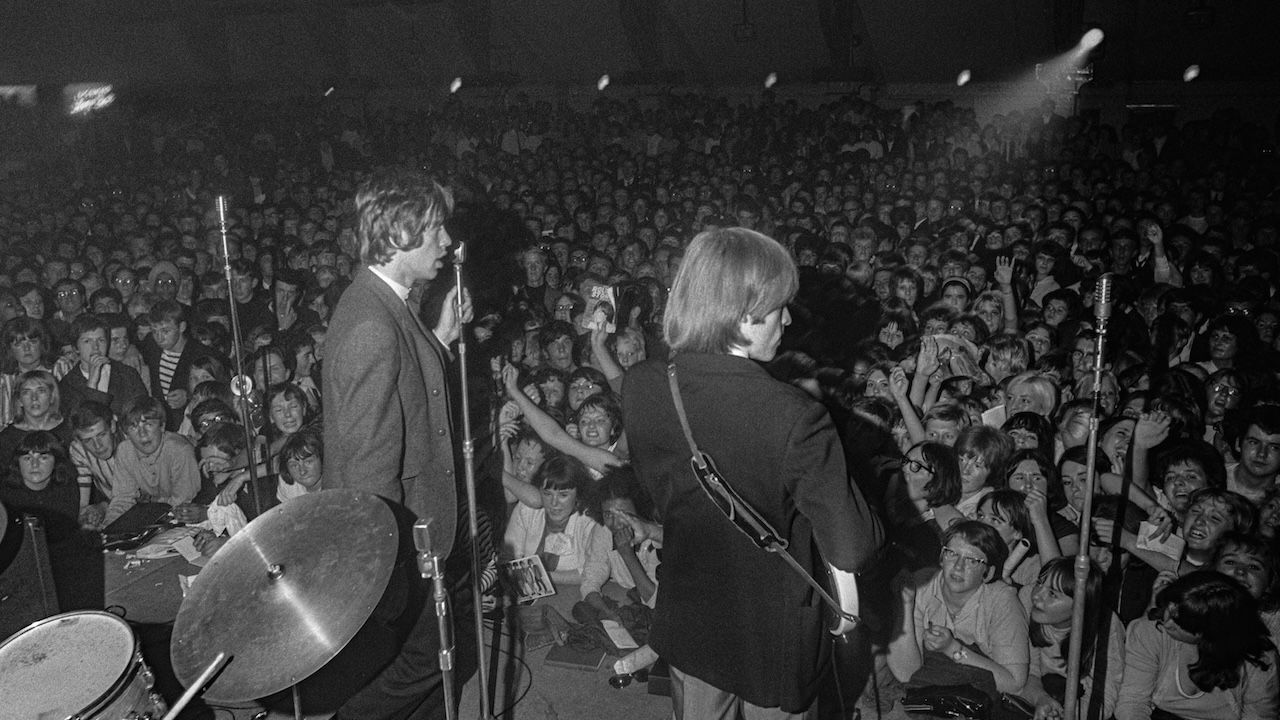
1964 was a banner year for The Rolling Stones. The band scored their first and second UK number one singles (It’s All Over Now and Little Red Rooster), became the first band to perform on the BBC’s new flagship music show Top Of The Pops, released their self-titled debut album, and toured the US for the first time. But it wasn’t all good news, for on July 24, 1964, the quintet’s show at the Empress Ballroom in Blackpool ended in a riot, and earned the Londoners an indefinite band from the seaside town.
Following their disappointing US debut tour – bassist Bill Wyman preferred to describe it as a “disaster” – the Stones might have anticipated that they’d be assured a warmer welcome on home soil. In Blackpool, however, this was certainly not the case.
According to eye witnesses, the trouble started when some unruly audience members began spitting at guitarist Brian Jones, and escalated alarmingly when Keith Richards retaliated in kind: “In those days I had a temper…” the guitarist later admitted.
“There was a mass rush for the stage,” concert-goer Terry Regan told the BBC. “There was a group of people, probably two or three hundred, determined to lay hands on the Rolling Stones.”
“They punched their way to the front, straight to the stage and started spitting at us,” Keith Richards recalled.
After being hit by a fork thrown at him, Richards kicked one of the principal trouble-makers in the face, all hell broke out. Bottles were thrown at the band, seats were ripped up and hurled towards the stage, and chandeliers in the grand old venue were smashed.
Tour manager Ian Stewart recalls pushing Richards off-stage, telling him, “For fuck’s sake get out of here while you’re still alive!”
When the Stones vacated the stage and sought sanctuary in their dressing room, the mob invaded the stage and smashed up amps, a grand piano and Charlie Watts’ drum kit. So enraged were elements among the audience at this point that they even tried to gatecrash the nearby Winter Gardens venue where The Dave Clark Five were playing. In the end, 50 people were taken to hospital, and four arrests were made, but not before an estimated £4,000 of damage had been done to the Ballroom.
“Some people in the audience obviously didn’t like us,” Mick Jagger later noted, with considerable understatement.
When the quintet sought to book a return to the seaside resort in 1965, the police watch committee refused them a licence, and an indefinite band was imposed by the town council.
In 2008 however, the local council finally sought to offer an olive branch to the band.
“I’ve given instruction to our council officers to write to The Rolling Stones to say, ‘Right, the ban is lifted. We reach out the hand of friendship’,” Blackpool council leader Peter Callow told the BBC. “What I am saying is, Come back Mick, all is forgiven.”
The Stones have no immediate plans to return to the town.