

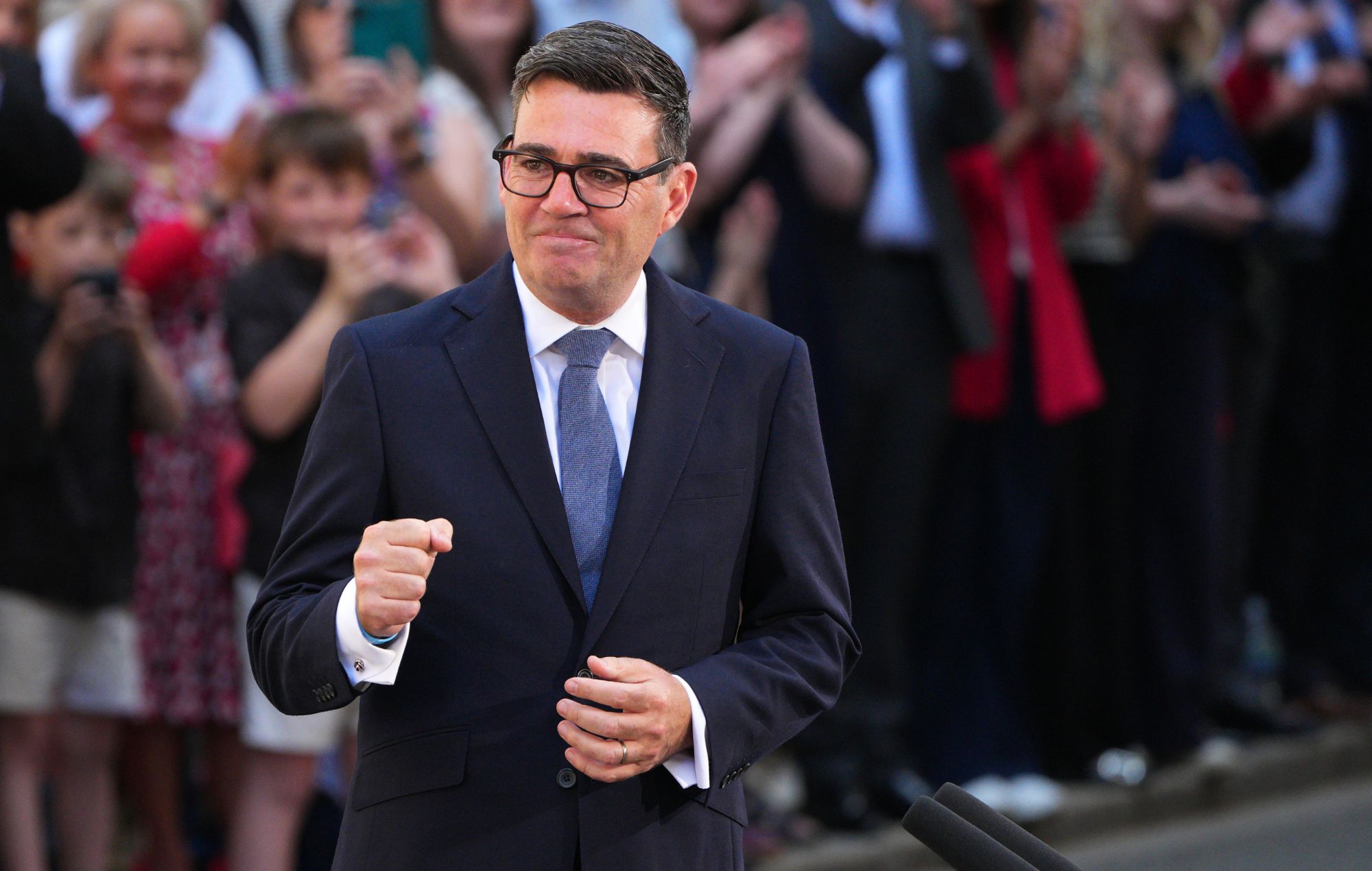
Andy Burnham has announced that music venues, clubs and pubs in England will get a 20 per cent cut in business rates next year, and the costs will be funded by a review of the tax reliefs given to companies “such as vape shops”.
READ MORE: The ticket levy that could save grassroots venues and artists: what happens next?
The announcement was made at 6am today (Thursday July 23) and marks the latest of multiple policy changes that Burnham has confirmed in his first few days as Prime Minister – following Keir Starmer stepping down.
With the move, pubs and music venues across the country will see tax rates decline by 20 per cent. The cut will cost around £100million, and will be paid for with higher taxes on businesses that “do not make a positive contribution to local communities, such as vape shops”.
Burnham added that the government is wanting to “crack down” on companies that are selling through online marketplaces and “do not comply with their tax obligations”, and has previously suggested that he wants to raise the threshold at which business rates kick in too – meaning that many small high-street retailers would avoid paying altogether.
The decrease in taxes is expected to save a typical UK pub around £1,100 per year, with 32,000 other businesses enjoying similar benefits, and while the new move will affect most live music spaces, it will not extend to the biggest music venues.
I’m giving thousands of pubs, clubs and music venues a 20% cut in business rates.
I won’t stand by while these cherished local spaces disappear, replaced by boarded-up windows and ‘For Sale’ signs.
They’re the heart of our communities and it’s time we backed them.
— Andy Burnham (@andyburnham) July 23, 2026
Addressing the planned changes, Burnham said that it is an indication that his government is wanting to “back the businesses that people want to see in their communities”, especially at a time when many “cherished venues have disappeared from our local high streets”.
Chancellor John Healy agreed, adding: “Pubs, clubs and live music venues are at the heart of communities across the UK. They bring people together, support local jobs and help keep high streets and town centres busy — which is why we will back them all the way. We are determined to bring hope back, give businesses the support they need and generate growth in every postcode.”
Other announcements made during Burnham’s first few days as PM have included cutting VAT from household electricity bills from October, and introducing a a £2 cap on bus journeys across England – but outside of London – from January 2027.
Addressing the planned to benefit music venues and pubs, Music Venue Trust CEO Mark Davyd said that the MVT “warmly welcomes this announcement” and described it as “an encouraging first step” when it comes to protecting the live music sector and “restor[ing] its central role at the heart of our towns and cities.”
“There remain some issues of implementation of previous reliefs, and we will work with colleagues in government to ensure that all grassroots music venues in England are recognised and eligible,” Davyd added. “We call on Senedd, Holyrood, and the Northern Ireland Assembly to swiftly confirm they will match this much needed support through Barnett formula consequentials. Venues in Wales, Scotland and Northern Ireland must be confident of a level playing field of economic conditions for touring across the UK.”
Davyd continued, saying that “live music is an ecosystem, and we strongly urge the government to reconsider the limit to the eligibility criteria so that all live music spaces of all sizes qualify, supporting jobs, local economies and communities to access live music.”
Michael Kill, CEO of the Night Time Industries Association, shared a similar stance, stating: “Having worked closely with the new Prime Minister’s team over recent weeks, it is encouraging to see a positive outcome from genuine engagement with the sector. The inclusion of clubs alongside pubs and live-music venues is particularly important and demonstrates a broader recognition of the vital economic, cultural and social contribution made by the night-time economy.”
Kill described the reduction in business rates as “a significant and welcome intervention” and as having “the potential to provide meaningful relief to businesses facing sustained cost pressures”.
“This is the third major policy announcement in as many days from the new government. Together, these interventions have undoubtedly begun to shift confidence across the sector and created renewed optimism that our concerns are being heard,” Kill continued. “We are still awaiting the full details and eligibility criteria, which are expected to be announced at the autumn Budget. We will also seek clarity on the proposed exclusion of the largest live-music venues and continue to press for the final scheme to provide the broadest possible support.”
Concluding, he said: “The government is undoubtedly making the right noises. We look forward to continuing this constructive dialogue and ensuring these commitments translate into tangible and inclusive support for businesses throughout the night-time economy.”
The changes benefiting music venues across the UK come at a vital time for the live music sector. At the start of the year, Music Venue Trust shared their annual report – showing another worrying year for the grassroots in 2025, as 30 grassroots music venues closed forever between July 2024 and July 2025, and 48 stopped operating as gig spaces.
Of those that survive, the findings showed that there was an average profit margin of just 2.5 per cent, and that 53.8 per cent of grassroots venues reported zero profit over the past year, with a loss of over 6,000 jobs annually.
Around the time Burnham entered 10 Downing Street at the start of the week, the government revealed a new ‘Music Plan’, designed to bolster their growth package by £15million to a total of £45million.
MPs said that it would benefit over 40,000 artists and businesses, 2,000 projects and millions of children over three years – hopefully enabling more people from working class backgrounds to enter the world of music.
Burnham – whose love of music is well-known – has been widely supportive of grassroots music venues over the years and has also backed the call for a £1 ticket levy to be introduced on gigs at arena level and above, paying back into the pipeline for rising artists and grassroots spaces.
There is now pressure on the PM to work on removing expensive, prohibitive barriers of the post-Brexit touring crisis, as well as crack down on the copyright exceptions in relation to AI and make good on the Government’s previous promises to ban ticket touts.
Recently, Minister for Creative Industries, Media and Arts and for Digital Government and Data Ian Murray MP spoke to NME about the latter, and said that the government is working hard to deliver on this policy this year.
“The draft bill is being worked on as we speak,” he shared. “We are very keen to get this done as quickly as possible, we have the commitment and we can do it in this term.
“We want to get this bill through, I am personally committed to it, the secretary of state is too, and it’s a great news story for fans. We need to make sure that every single penny that fans spend on tickets is going back into the industry and not into the pockets of touts.”
The post Andy Burnham to cut tax for music venues, clubs and pubs in England and make vape shops pay more appeared first on NME.