

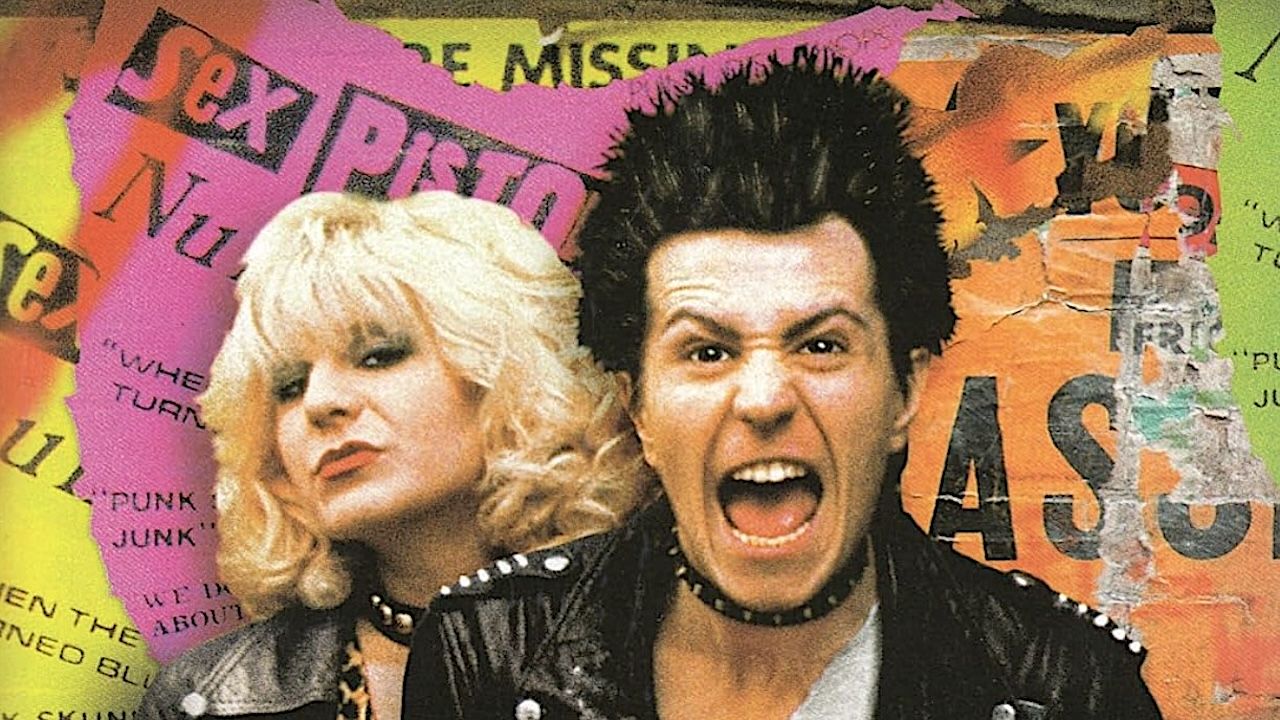
It’s fair to to say that Nancy Spungen was a divisive presence on London’s punk scene in the 1970s: Sex Pistols bassist Sid Vicious loved her, everyone else hated her.
Known as ‘Nauseating Nancy’ by the English media, Philadelphia-born groupie Spungen came to London with The Heartbreakers in December 1976, ahead of the New Yorkers jumping aboard the Sex Pistols’ ill-fated Anarchy Tour, and immediately latched onto bassist Vicious after being rejected by Johnny Rotten (aka John Lydon).
The relationship between Spungen and Vicious was tempestuous and violent, not helped by the young lovers both developing addictions to heroin. In January 1978, following the Pistols break-up on their debut US tour, Spungen and Vicious relocated to New York, taking up residence at the city’s iconic Hotel Chelsea. It was here, in room 100, that Spungen was found dead on October 12, 1978, aged 20: she had been murdered by a single stab wound to the abdomen, the murder weapon being a knife Vicious owned. The English musician gave conflicting accounts of what had happened, and was immediately arrested, and charged with second degree murder: however, his lawyers were able to get him released on $50,000 bail, on condition that he would not leave New York.
The news of Spungen’s murder caused far less shock in London than one might imagine.
“Normally in a situation like that, there would be an emotive response from family and friends alike,” Chrissie Hynde, who Vicious once offered to marry, wrote in her autobiography Reckless. “‘Sid? He would never do anything like that – not to the woman he loved!’ However, the nonchalant shrugging of shoulders like a Mexican wave making its way across London’s punkerage was palpable. No one who knew them was particularly surprised to hear that Sid had inserted a blade into exhibit ‘N’. We were only surprised that he’d stuck it out as long as he had.”
The bleak and brutal end to what was a seemingly doomed relationship was partly what drew English film-maker Alex Cox (and his co-writer Abbe Wool) to make Sid & Nancy, his 1986 biopic about the pair: that, and rumours that a Hollywood studio was interested in casting Madonna and Rupert Everett in a film about the ill-fated lovers.
“In the spirit of punk,” Cox told Clash magazine, “Abbe and I felt this had to be stopped, or at least pre-empted.”
“I thought, for the times, the story was a good one to tell,” the film-maker told money-into-light.com. “Sid and Nancy were terrible fuck-ups and they betrayed the punk ideal, but in the midst of all this chaos was a romantic story. It was all so tragic the way it played out.”
Once Cox had secured a $4 million budget for the film, he set about casting the two lead roles. Daniel Day Lewis was considered for the role of Vicious, but the part was ultimately given to a young Gary Oldman, who would later claim that he turned down the role twice, which Cox denies.
“Gary came from the same neighborhood as Sid, Bermondsey,” Cox told Money Into Light, “and he had the same understanding and desire to escape, to create a new persona and life for himself.”
Courtney Love pleaded for the chance to play Spungen, but eventually accepted a part as fictional character Gretchen, while American actress Chloe Webb was cast in the title role.
Iggy Pop also had a minor part in the film, while the members of Guns N’ Roses were employed as extras for scenes shot in a Los Angeles club, for which they were paid $100 per day. “It wasn’t much fun,” Slash recalled in his 2007 autobiography. “Actually it was like jury duty… I was the only one of us pathetic enough to show up for the duration.”
At the conclusion of the film, after Spungen is stabbed during an argument with her drugged-up lover, Vicious is collected in a New York taxi, and in his confusion, he believes that Nancy is still alive and in the back seat, and the pair are driven away from the crime scene. In reality, after a stay in prison, Vicious died of a heroin overdose on February 2, 1979.
“The end feels bogus,” Cox admitted 30 years on. “We should have shown Sid dying in a pool of vomit. Instead we opted for a touchy-feely way out.”
The ending irked Vicious’ friend John Lydon, who called it “stupid.”
“To me this movie is the lowest form of life.” Lydon stated. “I honestly believe that it celebrates heroin addiction.”
“It’s all wrong,” he wrote in his autobiography. “It was all someone else’s fucking fantasy, some Oxford graduate who missed the punk rock era. The bastard.”
Cox, however, defended the film in a 2017 BFI article.
“The most important scene in the film, from the perspective of [co-screenwriter] Abbe Wool and myself, was in the methadone clinic, where Sy Richardson plays the guy who won’t hand over their dose of methadone until he’s delivered a lecture about how they’re screwing up,” Cox wrote. “Essentially, Sid and Nancy betrayed the punk movement. They should have been out there on the barricades, but instead they became another example of junkie rock stars getting high in a hotel room.
“That’s what we wanted to say, how they’d become such a disappointment to punk, but because the film got deeper and deeper into their horrible little world, everything outside them got a bit lost. The last we see John Lydon, he’s in the corner of some club, fading away. All that explains a sort of misunderstanding in the UK, where it was taken to be a film about the punk scene. The reception in America, where it was viewed as a horrific love story, was closer to our intentions.”