
Think of his Bach-influenced Vox Continental organ hook on Light My Fire. Try to imagine Riders On The Storm without his ghostly electric piano. Witness his funked-up organ motifs on Peace Frog and The Changeling, or his delicate, modulating piano on Waiting For The Sun’s Yes, The River Knows. Ray Manzarek was one of rock’s most distinctive and innovative keyboardists, a true renaissance man drawing from a vast pool of diverse influences.
Jim Morrison’s lyrics aside, the palpable dread and foreboding of The Doors’ music (is there a creepier summer song than Summer’s Almost Gone?) was in the main evoked by Manzarek’s keys. Robby Krieger and John Densmore were no slouches in the chops department either, but it was Ray who had the sounds and imaginative gravitas to carry that weight.
“The beauty of the LA scene in late 1965-1966 was that every band was totally unique”, Jac Holzman, the man who signed The Doors to Elektra, told this writer in 2007. “Morrison hadn’t ignited in the first three Doors performances I witnessed. It was the musicians in the band that kept me coming back. I was fascinated by the substitution of the bass guitar with piano bass, and the clean architectural line of the music was very striking.” Contentious, perhaps, but you could argue it was primarily Manzarek who got The Doors signed.
Ray Manzarek in the mid-1970s (Image credit: Tom Hill/WireImage)
Born in Chicago, Illinois on February 12th, 1939, he shared a birthday with Abraham Lincoln and was christened Raymond Daniel Manczarek (sic) Jr. His grandparents had emigrated from Poland in the 1890’s; his father, Ray Sr, was a tool and die maker while mum Helena kept house, looking after him and his three brothers. His parents were crate-diggers, seeking out old 78 rpms of blues singers such as Bessie Smith. Mom sang well and dad played guitar and ukulele.
Ray was six foot tall by the time he was 14, loved basketball, and soon achieved a first-rate IQ score of 135. He was schooled in the ways of Bach and Chopin by his first piano teacher, but in his 1998 memoir, Light My Fire: My Life With The Doors, Manzarek recalled it was his second piano tutor Bruno Michelotti – “a dance band leader and a real cool cat” – who taught him “virtually everything I know about music”.
Michelotti helped Manzarek unlock the mysteries of boogie-woogie piano, empowering Ray’s left hand to become The Doors’ bass player, too. Boogie-woogie also seemed synonymous with Manzarek’s sexual awakening: “It was the rhythm of the act of love. The sway of a woman’s hips. The thrust of a man’s haunches.”
In 1958, Manzarek saw Muddy Waters up close and personal at Chicago’s Pepper’s Lounge; he and his two pals the only white kids present. Watching Fritz Reiner conduct Debussy’s La Mer was another epiphany. While studying economics at Chicago’s De Paul University, Manzarek became a culture vulture, soaking-up the best of musical theatre (Bernstein’s West Side Story) and world cinema (Truffaut; Bergman; Kurosawa). He’d barely smoked a joint, far less dropped acid, yet, but, artistically speaking, the doors of perception were already wide open. No wonder he and Jim Morrison had such a meeting of minds.
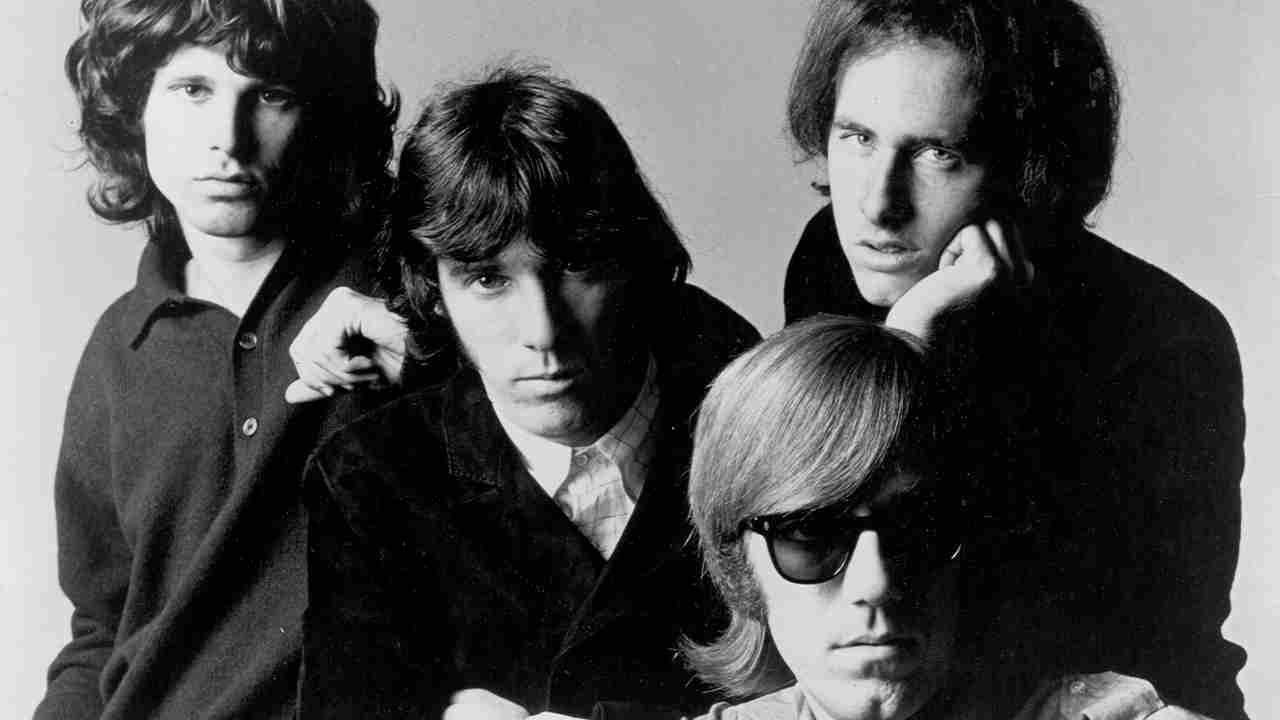
The Doors in 1966 (Image credit: Earl Leaf/Michael Ochs Archives/Getty Images)
Manzarek’s parents wanted him to become an attorney, but their son had other ideas. Enrolling in the University Of California’s Department Of Cinematography in 1962, Ray met future wife Dorothy Fujikawa there and had her act in his student films, but it was Manzarek’s meeting with fellow UCLA student and aspiring auteur Jim Morrison that made history. Exchanging dreams and ideas, Morrison and Manzarek would spark the full-flowering of each other’s artistry.
At UCLA they studied under resident tutor Josef von Steinberg, German Expressionist director of Marlene Dietrich in films such as The Blue Angel. Steinberg’s influence upon Manzarek and Morrison was profound, his darkly adult films and philosophical lectures firing their youthful imaginations.
“I thought Steinberg was an amazing intellectual and his movies’ existential ominousness had a direct impact upon The Doors’ music”, Manzarek told this writer at his tasteful, Bauhaus art-appointed Beverley Hills home in 2003. “In the early days I always felt that I was Joseph Von Steinberg to Jim’s male Dietrich, kind of helping to direct him.”
Graduating by May 1965, aspiring poet Jim and classically-trained jazz/blues buff Ray were faces on the emerging ‘heads’ scene, hanging out at Jim’s bohemian apartment in Goshen, West LA. They devoured Huxley’s The Doors Of Perception and Kerouac’s Beat classic On The Road, Manzarek citing the latter as “a book that instilled a sense of search and freeing myself.” Fuelled by marijuana and Tecate beer, Ray and Jim’s discussions also took in the on-going war in Vietnam, Sonny Rollins versus John Coltrane, Debussy versus Stravinsky and many other hot topics.
The Doors’ Ray Manzarek and Jim Morrison in 1967 (Image credit: Jack Rosen/Getty Images)
Fittingly, The Doors formed that same year after Manzarek met Robby Krieger and John Densmore at an LA transcendental meditation class led by Maharishi Mahesh Yogi, the same guru who would later instruct he Beatles in India.
“The leader guy at the class, Jerry Jarvis, asked if there were any problems”, Krieger recalled in 2007. “Ray stuck his hand up and said, ‘Yes. No bliss yet!’”
The group’s breakthrough single Light My Fire was a brilliant Krieger composition, but it was Manzarek’s calling card organ motif which made it irresistible, one of the most distinctive things on the airwaves. “I said, ‘You guys take a walk to the ocean and I’ll have something by the time you come back”, Manzarek told me in 2007, recalling being tasked with the song’s intro. “The muse jumped into my fingers and made my JS Bach studies come out. I did a [harmonic] circle of fifths and stumbled a bit with the filigrees, but it all resolved itself in 10-15 minutes.”
Elsewhere on The Doors self-titled 1967 debut, Manzarek responded to John Densmore’s bossa nova intro to Break On Through (To The Other Side) with an in-the-pocket organ groove inspired by Brazilian master of the form João Gilberto. He also played the Marxophone (a kind of zither) on The Doors’ theatrical cover of Bertolt Brecht and Kurt Weill’s Alabama Song (Whiskey Bar) . In 1967, such sparks of inspiration and informed plundering made The Doors sound very fresh. They were not one thing, but many things. A dazzling hybrid with a dark, bluesy underbelly.
Manzarek’s playing subtly changed across the six Morrison-fronted Doors albums. It became more refined; broader in scope. The “little Chopin polonaise” he brought to L.A. Woman’s Hyacinth House sounds like the prototype for Dave Greenfield’s organ runs with The Stranglers. Long freed from in the-studio bass-line responsibility by that point, Manzarek also let his imagination run-free on L.A. Woman’s title track while Densmore, Krieger and sometime Elvis Presley bassist Jerry Scheff laid down the groove.
It was mainly Morrison and Krieger who wrote the Doors songs credited to all four of them, but Manzarek was their ideas man. Not the only one, obviously, but Ray tended to ice – and spice – the cake. His intro to Unhappy Girl from Strange Days is all-important, and he added backwards piano to the song after what he described as “a great visitation of energy” in the studio. He also played percussive tack piano – a tinny, altered instrument with drawing-pins or nails placed on its felt-padded hammers – on People Are Strange, giving it edge and character.
The Doors playing in the street in Frankfurt, Germany in 1967 (Image credit: Getty Images)
Manzarek may have pushed the envelope musically, but he was less of a libertine than Morrison personality wise. Still, he certainly partook of mind-altering substances. “Acid is
a spiritual thing, a sacred sacrament”, he said. “For me, you took LSD when you went to the forest or the beach to attune yourself to the vibrations of the planet.”
As for sex, it was certainly something Manzarek talked about enthusiastically – and sometimes in a slightly icky way. His memoir has some rather graphic details about the carnal misadventures of the passionate part of himself he refers to as ‘Little Ray’, and nor was Manzarek more prudish in interviews or in public. Introducing People Are Strange at a 2004 Wembley Arena concert by The Doors Of The 21st Century, he invited the crowd to “play with each other’s genitals ever so gently.”
While Morrison became the wild man, Manzarek like to retain control. The singer had the looks, the voice, the way with words, but he needed direction, a vote of confidence. The oldest member of The Doors by four years (and older than Krieger, the youngest, by seven), he was best-placed to provide these things, his seniority granting a certain authority even if Jim got the girls and the adulation and the headlines.
In later interviews, Manzarek spoke articulately and performatively, that IQ of 135 on display. There was a sense of him not suffering fools gladly and he could seem a tad pretentious as he waxed lyrical about “the 12 astrological archetypes”, explaining how Morrison was “Dionysian” (excessive, addictive, charismatic), while he, by contrast, was a balancing “Apollonian” sort (driven, ordered, favours thinking over feeling).
Perhaps Manzarek was just trying to breathe life into a story that had been told and re-told. He portrayed Riders On The Storm as a portent of Jim’s death: “That whispered voice you hear was the last vocal Jim recorded on planet earth. It was the voice of the spirits, calling the shaman out of his physical form and into the next realm of existence. Had I known that Jim was so close to death, I would have seen it as a sign, maybe even a cry for help. But he was only 27 years old and it was impossible for anyone to believe that Jim was about to die.”
After Morrison’s death in Paris in 1971, Manzarek – and sometimes Robby Krieger – led The Doors from the front on 1971’s Other Voices and 1972’s Full Circle. Alas, there was no getting over the charisma-deficit in Jim’s absence, and Ray and Robby’s vocals aren’t great. They did notch up one final hit in mainland Europe and Latin America with Manzarek’s The Mosquito, a hooky novelty song that found him rhyming ‘mosquito’ with ‘my burrito’ as he sang about a pest-compromised snack.
The three-piece Doors in 1977 (Image credit: Universal Archive/Universal Images Group via Getty Images)
In 1978 came the final ‘new’ album to bear The Doors name, An American Prayer. It grafted recordings of documentary dialogue, live concert talk and Morrison’s poetry to music old and new. Some deemed it a travesty. Former Doors producer Paul A. Rothschild went further, calling it “a rape of Jim Morrison.” Here were the seeds of the controversies and internal feuds that would dog the surviving members’ handling of The Doors’ legacy from there on in.
A few years earlier, Manzarek’s 1974 solo debut The Golden Scarab had already cemented the sense that, musically speaking, he could be something of a loose cannon. Packing esoteric spoken-word and riotous percussion, it was ridiculed and praised in fairly equal measure, but its new-age Afro-funk is ripe for reappraisal, even if song titles such as Oh Thou Precious Nectar (A Little Fart) are off-putting.
The same year found Manzarek teaming with Iggy Pop, whom he’d long thought of as the ideal successor to Jim Morrison in The Doors. Having just left The Stooges, Iggy was being managed by Doors overseer Danny Sugerman. He and Manzarek rehearsed for months and even played live together (no tapes or footage have surfaced), but it wasn’t to be, perhaps because Iggy’s drug addiction was raging, and he’d need to follow David Bowie to Berlin to dry-out.
Instead, 1975 brought Manzarek’s second solo LP, the jazzier, bluesier The Whole Thing Started With Rock & Roll Now It’s Out Of Control. It featured Joe Walsh and Patti Smith, but not even they could save it from obscurity and poor sales.
Re-booting again in 1977, Ray formed Nite City, whose members included future Blondie bassist Nigel Harrison and drive-time radio friendly singer Noah James. But despite chart-friendly AOR leanings, the group failed to make an impact. That their second and final LP, 1978’s Golden Days Diamond Nights, was only released in West Germany spoke volumes.
Manzarek would soon busy himself producing LA punk band X’s debut album Los Angeles (which included a cover of The Doors’ Soul Kitchen), and their next three records. His 1983 solo album Carmina Burana occasionally brought a hitherto unimagined Chas’n’Dave vibe to Carl Orff’s demonic-sounding 1935 cantata, but with famed composer Phillip Glass co-producing it was also further proof of his pedigree.
As the 80s rolled on and appreciation for his former’s band’s legacy grew, Manzarek’s work with The Doors was a passport to all kinds of collaborations. In 1987, when Echo & the Bunnymen recorded a cover of People Are Strange for vampire flick The Lost Boys, Manzarek was invited to recreate his parts and subsequently brought his organ prowess to the Bunnymen’s Bedbugs And Ballyhoo, a song from the British band’s self-titled 1987 album.
More than a decade would pass before his the surprise resurrection of The Doors. The catalyst was a 2000 episode of VH-1’s Storytellers series dedicated to the band. An ecstatic Perry Farrell of Jane’s Addiction and Scott Weiland of Stone Temple Pilots were among the stars booked to sing live backed by Manzarek, Krieger and Densmore, but it was another guest – The Cult’s Morrison-esque singer Ian Astbury – who got the gig fronting an incarnation of The Doors which began touring again in 2002.
Densmore was supposed to be involved in the reunions, but he pulled out, claiming tinnitus issues, and eventually ended up gaining an injunction which forced Manzarek, Krieger and Astbury to perform as ‘The Doors Of The 21st Century.’ A Morrison-less Doors wasn’t worthy of the name, Densmore now griped. But Manzarek was quick to defend himself via CNN news: “The guy who put the band together is performing with the guy who wrote Light My Fire. If we’re not The Doors, who is?”
Ray Manzarek and Robby Krieger in 2012, a year before Manzarek’s death (Image credit: Kevin Winter/Getty Images)
Densmore and Manzarek had often feuded and had long-standing differences about how the Doors’ music and estate should be managed (the part in Manzarek’s memoir where he recalled telling Jim to regard John as “his dumb kid brother” probably didn’t help). But the pair made their peace prior to Manzarek dying of bile duct cancer in Rosenheim, Germany on May 20, 2013. “I called him and thank God he picked up and we talked about his illness”, Densmore recalled in 2023. “I felt so much better.”
“If you’re going to become a legend – one of the immortals, a god,” Manzarek himself said in 2011, “then you have to die. That’s the tragedy.”
He was talking about Jim Morrison, of course, but his own passing aged 74 brought a kind of immortality too. Ray Manzarek is alive again every time we hear Light My Fire.
Originally published in Classic Rock Presents: The Doors