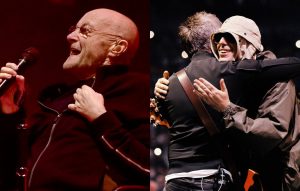

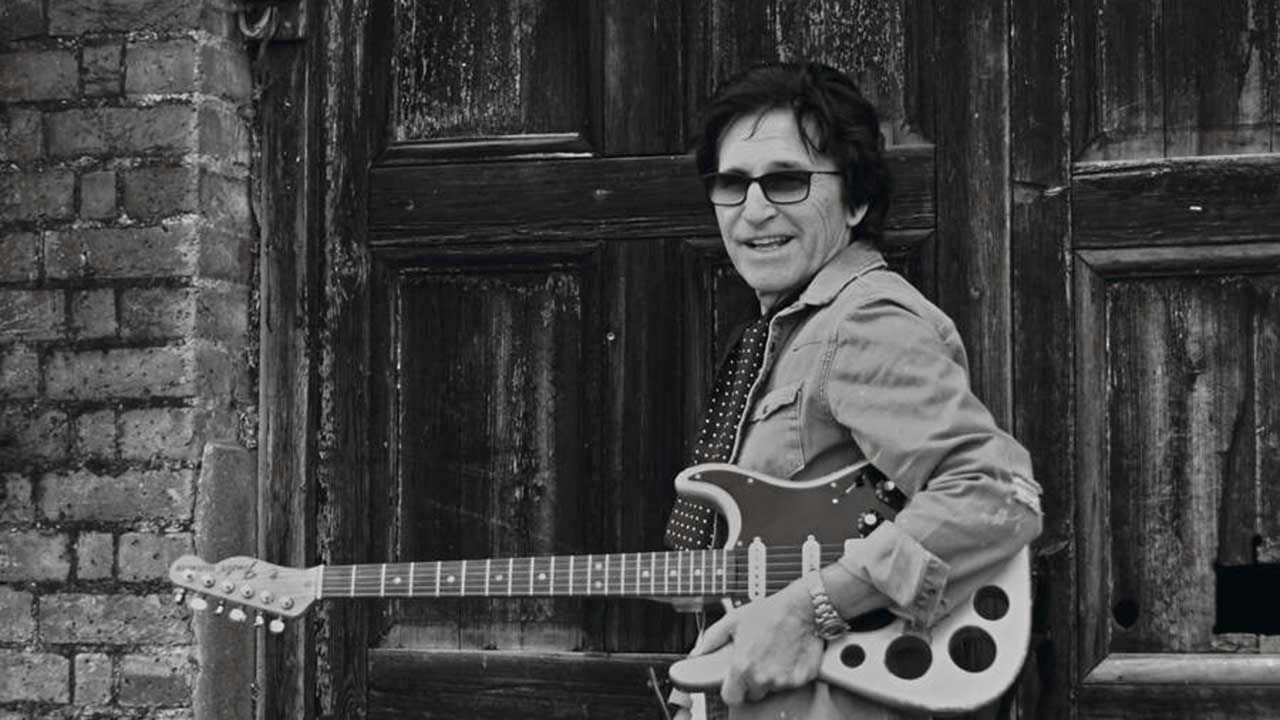
I honestly can’t remember having met Lemmy, though I may have “done when he was a roadie for Hendrix,” Russ Ballard says with a laugh, sounding embarrassed. “Wasn’t he also the guy that Jimi sent out for his drugs?”
So the story goes. Allegedly, part of Lemmy’s job description was trying out Jimi’s narcotics before passing them over to his boss.
He laughs again, beaming. “A bit like a food tester. I like that.”
Born in Hertfordshire in 1945, Ballard has spent many decades writing and playing music, first as the guitarist and lead vocalist with the band Argent, known principally for their 1971 top-five hit Hold Your Head Up, and then as a solo artist. However, the songs Ballard wrote – including Since You Been Gone and I Surrender (covered by Rainbow), God Gave Rock And Roll To You (reworked by Kiss on Revenge) and Hot Chocolate’s So You Win Again – were often much more successful in the hands of other artists, some of whom he got to meet, others he didn’t.
“It’s funny,” Ballard ponders, “I played gigs with Kiss, but we’ve never actually sat down and chatted. One was at the Academy Of Music in New York. At soundcheck, the band members were walking around without make-up. I was in the wings when they came down to perform, and suddenly they were all seven feet tall and unrecognisable. It was an amazing sight. We [Argent] played with them again in St Louis, but they had broken big by then.
“But the closest I came to meeting Kiss was in Los Angeles many years later,” he continues. “I was in a hotel, and Michael Bolton, who was Number One with How Am I Supposed To Live Without You [in 1989], was there by the swimming pool, having breakfast with Gene Simmons.
“As they left, Michael stopped at my table and asked whether I wrote [songs] with other writers. I told him that I was writing with John Waite at that time. Michael said: ‘There’s no other English writer I’d like to write with than you.’ Which was nice, but unfortunately, I was flying home the following day. We do still email each other, though.”
Way too polite a guy to have interrupted the God Of Thunder’s morning repast, it will come as no surprise that Ballard never placed too much importance on hanging out with celebs and fellow musicians. For him it was always about the songs. So, no, he probably didn’t drink Jack Daniel’s with Lemmy, but he did get to spend a few hours drinking tea and eating biscuits with all four members of The Beatles – and Ringo Starr once acted as his valet.
Ringo Starr
I met Ringo back in 1978 in a London nightclub. Flash place, I don’t remember the name. As we arrived, somebody said in a loud voice: “Hey Russ, got any songs?” It was Ringo. So I sat down with him and replied: “Of course. What are you looking for?” His reply was instant: “Hits!” His next question was: “Would you like to produce them?” Of course I would! With a huge smile, Ringo said: “The last person that tried to produce me was Marc Bolan – he’s dead now.”
A few days later, Ringo came to my house, and chose five songs including As Far As We Can Go [which would appear on Starr’s 1983 album Old Wave].
We spend some nice amounts of time together. Once we were in [London restaurant] Trader Vic’s, drinking and telling stories. I asked Ringo how John Lennon was, and he replied [adopts strong Starr accent]: “I speak to him, y’know, but the problem is that nobody is looking after business. Me, I’m baking bread.” That was Ringo’s phrase of the moment, ‘baking bread’. It meant he was paying attention.
My dad died as I started recording with Ringo, and he knew I was suffering. He asked if I was “Valium-ed out”. When we checked in to the Plaza Hotel, Ringo actually carried my cases to my room for me, remarking that my suite was bigger than his. He was smashing company.
The Beatles
We [Argent] would always see The Beatles at gigs, in hotels. They were such a great bunch of people. While I was playing with [late50s/early-60s pop star] Adam Faith I spent three hours with them in a room in Yarmouth. They were playing at the ABC, but because the venue was so surrounded with kids it was impossible to get into the place, so a helicopter dropped them on the roof.
I had just played my gig on the pier with Adam Faith, and they burst in as we were having tea and biscuits. John Lennon sat on the floor at the other end of the room with George [Harrison]. [Pop singer] Helen Shapiro was with them, and Paul McCartney and Ringo – or Richie as they called him – told stories about the Hamburg days; how because they were expected to do such long hours, they made the songs last much longer.
Billy J Kramer had just topped the chart with [the Lennon and McCartney-written] Do You Want To Know A Secret, and Paul told me: “We’ve written another one for him.” It was Bad To Me. At the time, nobody knew that. The following week it was Number One.
Noël Coward
That’s a strange one. I was seventeen when I joined Adam Faith. In Singapore, after breakfast, we sat by the pool. A man of around sixty was swimming lengths on his back. He introduced himself to Adam, saying: “You must come up to the suite.” I didn’t have a clue who he was.
Had I known that this was Noël Coward [the playwright, composer and singer celebrated for his flamboyance and wit] I’d have hung on his every word, but instead I fell asleep in the corner. He came to the show and sat right in the front row. Noël even mentioned us in his diaries: “Adam Faith was a fine young man who rocked and rolled with the utmost authority with his band The Roulettes. It was horrendously loud.” Fantastic.
Roger Daltrey
Roger became a mate of mine after I worked with Leo Sayer on the Daltrey album [1973]. I played on one of its tracks. That album came out so well that Roger wanted to do another and he asked me to write him some songs. Ride A Rock Horse [1975] was quite successful. Roger and I became really good friends, and I wrote more songs for the soundtrack to his film McVicar [1980]. One of those, Free Me, felt like a good idea for a convicted criminal.
On Under A Raging Moon [1985] I had the song Breaking Down Paradise. We became such good friends that Roger phoned and asked me to be a part of a solo tour of America, saying if I was unavailable then he wouldn’t do it. That felt like a big compliment. It was quite a big tour that included Madison Square Garden in New York. I really like Roger. He can change moods, as everybody knows, but he’s a really nice man. I think a lot of him.
Russ Ballard and Roger Daltrey onstage at a ChildLine Rocks charity concert in 2008 (Image credit: Harry Scott/Redferns)
Ritchie Blackmore
When Ritchie put Rainbow back together, his manager invited me to play with them at a gig at the O2 Arena [in 2017]. We did [Ballard song] Since You Been Gone together. Because we had similar backgrounds we got along really well; like him, I used to be in The Outlaws. Ritchie said he did these big gigs to make money, but what he enjoyed best was playing in churches and castles with his missus [Candice Night]. He asked if I’d write him another song. I replied: “Sure. What do you want, rock?” But he preferred minstrel music. In the end, though, I never heard from Ritchie again.
Ozzy Osbourne
This happened after Ozzy had his hit with Lita Ford [Close My Eyes Forever], so it would have been at the end of the 1980s. Ozzy’s record company called me to say that he had done an album but it needed a single, and would I like to write with him? So Ozzy came to my house. He arrived walking with a stick and it looked like he’d been having a bit of a rough time.
He was really, really funny. We sat in my sitting room, which looked out on a huge garden. Ozzy asked whether I had night-sight goggles. And of course I didn’t. He told me you could pick up an ex-military pair for ten thousand dollars. He had a pair. He was saying all of this really funny stuff, though I’m not sure it was meant to be. We were having such a fun time we didn’t do any writing. Boy, he was a very, very funny guy.
Robert Plant
I knew Robert Plant in the early days because we shared a booking agency in Wolverhampton. I met him again at a Teenage Cancer Trust show and we had a lovely chat. He told me about the time that Led Zeppelin met Elvis in Las Vegas [in 1969]. Robert reckoned Elvis didn’t have a clue who they were.
Apparently, Robert went up to Elvis, put his arm around his shoulder and swung his hips [à la Presley], which Elvis thought hilarious. They ended up having a real laugh together. When it was time for Elvis to leave, as he reached the swing doors he turned back into the room, pointed into the air in that famous pose of his and sang at them: ‘Well, my baby left me.’ Now that’s what you call an exit.
Mort Schuman
[Songwriters] Goffin and King, Lieber and Stoller, Neil Sedaka, Mort Schuman and Doc Pomus were among my earliest heroes. So later on it was an incredible thrill to write with Mort, who wrote a lot of the great Elvis songs, including Viva Las Vegas, Little Sister and A Mess Of Blues. He also wrote Sha-La-La-La-Lee [a hit for Small Faces in 1966].
He was a New Yorker, but Mort was living in England when I got the phone call: “Russ, I’m still a star in France. Do you fancy doing something together?” We co-wrote four songs [for Schuman’s final album, 1991’s Distant Drum]. I asked him lots of questions about Elvis. I wanted to know how many songs Morty wrote for him. Apparently there were around thirty, but he admitted: “A lot of them were crap because they were for those [terrible] films he made”.
Morty was a great guy to hang out with. I wish I had known him for longer, but unfortunately he died that same year.
Russ Ballard’s current album Songs From The Warehouse/The Hits Rewired is available via Frontiers Records.