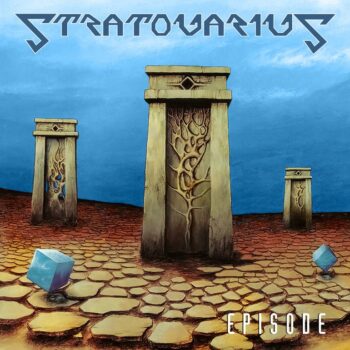
Considering how difficult making a record is, I’m always impressed by bands who reliably churn out great material every few years. I don’t know what Stratovarius were on between 1994–1998 that resulted in not one but five high-quality albums, one each year. Right in the middle of that magnificent streak sits their magnum opus Episode. When drummer Jörg Michael and ex-Yngwie Malmsteen keyboardist Jens Johansson joined the fray after Fourth Dimension, there was no indication this would become the classic Stratovarius lineup that would later influence much of the future direction of power metal. Stratovarius had already experienced plenty of member turnover by this point. What made this time different?
Compared to Stratovarius’s commonly cited ‘defining’ moment, Visions, Episode is a whole other beast. The first two songs deceive you into thinking this will be yet another take on post-Helloween metal. Timo Kotipelto’s powerful wail follows Kiskean philosophy. Timo Tolkki’s neoclassical guitar play is influenced by the likes of Yngwie, making Mr. Harpsichord’s joining much less surprising. But the moment “Eternity” hits you with Jari Kainulainen’s bass groove is when you realize something’s different. Much like Fourth Dimension a year prior, Episode takes its primary influence from Rage for Order-era Queensrÿche. It is often every bit as much heavy or progressive metal as it is power metal. However, the songwriting choices are more standout and unique than prior ones. Fourth Dimension’s quirky-but-fun “030366” was almost a carbon copy of ‘Rÿche’s “I Will Remember”—on Episode, both the bangers (“Father Time,” “Speed of Light”) and the moody, gargantuan stompers (“Eternity,” “Uncertainty”) are much more than just 1-to-1 correspondences. Still, you can tell the bunch also grew up Rainbow and Dio fans.
Episode is the first and still one of the only examples of what I like to call ‘sadboi power metal.’1 The guitar and keyboard pyrotechnics are in equilibrium with the record’s downcast atmosphere and dramatic backing. The shred of “Speed of Light” or “Stratosphere” is an obvious fan favorite aspect, but Episode brings many treats to choose from—most of them depressed. String orchestra-backed “Season of Change” is a masterclass in build-ups, symphonic way before Nightwish’s time. Even when being fast and melodic, Episode is not optimistic, knowing time shows mercy to no one (“Father Time,” “Speed of Light”) and asking if there will even be a future left (“Will the Sun Rise?”). A lyricist’s personal grief and malaise from 30 years ago has turned into a very apt sign of the times today. Once the faux-happy “Tomorrow” transitions into the immense “Night Time Eclipse,” the facade fades and all darkness falls.
So why did power metal at large take after the ‘stripped-down’ cheerful melodicity of Visions, rather than the dark introspection of Episode? As I mentioned previously,2 timing is everything, and the mid-’90s were not a good time to hit it big with complex and ambitious metal songwriting. Furthermore, the divide brewing between ‘classic metal’ and ‘extreme metal’ in the late ’80s only became more pronounced over time as all not-Pantera metal fell back to the underground. The years marched on, and most bands kept changing things up. This tended to make death metal heavier and power metal lighter, the heavy and thrash veterans struggling somewhere in the middle as ’80s metal fans know painfully well. My hypothesis is that Episode was both too ‘modern’ and lightweight for olde ‘Rÿche fans and too slow, gloomy and high-brow for the upcoming power metal crowd. One can only wonder what might’ve been if the resurgent ’90s power metal scene took after Episode instead of Visions and HammerFall’s early works, and if the difference would’ve convinced detractors of all things saccharine.
Episode is my favorite album of all time. It was the beginning of Stratovarius becoming an important cornerstone of power metal, later turning into a major influence for future ’00s bands. They’re a core blueprint for Japanese power metal at large. Nightwish’s best album Oceanborn and Sonata Arctica’s classic-if-wonky albums are 90% Stratovarius DNA. Even DragonForce noted ’90s Strato as an influence—coincidentally, both Episode and Inhuman Rampage have a closing ballad3 that works wonders (Episode even has two with the bonus track). What’s obvious via Visions and Destiny subtly started here with more depth, and I wish there was more like it.
The post Yer Metal Is Olde: Stratovarius – Episode appeared first on Angry Metal Guy.