
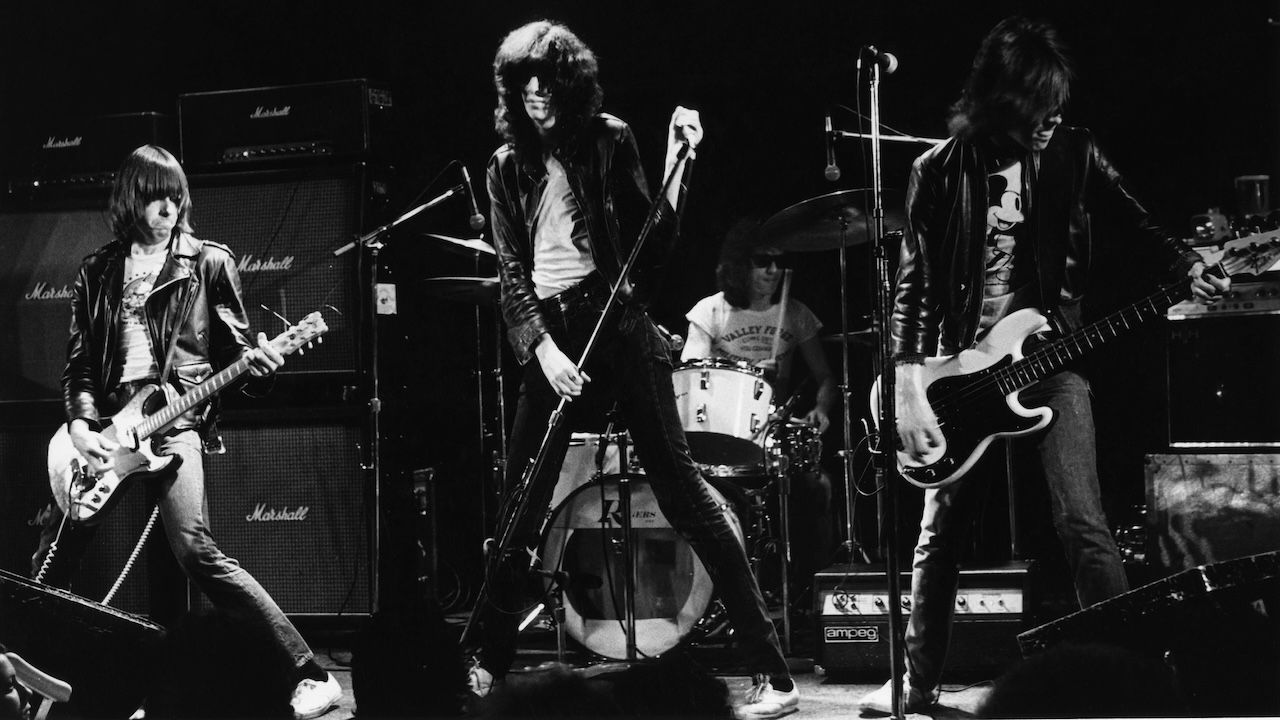
On November 8, 1975, NME magazine ran a live review of a Ramones and Blondie show at the Performance Studio on New York’s Lower East Side. Though the Ramones would not release their debut album until the following April, there was already a buzz around the Forest Hills, Queens quartet, who were racking up rave reviews in the New York-area rock press. Understandably then, NME writer Charles Shaar Murray was somewhat bemused to find that the group were playing to “a total audience of – at final count – 27 people, nine of whom were photographers.” Clearly, the hotly-tipped New Yorkers had a way to go before becoming the city’s Next Big Thing.
“The Ramones, though, are a band that the London rock scene could really use,” the man from NME told readers. “Jeez, I’d give a week’s pay just to see them explode over an unprepared audience at, say, Dingwalls. They’re simultaneously so funny, such a cartoon vision of rock and roll, and so genuinely tight and powerful that they’re just bound to enchant anyone who fell in love with rock and roll for the right reasons.”
Charles Shaar Murray’s words did not go unnoticed by Ramones’ canny manager Danny Fields. The New York Dolls’ profile in their hometown was boosted after the group undertook a UK tour in 1973, landing a slot on BBC TV’s The Old Grey Whistle Test while in London, and Fields realised that if he could generate a buzz around Ramones in the UK, it would make Anglophile music fans in the US pay more attention to his band. And so a whistle-stop visit was planned for July 1976, with two shows booked: a gig supporting The Flamin’ Groovies at London’s 3,000-capacity Roundhouse venue in Camden on July 4 (with The Stranglers opening up), and a headline show at the 500-capacity Dingwalls club, also in Camden, the following evening.
Contrary to a popular myth constantly repeated to this day, no members of the Sex Pixtols or The Clash were present at The Roundhouse on July 4: the two bands were playing Sheffield’s Black Swan pub that very night, The Clash’s support slot being their first ever gig. But among the Roundhouse audience were members of The Damned, Gaye Advert, Adam Ant and future Pogues frontman Shane McGowan.
“It’s now seen as this big iconic, historical thing – the visit that lit the torch-paper for UK punk – but it didn’t feel legendary at the time,” Danny Fields once told me. “But it was astonishing in that there were more people there than they had ever cumulatively played to in their career at that point. I mean, most of my work before that with them was getting them ‘jobs’ – Johnny [Ramone] always called them ‘jobs’, not gigs – and here we were in one of the world’s most important cities and there were thousands of people there, and people being turned away.”
“There were people waiting at the hotel to sleep with us all,” Fields noted in Ramones documentary End Of The Century. “You can tell it’s pretty good if people are lined up to fuck the roadies and the managers.”
On July 5, the turn-out for Ramones’ first UK headline show was impressive. Among those in attendance were Brian James, Rat Scabies and Captain Sensible from The Damned, Joe Strummer and Paul Simenon from The Clash, JJ Brunel from The Stranglers, John Lydon and Glen Mattlock from Sex Pistols, future Sex Pistol Sid Vicious, and future Pretenders leader Chrissie Hynde.
“I remember Johnny Ramone and Paul Simenon talking beforehand,” Dany Fields told me. “Paul said, ‘We played our first show last night: no-one wants us because we don’t know what we’re doing, and we’re not good enough.’ And Johnny said, ‘Wait, you haven’t seen play. We stink! We can’t play! Just do what we do… just play!’ But I also remember Joe Strummer later saying, ‘You couldn’t slide a cigarette paper between any two of their songs’ so I guess people were impressed. Plus, those gigs showed promoters that there was an audience for punk, and that was important too.”
“They kickstarted the whole thing in a big way,” Captain Sensible insisted.