

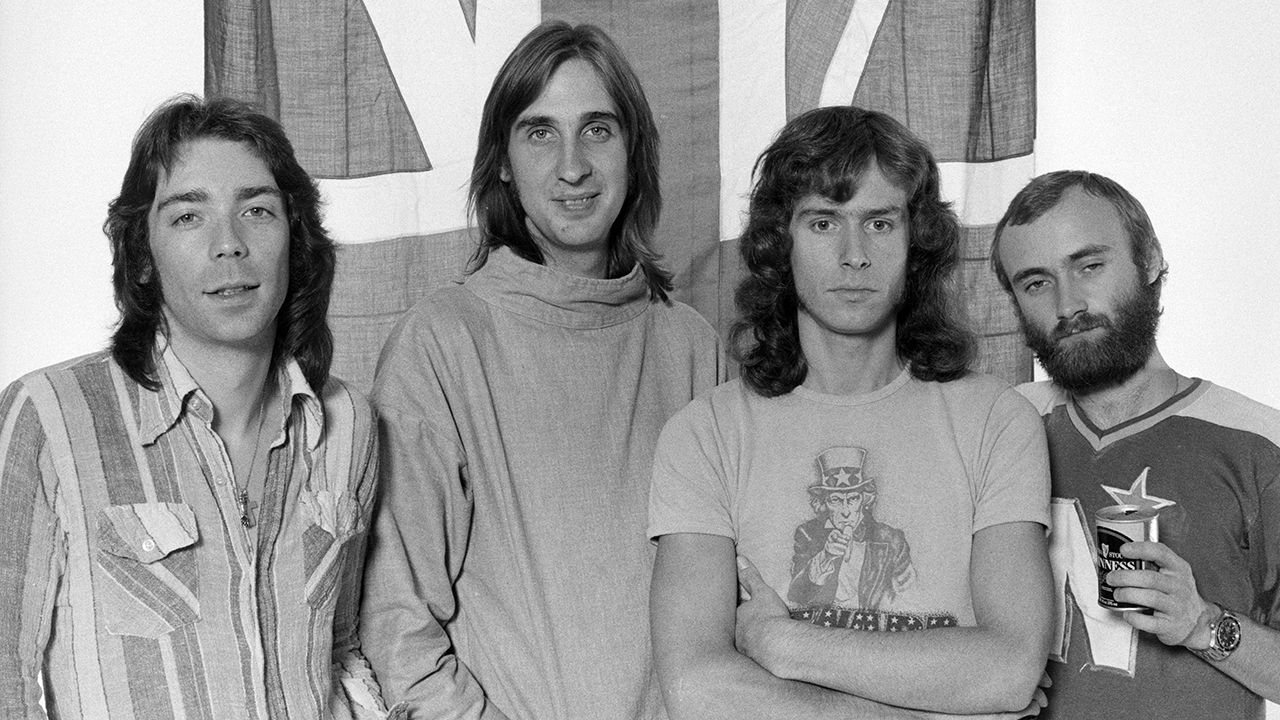
From Dance On A Volcano to Los Endos, Prog dissects each track on Genesis’ A Trick Of The Tail and rediscovers what made their first album without Peter Gabriel such an essential listen on release in 1976.
‘You’d better start doing it right,’ sings Phil Collins in opening track Dance On A Volcano. The seventh Genesis studio album, A Trick Of The Tail came with a whole bundle of pressure. With Peter Gabriel departed – but not “to go senile in the sticks,” he told the press – Genesis had questions and doubters to answer. Collins assumed they’d go on as a four-piece instrumental band.
“But my idea went out the window pretty much that first day,” he told this writer. “Tony and Mike said, ‘Don’t be ridiculous! We need a singer, because we’re songwriters.’”
Fortunately, although it took them a minute or two to realise it, they had an excellent singer within their ranks. “He had a lovely voice,” said Tony Banks. “He’d obviously done plenty on previous albums. But we weren’t sure he’d want to do it – he was the drummer, after all. And at the time, he didn’t seem to have the gravitas. But he sounded great.”
After many fruitless auditions with Collins teaching the applicants the vocals, it became clear who was the man for the job. “I do remember saying, ‘OK, I will give it a go,’” he recalled, “‘but don’t expect me to put on the costumes.’ Which is funny, as I was the one that had come from an acting background! It wasn’t a conscious decision to not do what Peter did; I just didn’t feel I could pull it off. So I became the ‘guy next door’. That’s what I did: I just stood there and sang.”
“In some ways that helped us,” Mike Rutherford remembered. “You couldn’t carry on Peter’s mystique – I mean, it’s not in Phil’s nature. With his character, lightening things between the longer, darker songs, it helped the balance of the shows.”
It also helped that the album was a completely inspired winner. A Trick Of The Tail is an exquisitely gauged blend of yearning melodies, heavy but not too heavy thumpers, affecting sad ballads and hypnotic soundbeds. The quartet had found all the right answers.
“We were lucky in a way,” recalled Banks. “Despite what people think of it now, The Lamb Lies Down On Broadway – quite a difficult double album – sold less than Selling England By The Pound. We were in debt! So we were able now to come out with something more direct. It was a good place to be.”
An album built by strength but revealing frequent tenderness, A Trick Of The Tail is a very good place to be indeed. It’s a dreamlike world in which to immerse yourself, from the opening rumbles and flourishes.
Dance On A Volcano
“It’s a very arresting beginning to an album,” Banks said. “It gets you in there.” It certainly does, all but erupting. The atmosphere and tone of much of the record is established by the determined drama of this colossus, which also makes a cameo reappearance at the album’s finale. There’s no shortage of unpredictable rhythm, channelling Collins’ beloved Weather Report.
He was still razor sharp at the day job, and longtime fans were reassured the new Genesis chapter wasn’t about to take easy options. Yet for all the twisty interplay, the song surges ever forward, its motivations and momentum rich with excitement.
This was the first album to credit individual songwriters rather than the band as a whole, so it’s telling that this opener was a Rutherford-Banks- Collins-Hackett composition: everyone involved, pulling together, keen to not merely steady the ship but to get it going at a rate of knots.
“We’d started writing, and from the first day things just happened,” said Rutherford. “And after two or three weeks we thought, ‘This feels strong, feels good.’ It gave us the confidence to carry on.”
The listener was confident now, too: this Genesis was both accessible and aesthetically intriguing.
Entangled
And nowhere more so than on this, possibly Steve Hackett’s finest contribution to the band. Banks added the chorus, but it “was based on this really beautiful piece Steve had written,” he said. (His synth solo is simultaneously eerie and charming, and seems to change shape second by second.)
Seeing Hackett’s lyrics for the first time – ‘over the rooftops and houses’ – Collins perceived something of a Mary Poppins vibe about them. But its weird science (Freudian slumbers, hypnosis, sinister urges to sleep) also shares some DNA with Here Comes The Supernatural Anaesthetist from The Lamb. It’s a gorgeous reverie, the band resisting temptation to oversell its innate mood, and Collins’ prowess with soft, alluring numbers – as a singer he rarely does too much or too little, always serving the song – gets an early showcase.
Guy Garvey has said Entangled was a big influence on Elbow’s own 2001 breakthrough, Newborn, and that it’s the one Genesis track everybody in his band agrees on. (He’s eulogised it, and Ripples, on his BBC Radio 6 Music radio show.)
Hackett mused: “I’d gone off to do a solo album, Voyage Of The Acolyte, and it’s difficult then to go back and just write the odd bit or odd song. But on A Trick I’d come up with Entangled and got the ball rolling there. It was a happy camp for most of that period. There are some classics on that album.” Its gorgeous, hazy, stoned coda is a pinnacle.
Squonk
In a way it was Squonk that meant Collins had, as they say, passed the audition. The potential Gabriel replacements struggled with it – even the frontrunner – albeit the band were playing it in too high a key. Collins chuckled that it never occurred to them to give the singers a better chance by adapting, and that his bandmate didn’t offer him that courtesy either. “I had to make do.”
Inspired by the thumping drum sound on Led Zeppelin’s Kashmir (“My John Bonham moment,” said Collins), its lyrics were based on a mythical creature as illustrated in the snappily titled 1910 American fantasy- folklore book, Fearsome Creatures Of The Lumberwoods, With A Few Desert And Mountain Beasts; the squonk was apparently easy to hunt because it wept constantly.
The song is a powerful slab of mythology in its own right – even if it does end up, poignantly, as ‘just a pool of tears.’
Mad Man Moon
The relatively unsung masterpiece of the album, Banks’ composition leans into the multipart ‘suite’ format the band were elsewhere moving on from, and its Mellotron magic coaxes forth a mournful majesty. Banks has suggested the reason it gets less attention than some tracks is because they never played it live.
“It’s more, dare I say, a feminine track,” he told Prog. “I was very pleased when I wrote it, especially the verses. The noodling in the middle is quite fun, but if you listen carefully, it’s beyond my playing ability!” That’s a high bar, then.
With its ‘snowflake in June’ and ‘horse not made of sand,’ this is one mysterious aria. When asked about the line describing ‘a muddy pitch in Newcastle’ Banks said with a smile, “I’ve had a few phrases that you shouldn’t use: ‘Into the breadbin’ in All In A Mouse’s Night. ‘Double glazing’ in Domino. You either like those lines sticking out or you don’t. We’ve always been a divisive band, and I’ve always been happy with that.”
Robbery, Assault and Battery
“Coming from our underdog position,” reflected Collins, “when nobody expected much, A Trick was a bright light. Yes, our fans wanted the band to survive – and they preferred that we’d made it work within ourselves.”
This, though, is arguably the weakest link, as it comes across as Collins trying to “do” Gabriel essaying a Cockney-geezer accent. His childhood role as the Artful Dodger at drama school qualified him somewhat, but it’s awkward.
Penned chiefly by Banks, it’s squarely in the tradition of The Battle Of Epping Forest or Get ’Em Out By Friday, but although it has some charm and humour – and was swiftly dropped into their live set – it never quite breaks free of its chains. And between the romantic lushness of the classics either side of it, it’s almost a mood-killer.
Ripples…
Created via Rutherford’s 12-string guitars and some mid-section Rachmaninov-inspired piano from Banks, Ripples… was one of the first songs written with Collins’ voice in mind. Instantly a crowd favourite, with lovely looped guitars from Hackett, its gentle verses and showstopping lighters-in-the-air chorus exhibit the perfect balance of shrewd songcraft and ‘Genesis epic’ DNA. It gave them the confidence to write more ballads.
And if it’s lyrically vaguely in the same zone as The Lamia, with a flavour of fearing age and mortality, they were to nail their courage to the mast and pen actual love songs imminently. “It’s a strong chorus,” said Banks, with customary understatement.
“There’s still an aspect of the musical odyssey there,” pondered Hackett.
A Trick of the Tail
Banks composed the title track, some years earlier, circa Foxtrot. He’d been reading William Golding’s book The Inheritors (his 1955 follow-up to Lord Of The Flies) and began jamming around the rhythm of The Beatles’ Getting Better. He wanted “something lighter and more quirky.”
Revisiting a world of elves, sprites and aliens, and with a now-visible hint of the cautionary tale of exploiting outsiders in The Man Who Fell To Earth (the Nicolas Roeg film starring David Bowie that came out a month later), it’s a song that could only be Genesis – jaunty, catchy, but with an almost shy pride in its accidental grandeur and undeniable pathos.
It flopped as the showcase single, with Collins citing the video, where effects “shrank” him to a miniature man hopping about on the instruments, as the most cringeworthy of his entire career.
Los Endos
A marriage of overture and an end-of-night rock-out (it became an enduring and glorious live finale), Los Endos was a band composition initiated by Collins summoning his Brand X jazz-funk tastes, offering flashes of Santana and Weather Report.
It has since been revealed that its opening began life as part of It’s Yourself, a track cut from the album for length and which emerged later. Reprises of Dance On A Volcano and Squonk are interjected, there are false endings to die for, and over the fade Collins subtly sings, ‘There’s an angel standing in the sun.’ That quote from Supper’s Ready can be read as a final fond farewell and acknowledgement to Gabriel’s role in creating Genesis.
But, now there were four. And as A Trick Of The Tail got a great response from the press, quickly went gold (doubling any previous album’s sales) and paid off most of their debts, it heralded the band’s new beginning.
“I do feel the strain,” Collins once told this writer, “when it’s said so many times that, ‘It all fucked up when he started singing’ – because, really, we all changed. It was a metamorphosis. And I think we got better at knowing when to stop; to say, ‘OK, this song sounds great just like this.’”
Accessible but never predictable, warm but still weird, and beautiful without being bland, the album proved Genesis could thrive after their reshuffle. For all the Gabriel-era genius, they did sound great just like this. They were doing it right.