

There are nights when escape presents itself as a pair of headlights. You get into the car, turn the key, and drive—not toward somewhere, necessarily, but away from everything that has become unbearable. The world contracts to the strip of road caught in the beams. Behind you lies the life you no longer want; ahead, only darkness.
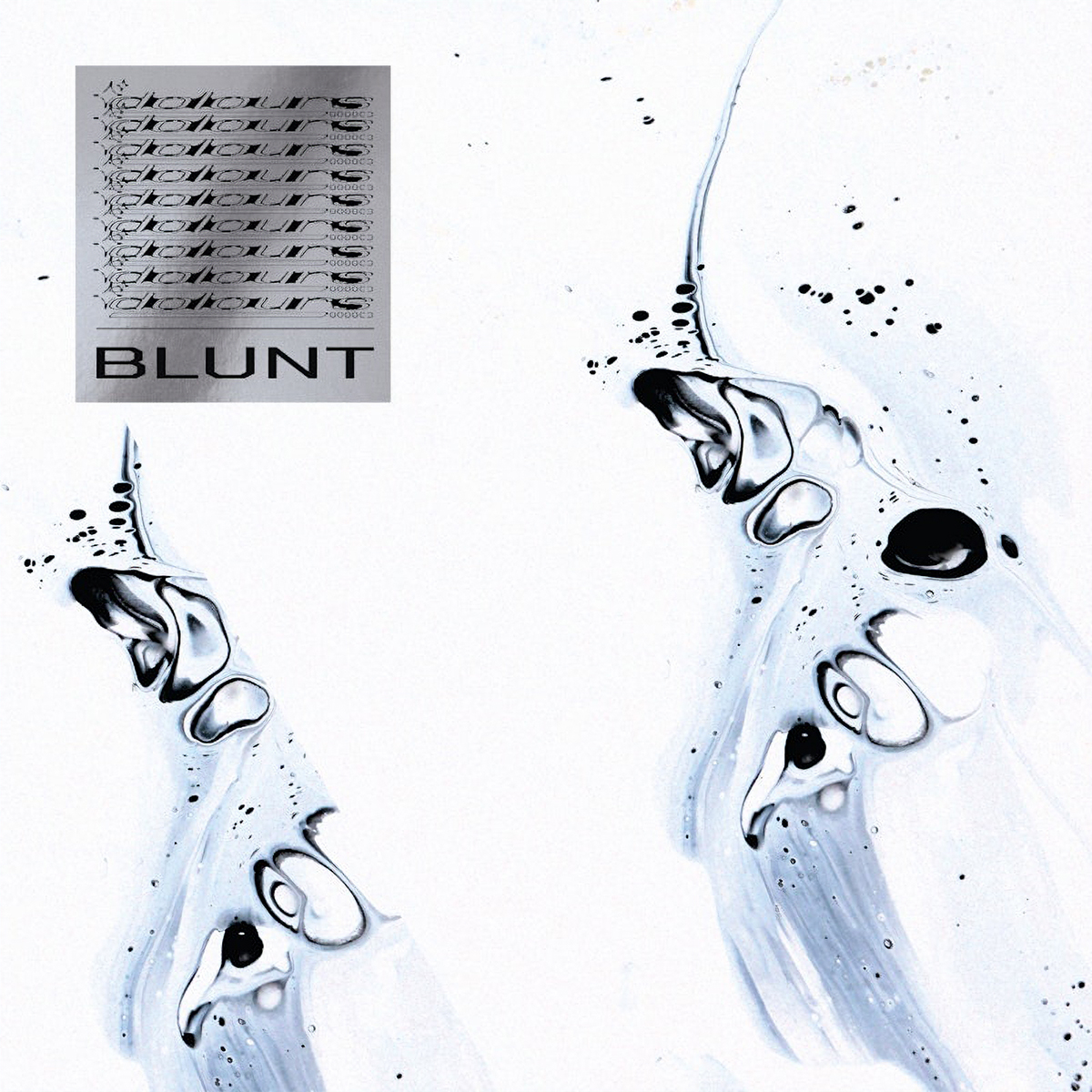
That impulse powers “Blunt,” the explosive debut single from Midlands UK outfit Dolours. Operating at the junction of post-punk, noise rock, and dark alternative music, the band converts frustration, anxiety, and emotional unrest into relentless forward motion. Abrasive guitars scrape across a pounding rhythm section, while synths and stacked voices close in like thoughts that become louder the farther one drives.
“Blunt” is built on a particularly effective contradiction. Its rhythm is serrated: drums, bass, and guitar lock into a clipped, unforgiving pulse, all hard edges and nervous friction. The lead vocal moves differently. Possessing a smooth, controlled power, it recalls the cool command of the early-2000s post-punk and garage-rock revival—particularly The Horrors and The Strokes—with a trace of The Verve’s widescreen Britpop melancholy in its more open, soaring turns. Rather than matching the instrumental attack, the voice glides above it, making the turbulence underneath feel more acute.
That contrast sharpens later, when deceptively simple la-la-la refrains coincide with blasts of compressed, industrial-hardcore shouting. One voice remains melodic and composed; another appears crushed into the mix, forcing fragments of lyrics through distortion. The collision is both inviting and hostile—part singalong, part alarm—as though two states of mind were occupying the same transmission.
Produced and mixed by Dolours, and recorded across a patchwork of studios, bedrooms, and garages, the single retains its uncompromising DIY abrasion without losing weight or definition. The drums land with physical force, the bass provides a persistent undertow, and every guitar edge remains legible as the arrangement thickens. The result is forceful but precise: a song that keeps tightening its grip while appearing to travel in a straight line.
The accompanying video gives that tension a visual language poised between Twin Peaks and Lost Highway. A car moves along an unlit road; a lone figure stares into the lens before heavy curtains; flashes of green, amber, and white briefly reveal a room that never becomes fully knowable. Around these images, mouths, flames, houses, tower blocks, wireframe terrain, and fractured digital architecture assemble and disappear according to dream logic.
The highway is the film’s central channel. Shot from the moving car, it advances without context or destination, the verge and lane markings surfacing for an instant before falling away. The repetition induces a kind of highway hypnosis: speed without arrival, attention narrowed to whatever enters the headlights next. In the psychic geography of Lost Highway, the road is never merely a route. It is a threshold where memory loosens, identity slips, and leaving one life behind may mean becoming someone else.
The curtained performance scenes carry a different but related unease. Like the charged interiors of Twin Peaks, the room feels less like a location than a waiting area between realities. The curtain suggests a stage, but no performance can quite explain what is happening; intermittent illumination exposes the singer only to return him to shadow. Here, light does not clarify. It interrupts.
The video continually folds these spaces into one another. The room gives way to the highway; the highway dissolves into diagrams, burning domestic scenes, duplicated faces, and landscapes reduced to grids. Familiar objects remain recognizable while losing their ordinary function. A house becomes an emblem, a mouth becomes a disembodied signal, and the road becomes the passage through which the entire visual world is being rewritten.
Watch the video for Blunt below:
Ultimately, Blunt is an exercise in highway hypnosis. Its jagged pulse supplies the lane markings, its poised vocal fixes the gaze, and its distorted shouts flare at the edge of perception. By the time the la-la-la refrain returns, the song no longer seems to be carrying the listener down a road so much as drawing them through a hidden seam in it—into another place where the curtains breathe, the lights speak in flashes, and the person who began the journey may not be the one who arrives.
Listen to Blunt via Spotify below;
Follow Dolours:
Instagram
Bandcamp
YouTube
Spotify
The post Lost Highway Hypnosis — Midlands UK Post-Punk Outfit Dolours Drive Into the Dark in Video for Debut Single “Blunt” appeared first on Post-Punk.com.