
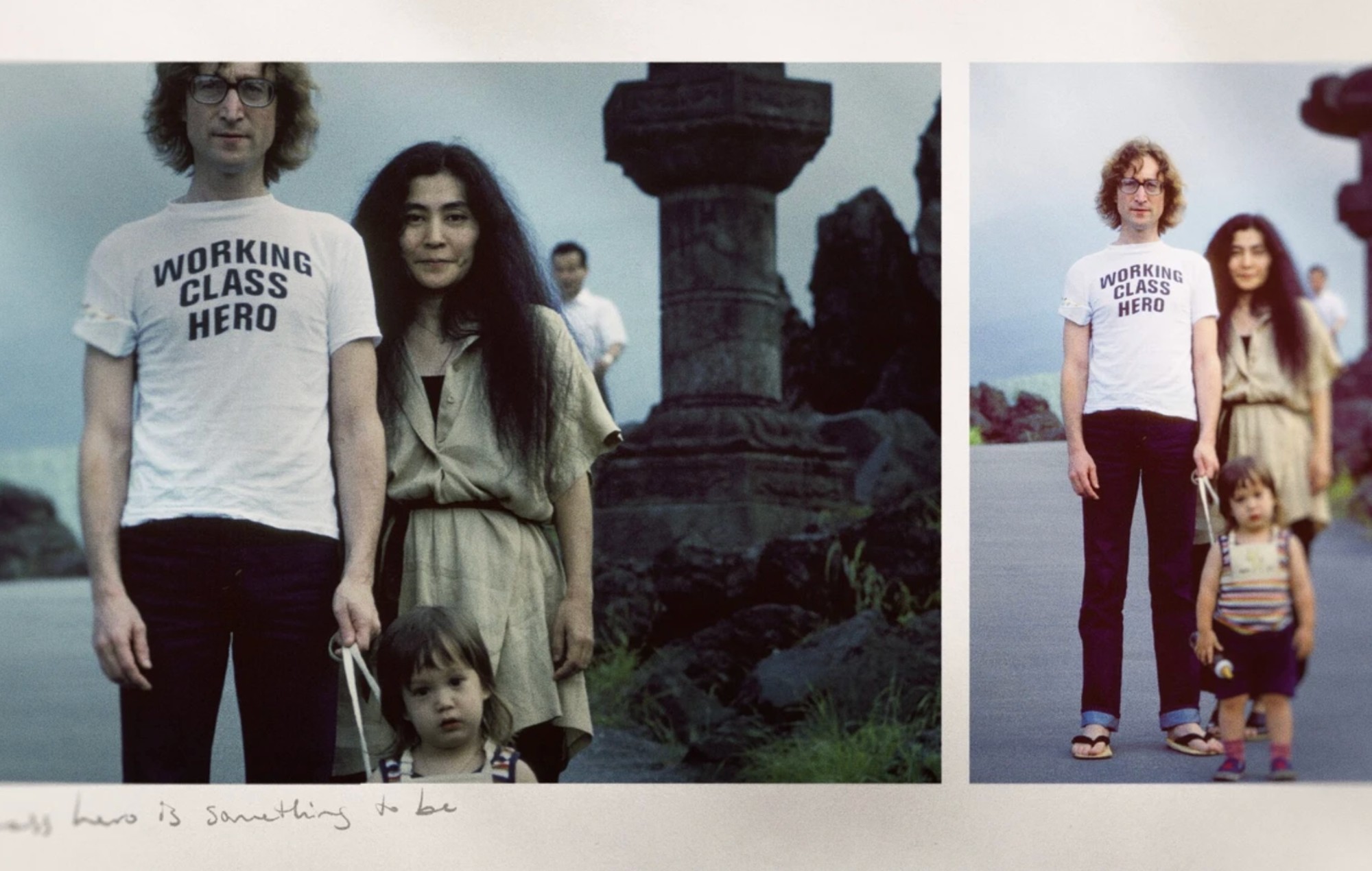
On December 8, 1980, John Lennon and Yoko Ono were ready to go back out into the world. After five years away from the spotlight, the former Beatle and his partner were presenting their brand new album ‘Double Fantasy’. They invited San Francisco station KFRC for an exclusive interview at their home in New York’s Dakota building. It was the final time he ever spoke with the press. Within hours, Lennon was dead – murdered outside his home by Mark David Chapman.
READ MORE: How Sean Ono Lennon helped bring his parents’ greatest gig back to life
Unveiled at the Cannes Film Festival this week, John Lennon: The Last Interview takes audiences inside the conversation, as host Laurie Kaye, along with KFRC music director Dave Sholin and engineer/producer Ron Hummel, sat down with Lennon and Ono. Behind the documentary is Steven Soderbergh, the Oscar-winning director of Traffic, Ocean’s 11 and, more recently, The Christophers, brought onto the project by producer Nancy Saslow who convinced Kaye and co. to grant her the rights.
Although an edited version of the interview ran at the time as a memorial special, the majority of the material has never been heard. “They’ve been sitting on this thing for four and a half decades. They could have had many opportunities to exploit it somewhere else, and didn’t,” says Soderbergh, sitting down with NME in Cannes’ Majestic Hotel. “They were content that if it wasn’t going to happen the right way, that it [would] not happen… they clearly had a very emotional attachment to this interview.”
‘John Lennon: The Last Interview’. CREDIT: Kishin Shinoyama via Cannes
The original conversation ran for around two hours and forty minutes, with Lennon even breaking down a typical day in the life (making breakfast for their son Sean, refusing to serve him sugary cereals, watching Sesame Street). His mood was unfailingly upbeat. “He’s just emerging out of this self-imposed… not exile, but detour away from music. And now he’s back and is excited about it again, which is also kind of instructive,” says Soderbergh. “He knew that he needed to be away from it for a while. He was one of the first people to experience that kind of fame, at that scale.”
Of all topics broached, Soderbergh was compelled by the “lost weekend” section, alluding to Lennon’s affair with his assistant May Pang. “Hearing both of them talk about it so openly, I was kind of stunned,” he says. “You can put yourself in [Ono’s] position. He’s done a lot to try and step out of this sort of aggro male rock star state, but it’s not all gone. There’s still this residue of that. And [she thinks] ‘I’m having to deal with that, and everybody hates me. He gets a pass on everything.’ The stuff that used to be said about her was really ugly and nonstop, and nobody was advocating for her.”
‘John Lennon: The Last Interview’. CREDIT: Kishin Shinoyama via Cannes
Soderbergh reports that Yoko, now 93, and Sean gave them access to archive materials (over a thousand clips and stills and 64 musical excerpts are featured), but didn’t demand any creative input into the project. “They were aware of the audio existing. I don’t think Sean had ever heard it,” says the director, who watched the film with Lennon’s son in New York. “He was five when the original edited version ran. I think when he saw [the film], he was hearing a lot of this for the first time, which had to be very strange.”
How did he react? “He seemed very pleased. He felt that it represented them, their relationship and what they were about accurately. I think that’s all he was concerned about.” Soderbergh had one rather curious question for him. “[I said], ‘How big are the closets in this apartment?’ Because they never wore the same clothes!” he chuckles. “I was just struck watching the movie over and over again, of how many wardrobe changes there were with these very well-documented people. And he’s like, ‘They’re big! The closets are big… it’s like a room!’”
While Soderbergh features new interviews with Kaye and the others, the bulk of the film is made up of John and Yoko holding court. “This isn’t my take on them… this is them speaking for themselves,” he says. “They’re front and centre, I want their voices to be what you are absolutely focused on.” But that presented a problem. Stills and clips aside, he needed imagery to help illustrate the pair’s more “philosophical riffs” during the interview. Somewhat controversially, he turned to AI.
John Lennon for ‘The Last Interview’. CREDIT: Fred Seaman via Cannes
“Literally, we were running out of money,” says Soderbergh, whose team struck a deal with Meta, who gave them access to as-yet-unreleased AI tools to help complete the film. Soderbergh makes no apologies for deploying such tech. “There was no other tool that could have gotten us there in the amount of time that we had.” Maybe Lennon, were he still alive, would’ve approved. “You saw that little studio of John’s at his house. I mean, it was filled with the up-to-date tech gear… he was into that stuff.”
While Soderbergh’s use of AI may overshadow the film, it shouldn’t take away from the fact The Last Interview offers the chance to hear Lennon and Ono talking so freely. “It was incredibly intimate. They’re at home… and they just were really ready to spill,” the director says. “At a certain point, I’m so engaged with what they’re saying, I forget the ending. When they come in and go, ‘John, it’s time to go’, you have an intake of breath. You’ve gone on this trip with them, and then you realise it’s ending, it’s really ending – and it’s heartbreaking.”
One of the most shocking revelations comes at the very end, as Kaye reveals she was accosted outside the Dakota by Lennon’s killer, who’s never named in the doc. The “creepy guy” badgered her, asking if she’d spoken to Lennon. “She really has had to carry that around,” says Soderbergh, “because she said ‘This guy chased me down the block, and I got away from him and then I thought I should go back and say something to the security people there. This guy seems exceptionally unbalanced.’ And she didn’t, and she’s never forgiven herself.” There was, he concludes, no way of knowing the tragedy to come.
The post Steven Soderbergh wants to give you one last moment with John Lennon appeared first on NME.