
In partnership with Rock In Rio Lisbon
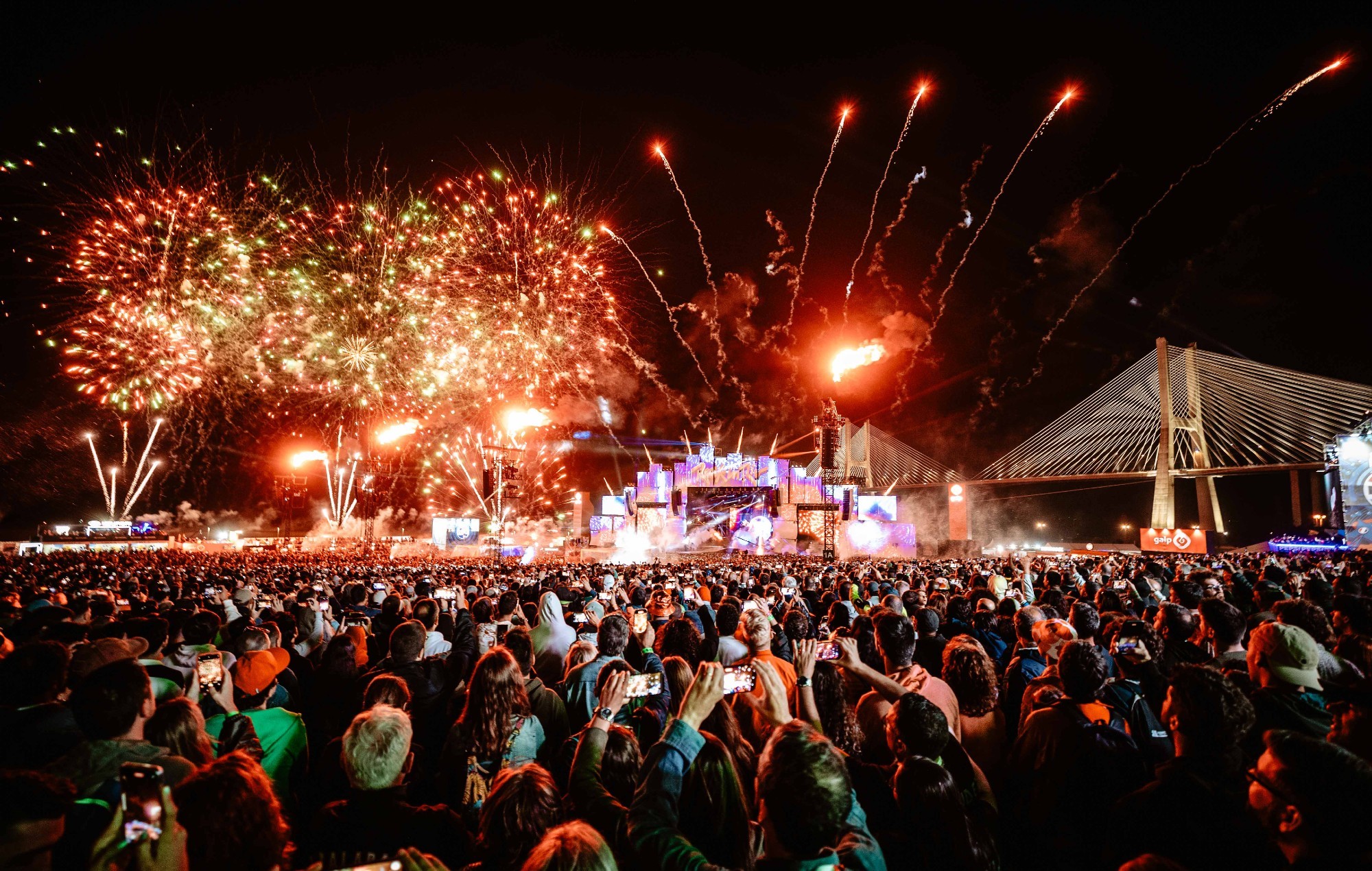
Rock In Rio Lisbon is a curated festival on a grand scale. On each of its four days, 100,000 revellers will pour into Parque Tejo, a scenic green space located along the Tagus river, for a world-class programme of music and activities. This year, it’s even hosting a daily aerial show, The Flight, in which five Yak-52 aircraft will soar and spin over the festival site. When you’re not watching a globally renowned artist on one of three huge stages, you’ll want to look to the sky.
But of course, music remains the main draw. Each day is programmed according to a clear “pathway”, or theme, that allows festival-goers to find the right line-up for them. June 20 is ‘Pop Day’ headlined by Katy Perry; June 21 is ‘Rock Day’ led by Linkin Park; June 27 is ‘Legends Day’ topped by Rod Stewart, and June 28 features 21 Savage, Central Cee and a diverse array of rap, R&B and Afrobeats artists. “I always joke that the first day is for parents who don’t want to bring their kids, and the last day is for kids who don’t want to bring their parents,” says Roberta Medina, VP of the company behind Rock In Rio and Rock In Rio Lisbon.
Roberta Medina, VP of the company behind Rock In Rio and Rock In Rio Lisbon. CREDIT: Rita Seixas
Founded in 1985 by her father, Roberto Medina, the Rock In Rio brand has grown into a global powerhouse with festival innovation at its core. When her father was organising the inaugural edition more than 40 years ago, a major challenge was persuading international talent to come to Brazil, a country only just emerging from a military dictatorship. “Even the big artists who did play Brazil at that time were worried about being paid on time or having their equipment stolen,” Roberta says.
To allay any fears, Roberta’s father came up with an ingenious idea. By teaming with a Brazilian beer brand in a long-term sponsorship deal, he secured funding for the festival and cleverly positioned it as a disruptive, youth-centric event. “He wanted to prove to the Brazilian regime that it was safe to bring 1.5 million young people together for a music festival, but he also wanted to promote Rio de Janeiro to the world,” Roberta explains. By attracting massive bands including Queen, AC/DC, Iron Maiden, the Go-Go’s and Whitesnake, plus stellar solo artists like Rod Stewart and George Benson, the first Rock In Rio really put Brazil on the festival map.
Rock In Rio Lisbon. CREDIT: Helena Yoshikoa
Rock In Rio returned for sequel events in 1991 and 2001, before becoming a bicontinental tentpole in the mid-noughties. In 2004, the first-ever Rock In Rio Lisbon took place with a diverse line-up featuring Paul McCartney, Foo Fighters, Black Eyed Peas, Alicia Keys and Portuguese rock icons Xutos & Pontapés. The maiden Lisbon event also underlined its disruptive credentials by booking Britney Spears at a time when pop superstars rarely appeared on festival bills.
Unlike some festivals that cleave to line-ups of male-led guitar bands, Rock In Rio and Rock In Rio Lisbon have always believed in broadening the musical agenda. When Miley Cyrus played Rock In Rio Lisbon in 2010, she had only just retired her Disney Channel alter ego, Hannah Montana. “That was a funny one, but it really worked,” Roberta recalls with a laugh. The aim has always been to attract music fans who don’t necessarily go to other festivals. “A big part of making ourselves stand out is the superior infrastructure we offer,” Roberta points out. “At Rock In Rio Lisbon, we build a really safe, secure festival site with proper restaurants and real restrooms, so people don’t have to use a Portaloo.”
Rock In Rio Lisbon. CREDIT: Manuel Berberan
Roberta says the festival’s location in Lisbon, one of Europe’s most vibrant and affordable capital cities, adds to its unique appeal. “We don’t have camping on site, so we attract music fans who want to spend a day or two watching amazing music, then a day or two exploring the city,” she says. At a time when people’s holiday budgets are squeezed tighter than ever, the opportunity to build a “two-for-one” hybrid of festival and citybreak is even more appealing.
But above all, Roberta is convinced Rock In Rio Lisbon succeeds because it’s a micro-community in its own right. Whether people are coming for Charlie Puth, Audrey Nuna and Bebe Rexha on this year’s ‘Pop Day’, or Cypress Hill, The Pretty Reckless and Kaiser Chiefs on ‘Rock Day’, they’ll help to create a galvanised vibe when they arrive on site. For many years, Rock In Rio Lisbon took place at Bela Vista Park, but it relocated to Parque Tejo in 2024 when it became apparent that more space was required. This allows Roberta and the team to expand the festival offering with forward-thinking new areas.
“This year, we’re introducing a new area called Smart Cities,” she says. “It’s basically a live lab showcasing new technologies that cities might want to invest in, because in a way, what we do is build a 100,000-capacity city for four days.” Rock In Rio Lisbon has received numerous awards for its sustainability initiatives and also places a premium on social cohesion. “We welcome people who have different political opinions, religious beliefs, genders and sexual orientations, but they all come together for the music and it really works,” Roberta says. “All cities can learn from that.”
The post Why Rock In Rio Lisbon is a music festival like no other appeared first on NME.