

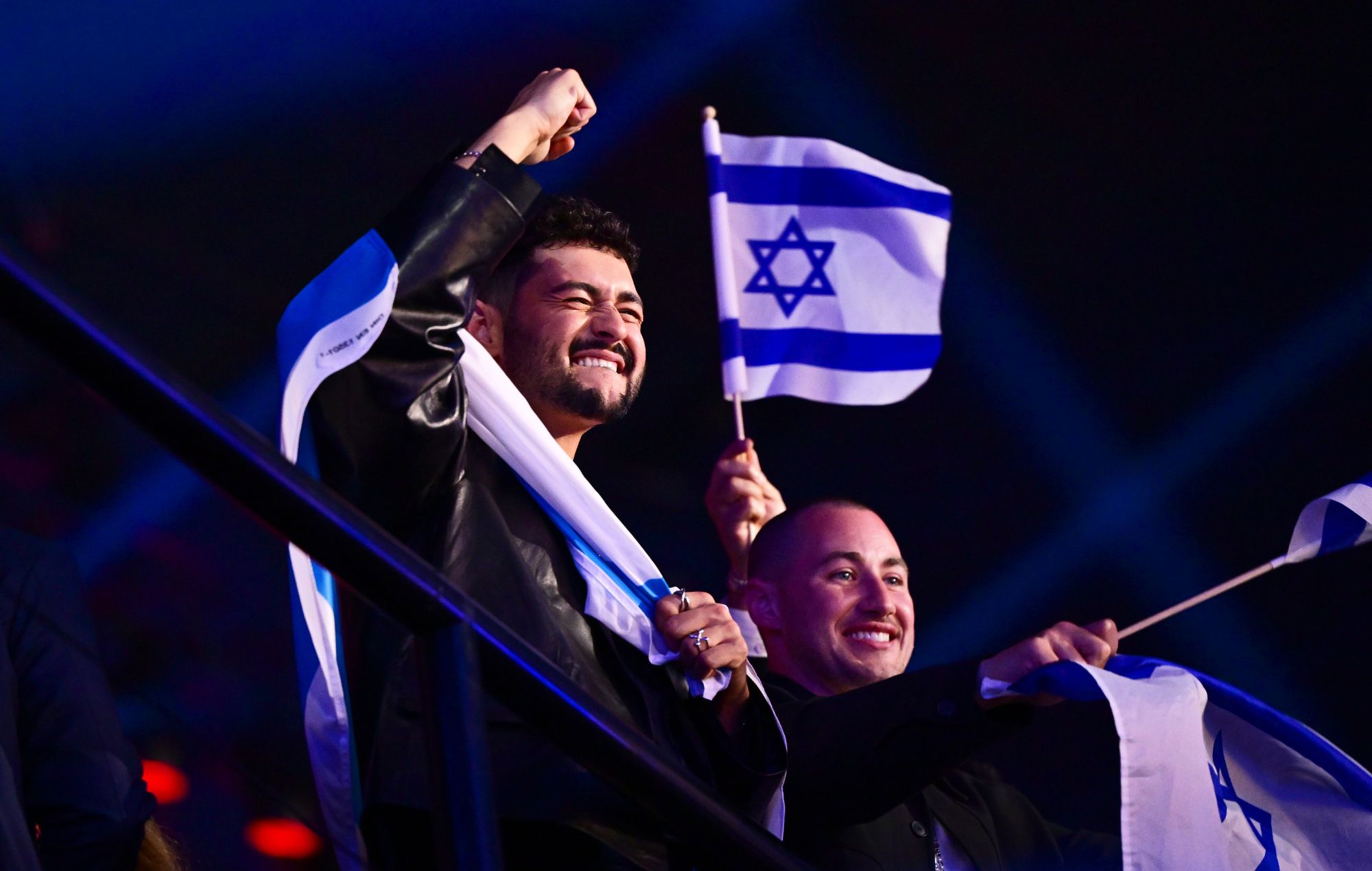
Israel have qualified for the final of Eurovision 2026 despite protests being heard during their performance, and Boy George has failed to make it through representing San Marino.
The first of the semi-finals was held yesterday (Tuesday May 12) ahead of the finale of the song contest taking place this weekend. There, it was confirmed that Israel would be taking part in the grand final, with their song ‘Michelle’ performed by 28-year-old Noam Bettan.
Their presence at the contest has been controversial in recent years due to the nation’s military action in Gaza, and multiple countries have pulled out of this year’s event in protest. The 70th edition will be held in Vienna on Saturday (May 16) and has already seen boycotts from Ireland, the Netherlands, Slovenia and Spain over Israel’s inclusion.
Reports have also emerged claiming that Israel’s government orchestrated a “well-organised campaign” to use the Eurovision Song Contest as a “soft power” tool.
During the semi-finals yesterday, Bettan received a mixed response from the audience, with some cheering the singer on while others booed and shouted anti-Israel slogans. As highlighted by The Independent, one person in particular could be heard for around a minute during the performance, saying “Stop the genocide” during the introduction to the song.
Austrian broadcaster ORF, which is hosting the show, confirmed ahead of time that it would not censor any negative reactions from the crowd to any participants. It also shared a joint statement with Eurovision organisers EBU about the heckles during Bettan’s semi-final performance.
They said that the audience member who was heard particularly loudly during the introduction stood “close to a microphone” and was “later removed by security for continuing to disturb the audience” (via BBC News).
The statement also confirmed that “three other people were also removed from the arena by security for disruptive behaviour”.
Amnesty International called yesterday for Israel to be suspended from the song contest, and also criticised the EBU for not suspending the country like it did with Russia in 2022 due to the ongoing conflict with Ukraine.
“The failure of the European Broadcasting Union (EBU) to suspend Israel from Eurovision, as it did with Russia, is an act of cowardice and an illustration of blatant double standards when it comes to Israel”, said Amnesty International’s Secretary General, Agnès Callamard.
“Instead of sending a clear message that there is a cost for Israel’s atrocity crimes against the Palestinian people, the EBU has given Israel this international stage even as it continues to commit genocide in Gaza, unlawful occupation, and apartheid. The EBU is betraying the values of the Eurovision Song Contest, which include freedom from intolerance, hate speech, and discrimination”.
Israel has repeatedly rejected accusations of waging genocide, and denies committing any war crimes, maintaining that its operations are lawful acts of self-defence following Hamas’ attack on Israeli citizens at the Nova Music Festival on October 7 2023, which killed over 1,100 people and saw 250 taken as hostages.
Failure to suspend Israel from Eurovision, as it continues to commit genocide in Gaza, unlawful occupation and apartheid against Palestinians, is an act of cowardice and double standards. #HumanityMustWin
Read more: https://t.co/1XDnwGOY7n pic.twitter.com/XgPzE6kglL
— Amnesty International (@amnesty) May 11, 2026
The statement from Amnesty International was given backing from United Nations Special Rapporteur Francesca Albanese on Instagram.
“I join Amnesty International in condemning #Eurovision and call everyone with a conscience not to watch it,” she wrote. “BIG THANK YOU to the five countries who withdrew from the competition.”
Pressure to exclude Israel from the competition has also come from No Music For Genocide, who issued an open letter signed by over 1,100 cultural workers and artists, calling for fans to boycott this year’s Eurovision unless Israel is banned from participating.
The open letter was first shared on April 21, and featured signatures from Brian Eno, Massive Attack, Paloma Faith, Paul Weller, Kneecap, Hot Chip, Of Monsters and Men, IDLES, Primal Scream, Sigur Rós, Young Fathers, Mogwai, Black Country New Road, Erika de Casier, Nadine Shah, Dry Cleaning, Ólafur Arnalds, David Holmes, Nemahsis, Macklemore, Roger Waters, Peter Gabriel, Vacations, Smerz, a number of former Eurovision finalists, and more.
In total, there were 10 countries that qualified for the finale last night: Israel, Belgium, Croatia, Finland, Greece, Lithuania, Moldova, Poland, Serbia and Sweden.
Those who did not qualify after performing and will not be progressing to the final were Estonia, Georgia, Montenegro, Portugal and San Marino.
The latter was represented by returning Eurovision performer Senhit, and also included a guest appearance from Culture Club singer Boy George.
Earlier this month, Boy George shared a video that saw him embracing Israel’s contestant, Noam Bettan, during rehearsals and wishing him luck ahead of the event.
The ‘Karma Chameleon’ singer also got involved in Eurovision in 2024, becoming was one of the famous faces who signed an open letter calling for Israel to remain part of the competition that year, with other high profile signees including Sharon Osbourne, Gene Simmons and Scooter Braun.
Other countries competing in the final of Eurovision 2026 include the four biggest financial contributors – France, Germany, Italy and the United Kingdom – who all qualify automatically.
Tomorrow night (Thursday May 14), 15 more countries will take part in a second semi-final, and 10 of which will progress to the finale and be in the running for the trophy.
The post Israel meet protests as they qualify for Eurovision, but Boy George fails to make it through appeared first on NME.