

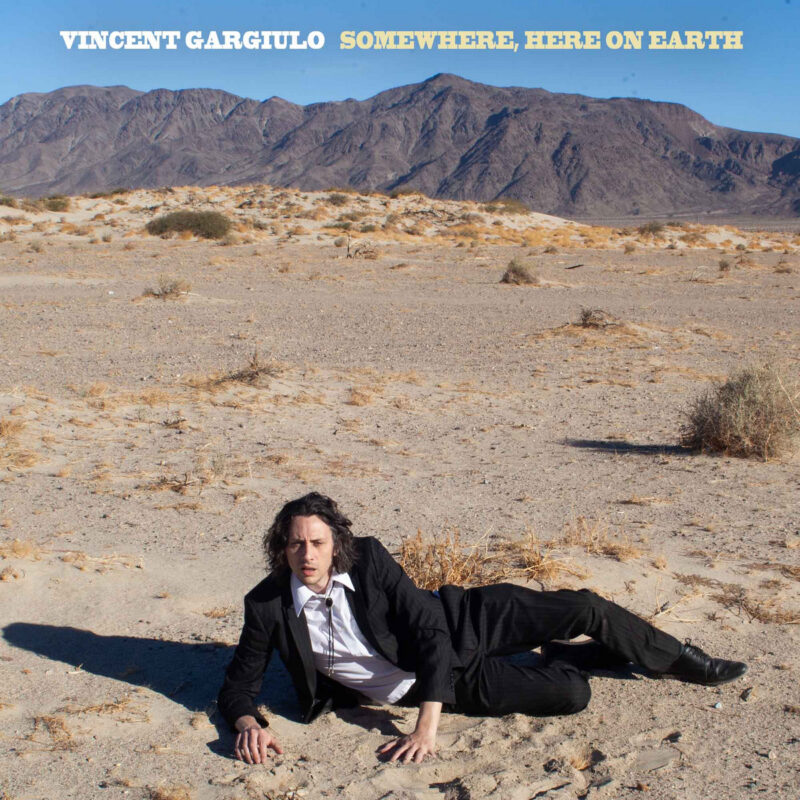
Somewhere here on earth
On the grass in the moonlight making out
Awake by spangled morning bells
You’d think we’d be over this hippie shit by now
Vincent Gargiulo has spent enough time around cult detritus, accidental profundity, and the crooked pageant of American absurdity to know that people reveal themselves most clearly when they are cornered by banality. That instinct runs all through Somewhere, Here on Earth, a record that turns dead-end jobs, stale desire, grief, traffic, and self-disgust into a vignette of spiritual depletion. Gargiulo writes like a man in line at the 7-11, staring at the hot dog rollers, suddenly seized by the suspicion that this may in fact be the full moral architecture of the age.
Somewhere, Here on Earth sticks close to a heightened version of American reality. Its heart is flopping off a tattered sleeve: Americana gone a little threadbare, middle age staring back from the bathroom mirror. The songs feel dug up from the daily mess instead of posed under a spotlight. Their oddness is earned the old-fashioned way, by living long enough to realize that normal life is already preposterous, especially once disappointment has had a couple of decades to seep into the wallpaper. Gargiulo rambles through piano-pop, bent country, jittery new wave, and a woozy kind of lounge sadness, picking up traces of Harry Nilsson, Bowie, They Might Be Giants, Joe Jackson, Beck, Rufus Wainwright, and The Divine Comedy.
24 Hour Jack in the Box sets the tone beautifully. Its bright piano gives the song a bruised buoyancy, somewhere in the vicinity of Stephen Bluhm and Joe Jackson, while Gargiulo sings about working alone on Christmas Eve in Kettleman City and drifting back to a memory of floating in a lake. It is a song about alienated labour, bodily numbness, and the desperate wish to feel anything at all. Asleep in the Sun takes that plainspoken approach to grief and gives it a country lilt, with slide guitar and a gently ramshackle air that recalls Odelay-era Beck filtered through classic country heartache à la Loretta Lynn or Porter Wagoner. The song’s power comes from its domestic details: the house too empty, the absence registered in a patch of light, the possibility that memory may be inventing signs just to keep going. Gargiulo never gilds the sadness. He keeps it close to the floor, where most mourning actually dwells.
A Bad Idea or a Missed Opportunity brings in a more theatrical ache, with forlorn horns, piano, and a touch of psychedelic disorientation that suggests Ben Folds stumbling into a Bowie bender. It’s sung from the perspective of sitting on the bathroom floor with a five-year-old birthday card nearby, tallying damage, lust, and regret like a man trying to reconstruct his life from the contents of his pockets. Jazzed in the Hurkle Durkle, another song with a strong jazz piano streak, takes midlife fatigue and turns it into something oddly tender, even cozy. Health scares, historical overwhelm, and personal insignificance all get folded into the comfort of lying next to someone you love while the world remains a bad joke outside the sheets.
She’s Got No Time shifts into a twitchier new-wave mode, carrying some of They Might Be Giants’ anxious charm while chronicling romantic neglect with good humour. It is one of the album’s wryest songs and one of its saddest, because the joke is inseparable from the self-laceration. Gargiulo, who wrote this track as a teenager, understood even at that tender age that people often explain away rejection with stories that wound them more efficiently than the truth ever could. The accompanying video casts him as a down-on-his-luck Romeo trying to get a stock footage date for the dance.
The title track, Somewhere, Here on Earth, reaches instead for a kind of sunburnt release, and its Charlie Brown-despondent piano evokes Vince Guaraldi at his most wistful. he heads for hot springs, moonlight, and open air, looking for a way out of structure and expectation, though even here the peace feels provisional, borrowed for an afternoon.
Anhedonia feels like the album’s emotional bullseye, even if it arrives looking rumpled and under-rested. Piano, a chorus with a real weary trudge to it, and Gargiulo out there begging for seduction, approval, any proof at all that the circuitry has not gone cold. It is pitiful, hilarious, and a little too close to home, which is probably why it stings. Another Psychopath comes in with that grand, bruised Bowie-on-piano sweep and puts failed love on the witness stand, where self-reproach gets to play judge, jury, and bored stenographer. Really Really Good Right?, all slide guitar and sideways country charm, takes a scalpel to artistic insecurity then proceeds to needle the vanity and panic behind making art. It may be the nakedest song on the album. Do the Dread ends the whole thing knee-deep in traffic, shopping-cart despair, and low-grade end-times anxiety, still foolish enough to believe love might slam on the brakes before the car goes through the guardrail.
Vincent Gargiulo’s real gift is that he does not romanticize damage, nor does he sweep it under the rug. He writes about people who are bored, bereaved, needy, horny, ashamed, hopeful, and spiritually waterlogged, then gives them nimble melodies. Somewhere, Here on Earth is funny, sorrowful, strange, and embarrassingly alert to the small humiliations of being a person. It is a record about modern estrangement. Gargiulo keeps his eye on the petty details, the cheap settings, the moments when life looks most foolish, and that is exactly where he finds its bruised little truths.
Listen to Somewhere, Here On Earth below and order the album here.
Somewhere, Here on Earth by Vincent Gargiulo
A fiercely independent artist, Vincent Gargiulo’s creative output is impressive – and his subject matter universal. Beneath the silliness is an authenticity, and a deep affection for the unsung Everyman. Songs about shitty Tinder dates, sofas no one wants to see, local pizza joints, 80s theme songs. Likewise, a lot of his film work goes chasing the gloriously ridiculous: Chickens in the Shadows, The Dark Crusader, and the whole cracked film universe that gave the world the dynamic duo of Toasters N’ Moose and their sassy thrift store ode to the KFC five-piece meal deal, Taste the Biscuit.
Gargiulo spoke with Post-Punk.com about his creative process, influences, background and philosophy.
Follow Vincent Gargiulo:
Facebook
YouTube
Instagram
Bandcamp
Spotify
The post Vincent Gargiulo Finds the Bruised Poetry of Banality With “Somewhere, Here on Earth” appeared first on Post-Punk.com.