

Gaze out from the city quayside in Belém, Brazil, and there’s a lot to take in. To the north, the sprawling Baia de Marajo estuary stretches towards the mighty Atlantic Ocean. To the south, an epic blanket of green – the uppermost tip of the Brazilian Amazon, 60 per cent of all the world’s remaining tropical rainforest. To the east, in contrast, is the concrete skyline of the region’s urban capital. Home to 2.5million people, Belém’s waterside colonial old town is soon dwarfed by high-rise apartment blocks. Cutting through it all, and oozing Main Character Energy, the muddy Guamá River. More than a mile wide, it shapes both the landscape and the culture of Belém. Home to fishing canoes and monstrous cruise ships, its choppy waters represent a life-sustaining artery. This is life on the equator; life at the “gateway to the Amazon” – where modern human living and ancient biomes are locked in an increasingly heated bear hug.
It’s an oppressively humid Monday lunchtime in mid-November 2025. A rickety passenger boat, transporting a group of musicians, makes the short journey across the Guamá from Belém to Ilha do Combu. Three times the size of Glastonbury Festival, Combu is a forest island abundant in wildlife. Along the palm-lined banks, local Ribeirinhos – indigenous people – welcome visitors to boat-stop restaurants that rise out of the waves on tall wooden stilts. Bowls of thick savoury açaí and fresh guava fruit are handed to tourists – when the native howler monkeys don’t get there first.
For some of the diverse group of musicians that make up the newly formed multinational, multi-genre collective Flow, this could not feel farther from home. For others, this is their backyard. More, in fact – it’s ancestral soil they’re fighting to protect.
An interchanging number of songwriters, all distinguished in their own right, this mission-driven sisterhood has linked up with a unifying commitment to lift up stories of women and water worldwide. So it’s very deliberate they’re here in the Amazon right now. Across town, in a vibeless temporary conference centre, 50,000 besuited delegates are amassed for COP30 – the UN’s flagship climate change conference. A political forum intended to carve out a safer, healthier and fairer reality for every human on the planet, not just here in South America. [Hardly a spoiler: it’s not excelling]. But while the circus of power is in town, Flow are determined to have their message heard – in the corridors of power and the cultural communities of the city.
Flow: (l-r), Jaloo, Bebé Salvego, Shingai, Sohini Alam. Credit: Felipe Pagani/EarthSonic
Forget supergroups, “we’re building a ‘super dynamic’” says Zimbabwean-British powerhouse Shingai, ex-Noisettes, champion of African artivism, and one of Flow’s members.
There’s the willowly Jaloo – a self-produced DIY artist and pioneer of Sci-fi Brega (an updated synth-pop and electronica take on northern Brazil’s ’60s rhythms) whose vulnerability, style and allyship for queer communities have earned her a devoted Latin American following. “There’s no straight white man behind me and what I do,” she asserts. “Particularly when I share my difficult times, I think people connect with me through those emotions.”
Madame Gandhi, former MIA drummer, from LA via Mumbai, whose innovative drive to promote social justice and nature connection has taken her to stages at TED to Burning Man. Rising Brazilian star Bebé Salvego, the youngest of the family, injects the soul of jazz and the spirit of rap. Celebrated British-Bangladeshi vocalist Sohini Alam, songwriter and vocalist with bands Khyio and Grrrl, meanwhile, explains why she’s here: “I don’t want my daughter to be fighting the same battles I am.”
And, Keila – energy commander-in-chief – vocalist from Belém, Brazil, is known for her high-octane tecnobrega, whose bold style and campaigning (against exploitation mining companies and industrial agriculture) means she’s a firm local hero.
“I don’t want my daughter to be fighting the same battles I am” – Sohini Alam
They make for a formidable crew. With five shows in four days, Flow’s women are here in Amazonia to make a noise. Briefly, though, here on Combu, there’s a rare moment to take a pause.
“We’re very used to being near this water at all moments in our lives,” says Keila. “When we’re happy, when we’re sad. When we need something. To us, it is recovery. When I speak, I think a lot about Indigenous communities, about the original peoples, about the genocide, suffering, and struggle of those who protect the forest and protect these places.”
Rewind 12 hours, and the scene is the opposite of nature’s restorative calm. Where other cities are tucked up in bed early on a Sunday evening, Old Town Belém is bouncing. It’s approaching midnight at Casa Apoena, an old converted mansion and legendary cultural venue usually found hosting carimbó and samba nights. Tonight, it feels like a rustic backyard party – buckets of iced beers passed between people. And it’s packed – at capacity before soundcheck.
Locally, word has spread rapidly about Flow. Following a short spell of rehearsals in São Paulo, their weekend kicked off with shows and talks in the official “blue zone” at the climate conference. The musicians’ presence was met with a mixture of bewilderment and excitement from blazer-wearing delegates more used to being handed free coffee from an information stall than having a singer crash-land into their lap (a Friday gig highlight is Shingai clearing the assembled crowd to somersault across the conference room floor). These spaces are not used to the women of Flow, and that’s the point. They depart, with an invite from organisers to the next global gathering in late 2026.
Flow: (l-r) Sohini Alam, Shingai, Bebé Salvego, Jaloo, Keila. Credit: Felipe Pagani/EarthSonic
Online, chatter about their provocative presence grows – driven by the fanatical followings of the Brazilians in the group. Jaloo, for example, can’t walk a few metres without a selfie request. On TikTok, someone cheekily brands them the ‘Spice Girls da COP’, which soon catches on. “Which Spice Girl am I?” responds Keila with a wicked smile, “Which is the crazy one?”
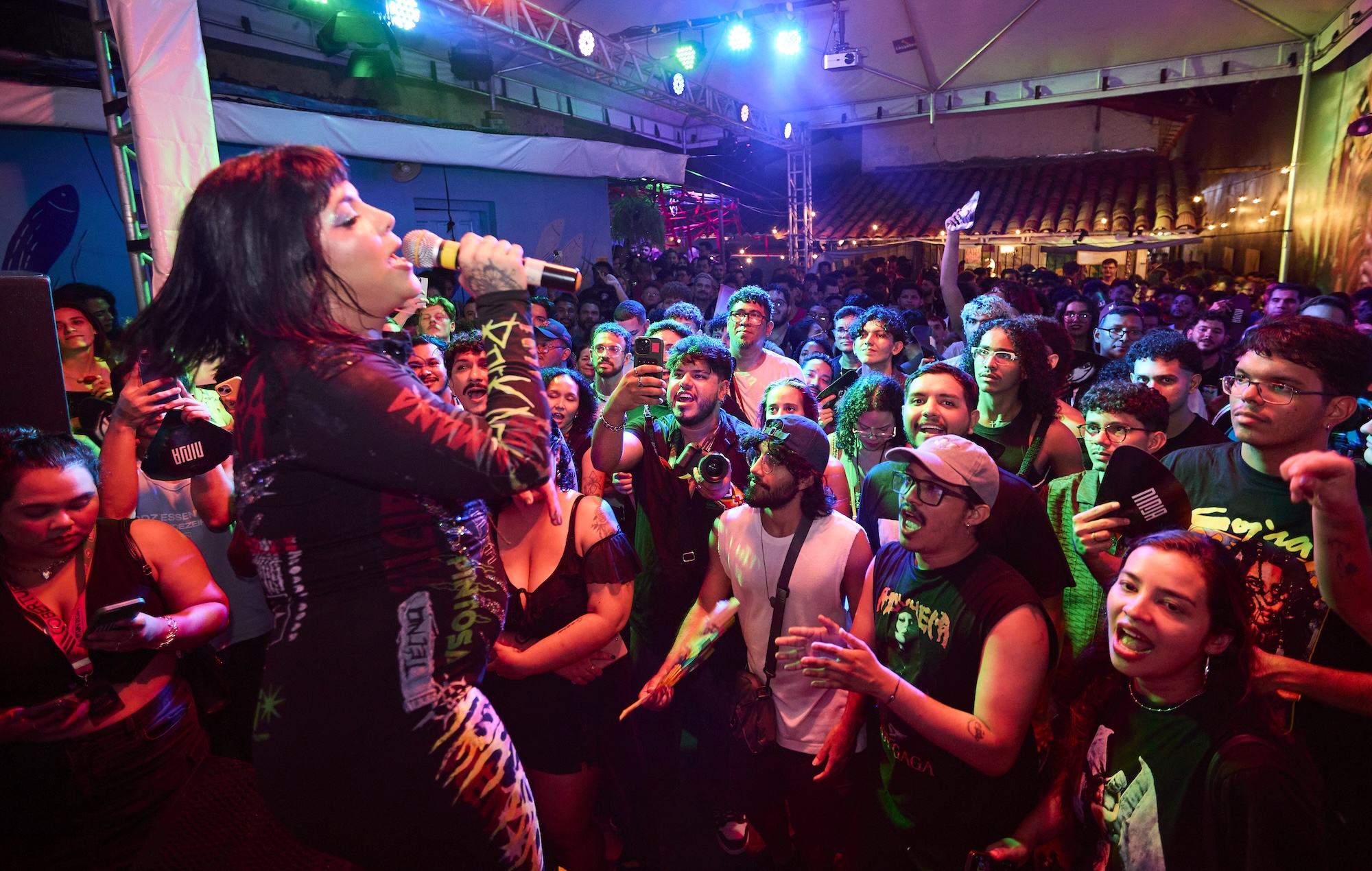
All that means anticipation for their Casa Apoena appearance is high. The house lights go down, and 300 camera-phone lights go on as Keila, Sohini, Bebé, Shingai and Jaloo walk from a backstage balcony down through the audience to the stage.
The show is a vibey celebration, each artist taking a turn to lead while the others become their backing band. A team, sure, but also a healthy competition. It peaks with Shingai cartwheeling and Keila conducting the crowd from the heart of the dancefloor.
The music is as diverse and wild as its theme and creators. When the recorded Flow album arrives in November, it will also feature contributions from Nadine Shah, Maxine Peake and Charlotte Church. Shingai’s track ‘Mhondoro’ is the infectious first taste – all ‘Mhande’ handclaps, distorted guitar and a mountainous chorus – and will be shared this week (April 30). “Flow gave us the freedom to explore our cross-cultural experiences,” she says. “I recorded my piece in Zimbabwe with local musicians. Shortly afterwards, I was rehearsing it with the other artists here in Brazil, which felt quite magical.
“My hope is that the music created through Flow becomes something joyful yet impossible to ignore” – Shingai
“My hope is that the music created through Flow becomes something joyful yet impossible to ignore,” she continues. “Something that resonates across cultures and conversations. We are building our own ‘Ancient Futures’ and the soundtrack is already cooking nicely.” A documentary film – there’s a crew out here in the Amazon – will also arrive in the autumn, before touring around the world.
There’s one final stop on their Brazilian adventure, a show at Casa Mídia Ninja. In tune with the change-making spirit of Flow, the venue is an activism and content hub formed as a response to the exclusion of youth and underrepresented voices in traditional Brazilian media.
The performance, once again, shifts up a gear, with the centrepiece a chest-beating speech from Keila chiding the absence of major musicians speaking out on behalf of people and the planet. As the crowd continues the party into the night, backstage, the Flow artists fall into each others’ arms. Mission-accomplished – for the moment.
“Flow shows what can happen when women are given the space to write about subjects beyond the narrow expectations often placed on them in mainstream music,” says Shingai later. “It’s refreshing. It’s necessary. And honestly, it’s about time.”
Flow’s ‘Mhondoro’ is out on 30 April via EarthSonic.
The post Flow: the multinational, multi-genre sisterhood dubbed the ‘Spice Girls of the Amazon’ appeared first on NME.