I can’t bear this soul
Sorrow of its worth
I am learned in ways
Hearts can be broken
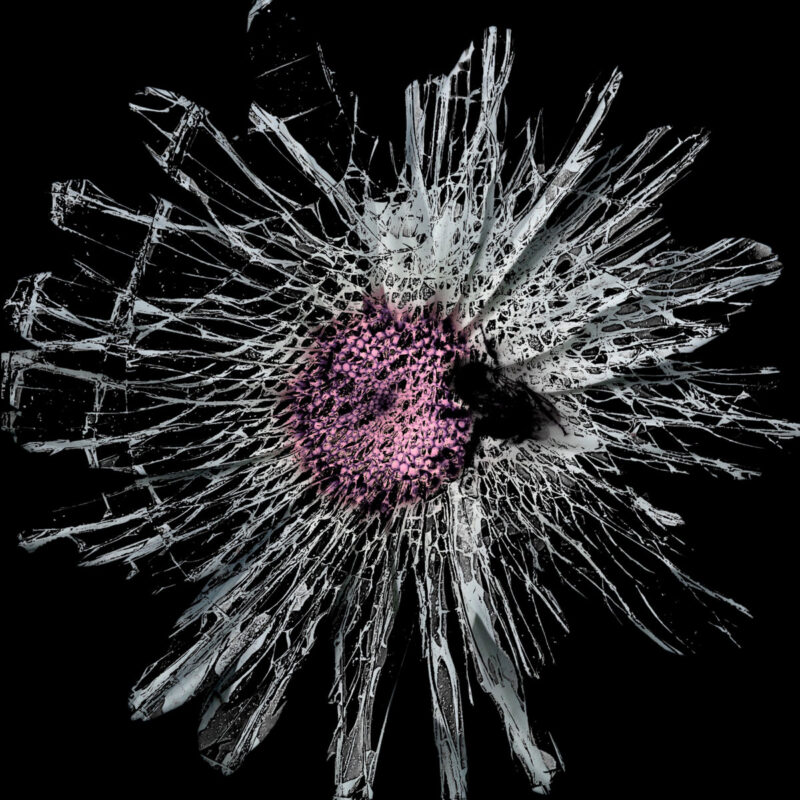
Some records arrive with clenched fists; others with open wounds. Shadowlands’ fourth album, 004, comes bearing both. The Portland, Oregon band has long worked in the fertile gloom between post-punk, darkwave, and synth-pop, but here their sound feels sharpened by absence, distance, and the ugly knowledge that history keeps circling back with blood on its shoes.
Their previous album landed just before COVID shut the world down. On the drive home from a show in Boise in early 2020, the band half-jokingly asked their bass player, who is also a scientist, whether this SARS-CoV-2 thing was anything to worry about. His answer was plain enough: “Yeah… we should be fairly worried.” A few weeks later, everything stopped.
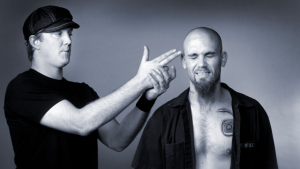
For lead songwriter Amy Sabin, whose creative process depends on collaboration, that sudden separation from the band’s close-knit musical family felt suffocating. Shadowlands is not some loose assemblage of strangers clocking in for rehearsals; it is a deeply personal unit, with Sabin joined by longtime musical partner and bassist Jesse Elizondo, twin sister and guitarist Angie Sabin, and drummer Casey Logan, who is also her spouse. When that living circuit was broken, silence moved in.
At the same time, social unrest and the brutal exposure of racism and fascism pushed Sabin inward. A natural verbal processor, she found herself stepping back, listening, unlearning, and speaking less than she ever had before. That silence hangs over 004, eventually crystallizing in the album’s closing line: “I never could have guessed, I’d have nothing to say.”
Yet 004 is anything but empty. It is crowded with ghosts, arguments, prayers gone cold, bodies under pressure, and memories that will not behave. The band leans fully into its collaborative strength, with every member contributing key ideas. The result is an album where grief and outrage move through the music like weather through an old house, rattling the windows, stirring the dust, and leaving the rooms changed.
Burdens opens with a sparkling synth sequence, pretty at first glance but edged with unease. Then the bass begins to churn, locking into a firm groove with the drums before noir-tinted synths and mournful guitar lines move in around Sabin’s voice. Her vocals arrive wrapped in reverb, trembling with the strain of someone trying to carry what no living person can hold forever.
The lyrics search among the lost, the dead, and the half-remembered, imagining grief as a floodplain where old songs still try to raise what cannot return. Sabin sings of “burdens of saviors,” but the song is less about rescue than the failure of rescue as a fantasy. Love remains enormous, but even love has a limit when sorrow becomes an inheritance. By the end, the song arrives at its most painful wisdom: life was enough, love was enough, and sometimes the final mercy is release.
Clicks slides into view with an ’80s cinematic synth-wave sequence that carries the perfume of that shivering giallo: bright blades, strange corridors, some menace moving just out of frame. Rapid drums and a shuffling bassline kick the track forward, while the guitar underscores the vocals with a baroque chill, less decorative than accusatory.
Lyrically, the song takes aim at online performance, validation, and the flattening of identity into engagement. “Trading faces for clicks” becomes the central indictment, a neat little poison pill for the age of self-branding. Social media turns into a glut of mirrors, a place where loneliness gets medicated by noise, belief is tuned into a marketable image, and public expression grows hollow under the pressure to be seen. The song’s bitter joke is that everyone must be heard, even when the words have already wasted themselves.
Let’s Fall Apart begins with fuzzy distortion on the bass, rolling drums, and a line of guitar melancholia that feels bruised but still beautiful. Sabin’s vocal performance is somber and almost resigned, though never passive; there is a pulse of endurance inside the exhaustion, a sense that collapse can become its own strange ceremony.
The lyrics imagine people as “lost scavengers of time,” fragile bodies falling in line while tiny worlds give way around them. Faces lose their feeling, dreams become grave-bound, and everyone fakes their way forward because stopping is not an option. Yet the refrain does not treat falling apart as pure defeat. Beneath the breakage, Shadowlands keeps returning to the stubborn claim that “there’s something real left in us yet.” Collapse, here, becomes proof that something was alive enough to fracture.
Nothing Has Changed begins with a pause that feels almost architectural, a held breath before the floor gives way. Cold piano tones ring out, followed by crashing drums and a drone of guitars that pull the song toward gothic shoegaze. Isolated piano notes return like signals from a ruined chapel, while sustained guitar tones heighten the sense of dread. Sabin’s voice enters powerful but restrained, carrying a forlorn wail that seems to roll with the track like waves beating against a rocky shore.
The song is a bleak political and spiritual lament about suffering that persists beneath headlines, silence, and failed prayers. Its language gathers around lost voices, defenseless bodies, abandoned places, and the terrible weight of what has not yet arrived. “Such little hands have lost the game” lands like an image of innocence crushed beneath systems too large and too hungry to name cleanly. Prayer is rationed to the void, words fall strange, and still the refrain returns: nothing has changed. It is not resignation so much as accusation.
Wounds and Relics opens with an anxious, taut, percussive string-like sound, while a droning vocal sigh hovers in the background. A mystic, chamber-like tone sits beneath Sabin’s voice, which hits with the force of witchcraft carried on the wind. The arrangement feels ritualistic, but not comforting; this is a ceremony held in the ruins of a belief system that has learned to bless cruelty.
The song tears into righteousness, mythmaking, and violence dressed up as faith. Shadowlands takes old stories down from the altar and asks what they have actually saved, especially when fairytales harden into doctrine and doctrine becomes permission to burn. The title phrase cuts to the center of the track: wounds are worshipped, relics are polished, and the living air is forgotten. By the time Sabin turns toward the figure who never shuts up and never lets their god down, the song has become a furious portrait of sanctimony as arson.
R/AGE is a slow dirge, opening with a buzzing sigh over restrained hi-hats and soft synth pulses. The drums later begin to click like the hands of a clock, measuring out the body’s endurance one small blow at a time. A droning saxophone-like tone slips in, widening the atmosphere, while the vocals arrive late, somber and heavy, with guitars washing in the background like smoke from an unseen fire.
This is a furious reckoning with pain, survival, and the body pushed to its limits. The lyric sheet reads like speech after shock: words left behind, tongues split, drive lost, life surrounded by something unnamed. The refrain of breath becomes crucial, not as wellness platitude but as bare biological insistence. Every ache stretches “a million miles,” every inch of life catches fire, and the things once feared turn out to be smaller than what actually arrived. Rage becomes wound, engine, and evidence: if no voice is left, the body still keeps the score.
Substance opens with bubbling synths, cinematic ’80s tones, rolling drums, and guitar lines that seem to gather around the song’s ache rather than decorate it. There is a strange lift to the track, a feeling of longing stretching outward into something almost devotional.
Here, Shadowlands turns toward love, absence, devotion, and the exhaustion of desire. The lyrics count time in impossible units: a thousand hours, a thousand days, a thousand lives, all organized around the absence of another person’s sun. Love is tired, time is sacred, and the beloved becomes a source of matter, light, and almost religious necessity. When Sabin sings of crawling through lands until the last breath tears her away, the song locates romance somewhere between devotion and depletion. The title is exact: this is love as the thing that gives form to the self, and the thing whose loss turns the self into a shell.
Closing track The Worst Light arrives with an almost trip-hop feel in its synth tone and drum-pad pulse, bringing to mind the slow-motion denouement of Nine Inch Nails’ Closer. The song evokes the image of a ballerina about to collapse in despair, held upright by habit, grace, and a final thread of will. Sustained guitar wails softly, touching the doomed grandeur of The Cure’s Disintegration, while the whole piece takes on the feeling of a baroque lullaby sung at the edge of a breakdown.
The vocals quiver with real force, deeply affecting without tipping into theater. Lyrically, the song confronts grief, hunger, self-estrangement, and ecological or spiritual collapse. The speaker enters the ring to “hold a note,” only to find grief refusing to end. Wilderness builds towns; life and death wear thin; the self becomes strange to itself. There is bitter laughter at the worst possible moment, pillars of salt, a mother figure wrapped in greens and golds, and the unbearable recognition that we have never held a weight quite like this. The album closes where its pandemic-era silence began: stunned by survival, stripped of easy language, standing beneath the worst light with nothing left to say.
Across 004, Shadowlands make a record about what happens after language fails: after the prayer, after the feed, after the fight, after the funeral, after the silence. The album is filled with bodies under strain and voices trying to return from muteness, but it never mistakes bleakness for depth on its own. Instead, it finds meaning in the act of showing up together, of placing grief, rage, love, and fear into the same room and letting the band answer as one.
Listen to 004 below and order the album, out now via Seeing Red Records, here.
Follow Shadowlands:
Bandcamp
Instagram
Facebook
YouTube
The post “I Am Learned in Ways Hearts Can Be Broken” — Portland’s Shadowlands Return With the Grief, Rage, and Release of New Album “004” appeared first on Post-Punk.com.