

Music Venue Trust launched a new campaign against PRS For Music earlier this week, calling for fairer and more transparent fees as artists and venue owners complained of “crippling bills” and huge “black holes” of unclaimed money.
Now, the Council Of Music Makers has joined the push to get the company to make more “improvements”, and MVT have dismissed claims that they are trying to “reduce songwriter royalties”.
READ MORE: The ticket levy that could save grassroots venues and artists: what happens next?
PRS is a body who collect and pay royalties when a member’s music is played in public, broadcast, downloaded, streamed, or performed live both in the UK and around the world.
While it states that it is devoted to “ensuring writers are paid when their works are performed live”, MVT claims to have spotted over £666,000 in discrepancies linked to PRS-related licensing charges, spanning venues across England, Scotland and Wales.
In one singular case they found an error of £90,000 – enough to permanently close a grassroots venue – and said that it was reflective of “a broader pattern of billing based on estimated rather than actual usage, with charges in some cases linked to maximum theoretical capacity rather than real attendance or sellable space.”
To try and combat this, MVT launched the ‘Set The Record Straight’ campaign, highlighting how artists and gig spaces have been complaining about devastating bills and “black holes” of unclaimed money.
It pushes to spotlight how PRS For Music’s licensing fees are calculated, applied and enforced across the UK grassroots music venue sector, and has been launched after discovering “incorrect capacity calculations” and “unclear liability between promoters and venues”.
“The issue is not whether fees should be paid, they absolutely should,” MVT’s Rights Management Specialist Gareth Kelly said.
“The issue is whether those fees are being calculated accurately, applied fairly and charged to the right party. What we’re seeing too often is a system that relies on assumptions rather than reality, and that can create serious financial consequences for grassroots venues.”
In response to the campaign, PRS shared a statement with NME, defending how calculations are made and saying that they “license venues for the use of music and rely on the data they provide, including capacity and event information”.
“Estimations are only used when the relevant data has not been provided,” the PRS spokesperson argued. “However, we are continuously investing in and improving the collection of live data to accelerate accurate payment of royalties, including improving setlist collection tools and exploring AI tools to find fan generated setlists to supplement missing data.”
“The most effective way to improve outcomes for songwriters is through shared responsibility across the live music ecosystem, and we will continue to work with all parties across the live sector to strengthen every part of that process,” they added.
Now, Council Of Music Makers has shown support for the MVT campaign and issued a statement that calls on all parts of the UK’s live sector to recognise the “irrefutable importance that the work of songwriters plays in underpinning the live sector”.
“CMM rejects any proposals for a reduction in licensing fees or collections for the use of music,” the statement began, adding that “such moves would simply have a negative impact on the income of songwriters and composers and make their careers less viable.”
The body went on to share that “collective licensing plays a crucial role as part of the licensing of live performances”, and added that its members have “have long worked with collective management organisations like PRS to challenge and improve practices, and to ensure they work in favour of the music-makers”.
“The majority of songs performed in UK venues and festivals are written by PRS members or members of other collecting societies around the world, making a blanket licence administered by PRS essential to both music-makers and their business partners in live music,” CMM continued, then saying that PRS income is “vital” for grassroots venues and songwriters – especially as they “seek to overcome the widely documented challenges around the economics of touring.”
Outlining where they want to see changes made on behalf of PRS, CMM said: “There remain a number of areas where further improvements with collective management are needed, to achieve better accuracy, distribution and transparency.
“CMM members will continue to work with PRS in the interests of our members to ensure that those changes are made in a manner that does not create unintended consequences which would undermine creators’ ability to make a living in an already tough industry.”
These changes it outlined are that “PRS must ensure its licences are fair and transparent for both music-makers and users of music, not least grassroots venues”, and should “also employ new technology to overcome inaccuracies and inefficiencies with songwriter payments”.
“Where there is unavoidable unallocated income, it should be used to support grassroots music-makers, for example through the PRS Foundation,” it suggested, before concluding: “While making these changes, we must always ensure that we respect and protect the value of the songs and compositions on which the entire music industry is built, and without which it cannot exist.”
MVT CEO Mark Davyd has hit back at PRS’ defence and clarified a misconception about the aim of the ‘Set The Record Straight’ campaign.
“There’s what appears to be an organised pushback against the MVT campaign”, he wrote today (Thursday April 16), adding that he has noticed that “none of that pushback is actually objecting to, or even engaging with” the calls for “more accuracy, better data, easier collection, and improved distribution of songwriter royalties”.
He then dismissed the misconception that the campaign wants to “reduce songwriter royalties (we don’t, and we explicitly said that) and we want to end blanket licensing (we don’t, and we explicitly said that too).”
“It almost feels like confronted by evidence based, factual, robust data, PRS for Music would prefer everyone to talk about something else other than actually improving the system,” he alleged. “And to do that they seem quite content to allow their own members to be misled and poorly informed about what is being proposed and discussed.”
He went on to clarify the stance of the campaign and say that they decided to now bring it public after “many, many years of trying to move this forward privately”.
“To be clear; we are not trying to reduce songwriter royalties, we are trying to ensure that the correct songwriters are paid. And that includes all songwriters, whether or not they have decided to pay PRS to act on their behalf,” Davyd wrote.
“I’m sorry, but I find it a deeply unconvincing argument that we cannot tackle a plainly broken system because it might mean that some songwriters who have paid to be PRS members might stop receiving money for works they didn’t write and/or works that weren’t performed. That sounds absurd and I’m going to take a lot of convincing that it’s morally or ethically justifiable.”
Concluding, he added: “Good positive statement from the Council of Music Makers though. There’s plainly some good people willing to have a proper, robust discussion about it even if we don’t fully agree.”
In NME’s report about the new ‘Set The Record Straight’ campaign, we heard from Dylan Clarke – a booker at the 600-capacity venue The Brook in Southampton – who revealed that he had sent around 1,000 emails of invoicing between his accountant and PRS before long periods of no contact and then crippling invoices.
PRS then stated that “where royalties can’t yet be matched to the correct work or creator because the necessary data (e.g. a setlist) hasn’t been provided to us, those funds are held while we work to match them or we receive claims from members. We make unclaimed royalties available to members and other societies so they can easily identify and claim what they are owed.”
Clarke went on to share the confusion and anger among venues and artists at “the black hole where the money is.”
“Between March 2022 and June 2025, we estimate £14,000 of unclaimed money from artists,” he told NME. “Loads of them would be PRS-registered and would be easy for them to find, but it’s just sitting in PRS’ bank […] PRS should have the infrastructure to get it to them.”
He continued: “Some of the money in that black hole doesn’t belong to [artists] because they’re not PRS-registered, so who does it belong to? It needs investigating. If it’s that much money just for my venue then just imagine how much is unclaimed in total.”
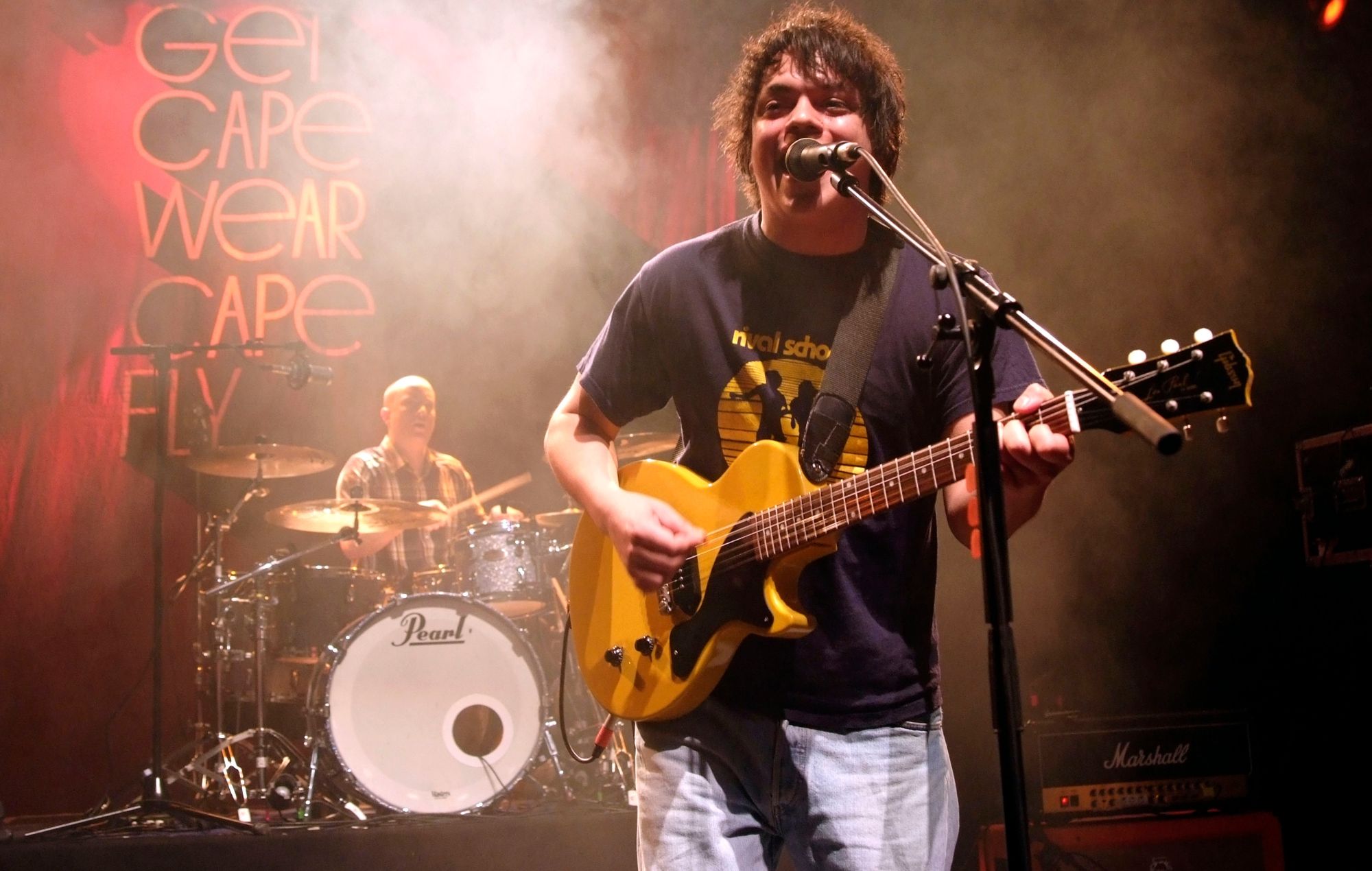
Artist and grassroots campaigner Sam Duckworth – also known as Get Cape. Wear Cape. Fly. also shared his frustrations as a musician dealing with PRS.
“Over the years I’ve had tracks paid to publishers I haven’t been signed to on alarming regularity,” he said. “Shows still labeled as ‘unclaimed’ in the middle of tours where the setlist is correctly registered, venues have paid and adjacent shows were paid. I’ve had some shows simply ‘pending’ for years. Often not through lack of trying on both sides. I’ve heard talk of blockchains, the power of data and a myriad of technological promises that have never reached fruition.”
The calls from MVT and CMM come amid news that 30 grassroots venues were lost forever between July 2024 and July 2025, and that the last decade has seen the UK suffer from the “complete collapse of touring“, with 175 towns and cities declared “gig deserts”, and 35million people without live music in their area or community.
Recent years have seen pressure start to mount on larger companies and Live Nation to adopt a ticket levy on all gigs at arena level and above to help support grassroots venues and artists. If this is not done voluntarily by the end of June, the government will step in to make it mandatory.
The post Council Of Music Makers echo calls for PRS to make “improvements” and be “fair and transparent” after payment campaign launched appeared first on NME.