

For fifteen years, The Cosmic Factory have been quietly building one of the most unwavering bonds in modern rock. Formed in Providence, Rhode Island in 2010 by high-school friends Lee McAdams, Mike Baker, and Dewey Raposo, the trio have never taken a break, never swapped a single member, and never stopped exploring the outer edges of their sound. Their music has always blurred genres, from psychedelic rock to jam-band improvisation to heavier experimental edges. Their newest release, Lab Grown, feels like the most vivid expression yet of the chemistry they have cultivated across a decade and a half.
Released on November 15, 2025, Lab Grown marks a major evolutionary step for the band. The members describe it as their “grooviest and heaviest” work so far, pulling from an expansive palette that includes metal, funk, electronica, lullabies, and everything in between. It also features their most ambitious track yet, the 20-minute epic “On My Ohm.” The piece grew from improvisation, experimentation, and the progressive-rock influences the band has absorbed over the years. In many ways, Lab Grown captures the trio at their most fearless, more comfortable in their shared voice than ever before, and more willing to push boundaries simply because they trust each other enough to do it.
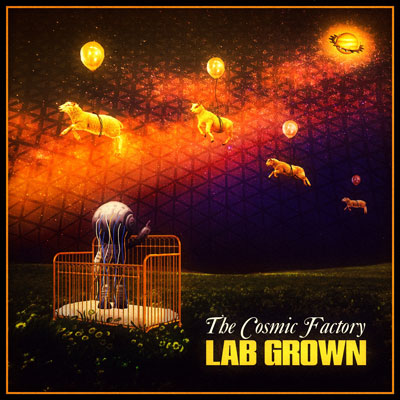
That sense of trust comes through clearly in the way the record was created. Built collectively at their home base, Squatch Sounds, the album emerged from jam sessions, evolving riffs, last-minute changes, and long hours spent shaping songs without the pressure of an external studio clock. The band’s ability to read each other musically, while still surprising one another, helped give Lab Grown both its dynamic range and its cohesive unpredictability. With artist Joe Winograd’s vivid cover art and the polished mastering touch of George Dussault, the record stands as both a milestone and a confident artistic statement.
As the band reflects on their journey, it becomes clear that Lab Grown is both a culmination and a beginning. It captures the quirks, influences, and evolution that have shaped The Cosmic Factory while hinting at even stranger and richer territories ahead. Grounded in Providence’s diverse music scene and energized by fifteen years of shared history, the trio continue to move forward with curiosity and imagination. And if their closing words are anything to go by, they are more than ready for whatever cosmic direction comes next.
Lab Grown album artwork
“Lab Grown” feels like a culmination of 15 years of chemistry between the three of you. How did your long-standing friendship shape the creative direction of this album?
Lee McAdams: After all this time together, the chemistry, on and off stage, has evolved. We’ve always been interested in many different styles of music and different sounds, but its gotten easier to incorporate everything and meld it all together.
Dewey Raposo: We trust each other enough to try new things.
You’ve always had an eclectic sound, but this record dives into metal, funk, electronica, and even lullabies. What inspired you to push your sound even further this time?
Dewey: A big part of music is evolution. We’ve gotten to the point where we’re the most comfortable we’ve ever been with our sound, so why not go for it?
The title Lab Grown suggests something crafted or synthesized – was that intentional, given how experimental and sonically diverse the album is?
Lee: Like so many of our ideas, the title really started as a joke. I think we were talking about lab grown meat or something.
Dewey: It came from us telling jokes after practice. When the words “lab grown” came out we all kinda were like, “huh, sounds like a good name for the album”. It just kinda fit, given the “it’s a boy” theme from the last album.
Can you walk us through a typical writing session for this record? Were the songs born out of jam sessions, studio experimentation, or more deliberate composition?
Dewey: All of the above. Some written deliberately working through new riffs. Some from jams. Some studio experiments.
Lee: The songs on this album were written collectively as a band, more so than any other music we’ve done before. One of us will have a riff, we’ll jam on it, the riff will evolve or change, we’ll improvise new parts. Some of the songs were changing up until the moment we finished recording them.
You recorded and produced the album yourselves at Squatch Sounds. What freedoms – and challenges – come with keeping the process entirely in-house?
Dewey: Pros- we can take our time with it. Cons- we can take our time with it.
Lee: I do feel like the ability to do it ourselves gave us the freedom to be a little more experimental and creative with the music. The clock never felt like it was ticking.
Lee McAdams – guitars, keyboards, percussion, vocals
The 20-minute track “On My Ohm” stands out as a bold artistic statement. What was your mindset when creating a song of that scale and dynamic range?
Lee: The first part started as a completely different song and then we used a jam to finish the song, added more lyrics, experimented a bit. I’ve always enjoyed long songs personally, being a fan of prog bands like Yes, King Crimson and Pink Floyd, and also bands like the Grateful Dead and Phish.
Dewey: The whole second part came from a practice jam we recorded. We refined it from there, but Mike’s vocals really tie the whole thing together.
Many fans describe your sound as “psychedelic, but grounded.” How do you balance exploration and accessibility when crafting your music?
Lee: I don’t think it’s a conscious decision to try and balance those elements. I think we all enjoy some pretty weird music and I think we all enjoy some poppy more mainstream music. It’s a natural balance.
Dewey: It’s all dance music to me.
Each song title – like Rose of Jericho or Extra Terrestrial – feels symbolic. Are there overarching themes or narratives connecting these tracks?
Lee: While we did purposely write these songs as an album and I do think they all fit together well, the themes are more musical than anything else. The lyrics don’t necessarily connect like a concept album or anything.
How did you decide on the track order for Lab Grown? It seems to tell a story through its shifting moods and energies.
Lee: The first two songs were written back to back and seemed like an appropriate start to the album. The rest of the songs came over time. We listened and played all of the songs in different orders and this is just what felt right to us.
You’ve described this as your grooviest and heaviest material yet. What was the key to achieving that duality – making it both rhythmic and crushing?
Lee: I feel like it’s just a natural evolution of our sound. I grew up on funk, and heavy music has always been a key influence for all of us. We also play a lot in the jam band scene where funk is often king. I don’t know, we’re just having fun.
Dewey: I like heavy music. It’s like heavy dance music to me.
Mike Baker – bass, vocals
It’s remarkable that The Cosmic Factory has never changed its lineup in 15 years. What’s the secret to maintaining that kind of creative and personal harmony?
Dewey: We all trust each other musically.
Lee: I think it’s important to hear and try all ideas musically. We never lose our tempers with each other and we respect each other. As much as we do have goals and dreams, we started this band for fun and that will always be top priority.
When you look back at your early days in Providence, how do you think your bond as musicians has evolved – or stayed the same?
Dewey: We all came into the band with a very different set of influences which was very apparent early on. By now it sounds like we’ve found our combined voice. This new album is the culmination of that.
How do your individual influences show up differently on Lab Grown compared to past releases like the Lifeline EP?
Lee: Like Dewey said, we all have different influences and over time we have been able to combine them all more in a natural way. I think in the past we incorporated more blues and like 90’s rock vibes. This album is leaning more on psychedelic, progressive and stoner rock.
Having been together so long, do you ever surprise each other musically anymore, or do you feel like you can read each other’s minds at this point?
Dewey: We definitely read each other’s minds. I was also constantly surprised throughout writing the new record.
Lee: Both for sure. I’m surprised by how well we can read each other’s minds. But Dewey and Mike are constantly bringing ideas to the table that surprise and inspire me.
The artwork by Joe Winograd is striking. How does the visual concept tie into the sonic world of Lab Grown?
Lee: First of all, Joe is an absolute force in the art world. His work amazes me. He recently did cover art for my solo EP “Anxiety Incarnate”, he’s done a bunch of concert posters for us in the past. He’s also joined us live multiple times to provide trippy projections onstage. We asked him to make a continuation of the character from our “It’s a Boy” album cover. I met with Joe a couple times to talk about our ideas, but we mostly gave him freedom to do what he wanted. I think he absolutely nailed it.
Dewey Raposo – drums, vocals
Working with George Dussault for mastering, how did his touch influence the final sound of the album?
Dewey: George mixed and mastered the album. He’s a true pro with years of experience, having worked with some of the biggest names in the business. As with many other artists, he knows how to help make us sound like the best version of ourselves.
Lee: I can’t praise George enough. He has an amazing ear for music and he totally gets what we’re trying to do. George is always my top choice for mixing and mastering work. He’s also a top-level musician himself and always has great feedback for us.
Squatch Sounds seems to be more than just a studio – it feels like a creative hub for the band. How has that environment shaped your recent work?
Lee: Squatch Sounds operates sort of as our studio and label. We release our own music, side projects and work with some other cool artists, while offering recording, mixing and mastering services. There are a few really exciting projects in the works at Squatch right now.
After four years since the Lifeline EP, what do you hope longtime fans take away from Lab Grown, and what do you hope new listeners discover?
Dewey: It took a little time to put this out, but just know that we are coming and you can expect more efforts like this in the future.
How has being rooted in Providence influenced your sound and approach over the years?
Dewey: There is a wide variety of music in Providence, so we can pull influences from all over the musical world.
Lee: Rhode Island is a little quirky and so are we. We love Rhode Island and really believe some of the best musicians in the world live here.
Finally, Lab Grown feels both like a reinvention and a homecoming. Where do you see The Cosmic Factory heading next after this chapter?
Lee: From here, we’ll probably beam up and take a ride in a spaceship. The same one that we arrived in. We’re going home.
OFFICIAL LINKS:
www.cosmicfactory.bandcamp.com
www.facebook.com/thecosmicfactory
www.instagram.com/thecosmicfactory_