

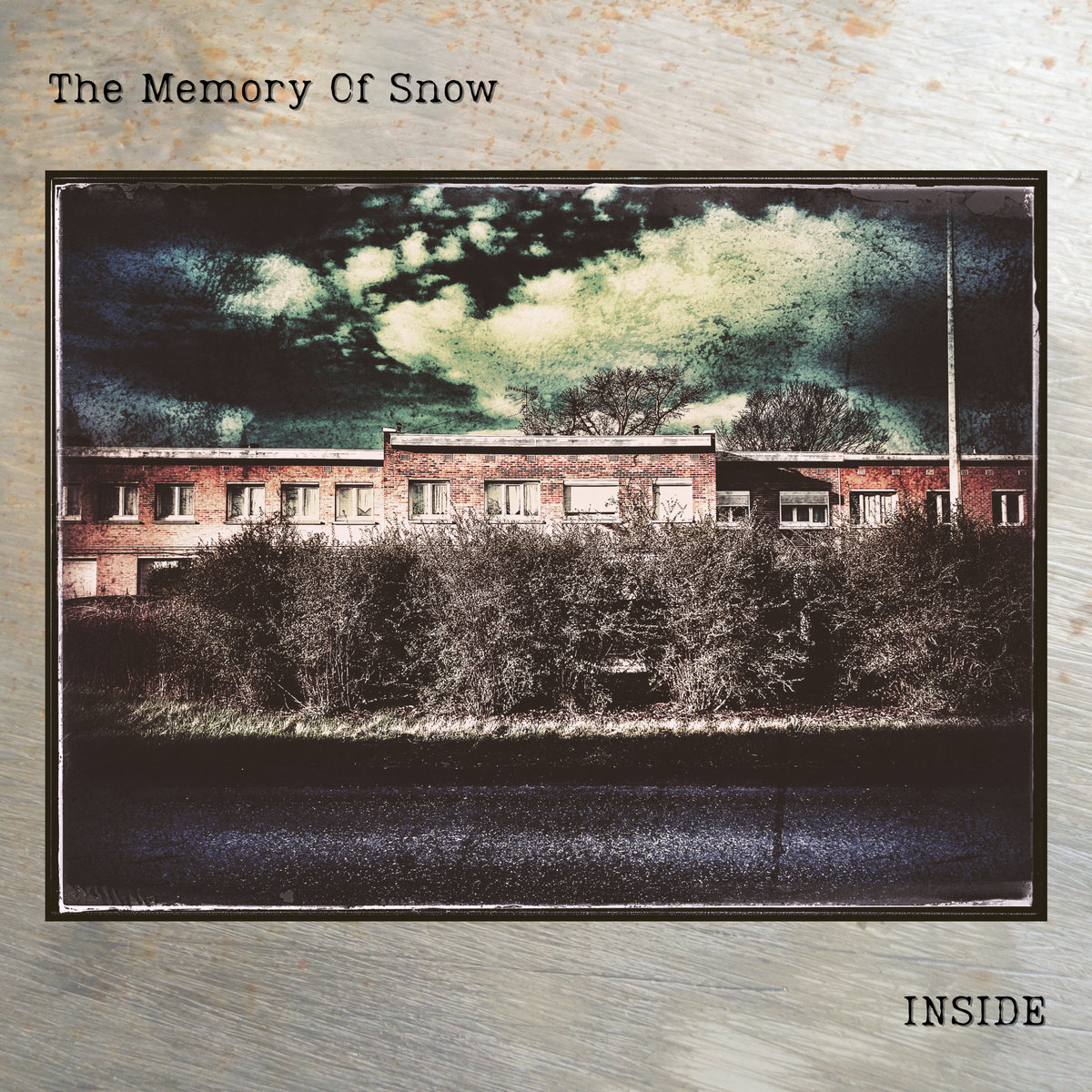
Some albums invite the listener into a vast landscape; Inside invites them into a house where every room seems to know something. The fourth album from The Memory Of Snow, the solo project of Albin Wagener, follows an alt-gothic noir trail through ordinary spaces made uncanny: kitchens, diners, basements, courtrooms, screens, and the uneasy silence of neighbours who thought they knew what lived next door.
For Wagener, that contraction of space is meaningful. The Memory Of Snow has always carried the suggestion of distance, weather, and vanishing landscapes, its name rooted in Arctic silence, childhood winters, and the fragile beauty of snow in an age of disappearance. Earlier records often looked outward, toward coastlines, isolation, northern light, and the emotional weather of survival. On Inside, that coldness is brought indoors. The horizon disappears, and the familiar melancholy of the project becomes something more forensic: not only the ache of distance, but the chill of evidence left behind.
That inward turn also extends Wagener’s own artistic history. After years of music-making with earlier projects, including Overcast, The Memory Of Snow emerged from a decade of silence and creative paralysis, a period he has described as a kind of mourning before melody, lyric, and atmosphere returned. Since then, he has treated songwriting less as genre exercise than emotional architecture: each track built around a specific world, a specific tone, a specific pressure in the air.
With Inside, that method becomes darker and more narrative. Wagener has framed the album as a humble echo of David Bowie’s Outside, but the record does not attempt to mimic Bowie’s art-crime labyrinth. Instead, it turns the idea inward. Where Outside sprawled through fragmented futurism, performance, and grotesque mythology, Inside feels grimly intimate: an alt-gothic noir dossier in which violence is traced through home, gender, media, law, grief, and revenge.
There is a Lynchian undertow in that exchange as well. Bowie’s Outside has long been understood in relation to Twin Peaks: a murdered girl, an investigator, a strange community, and a mystery that feels as psychological and metaphysical as it is criminal. Inside finds its own path into that same dark wood, but Wagener brings the unease closer to the floorboards. His mystery does not drift above the songs as a concept; it moves through their physical details
Basslines, synths, electronic textures, guitar figures, programmed rhythms, and Wagener’s deep melodic vocals do more than support the story; they turn each track into a room with its own temperature and evidence. The songs unfold slowly, with patience, dread, and eerie beauty, asking what lingers after horror has passed through a place, and what remains inside the person who keeps searching.
“To The North Sea” opens the album as a nocturnal drive toward a body of water that feels like both escape and erasure. Wagener is already contaminated by what he has witnessed; the sea promises cleansing, but the song knows better. Its motion is propulsive, almost motorik, yet emotionally it sounds stranded between flight and confession. The North Sea is not a romantic horizon here. It is where someone goes when the human part of the self has begun to fail. Musically, the track rides on a taut post-punk pulse, with a steady drum machine drive and thick, grungy bass movement that give the song the sensation of headlights cutting through dark rain. The guitars do not dominate so much as blur at the edges, treated almost like weather, while the synths spread a cold marine haze across the arrangement. Wagener’s voice stays low, controlled, and haunted, less like a confession than like a man trying not to break while recounting something unbearable.
The title track, “Inside,” makes the concept explicit. Wagener tears away the façade of domestic happiness and finds violence hidden behind clean rooms, family appearances, and the sentimental myth of home. There is a grim callback to the title of his first album, Home Is Where The Heart Aches, but the phrase now feels less like poetic melancholy than a forensic conclusion. The song’s atmosphere is heavy and deliberate, built around a cold, steady momentum that mirrors the narrator’s drive toward the scene of another tragedy. This is the album’s thesis: the most frightening doors are often the ones already inside the house. The arrangement sharpens that thesis with a blend of acoustic guitar, pulsing bass, patient programmed drums, glassy synth pads, and a slick electric guitar figure that has a Southern, almost surf-guitar twang to it. That clean, shadowy riff gives the song a strange cinematic quality, as if domestic horror has been filtered through desert noir and coldwave at once. Wagener’s baritone delivery carries a Peter Murphy-like gravity: grave, theatrical, and intimate without tipping into excess.
“All The Things I Shouldn’t Have Seen” moves from the particular to the philosophical. Instead of treating violence as an eruption from somewhere outside ordinary life, Wagener catalogues its motives: boredom, revenge, domination, excitement, power, grievance, and the hunger for attention. The song asks the album’s most terrible question: what actually keeps people from becoming violent? Morality? Luck? Love? Social pressure? Habit? The arrangement gives that question a dark, circling weight, as if the narrator is pacing around the same impossible thought and finding no safe answer. Musically, the track is grungy and ritualistic, built around a heavy rhythmic drag and a low-slung bassline that seems to circle the same dreadful thought again and again. The synths hang above it like a bruised nocturnal canopy, thick but not grandiose, while the guitars and electronic textures keep to the shadows. Wagener sings with a weary steadiness, as if the vocal itself has been numbed by the catalogue of violence it is forced to name.
With “Noise In The Basement,” the horror contracts into the most ordinary domestic details: sheets, a kitchen, a radio, a television, a diary, clothes, and all the household objects that become unbearable once violence has passed through them. Wagener’s writing is careful and unsensational, letting the room itself carry the dread rather than turning the crime into decoration. Beneath the song’s controlled surface, however, grief and rage keep pressing upward; justice remains the stated purpose, but vengeance has already begun to darken the edges. The arrangement builds slowly and atmospherically, with sparse, tense elements leaving space for unease before bass, percussion, and synth pressure thicken like walls closing in. The guitar textures feel clipped and watchful, adding a noirish severity rather than ornament, while Wagener’s voice straddles narration and accusation, echoing the dramatic restraint of Bowie and Scott Walker: composed enough to recount the scene, but charged with the emotion of someone who may not be able to remain only a witness.
“Pandora” widens the frame to the audience. Once the box is opened, everyone wants to look: grief becomes a headline, violence becomes entertainment, and the death of a child is fed into the machinery of content. The song is one of the album’s sharpest social critiques, aimed not only at television and social media but at the appetite underneath them. Wagener does not let the listener stand outside the spectacle; he asks why people keep watching, commenting, sharing, and consuming after compassion has already been replaced by fascination. The track opens with bagpipes over a shuffling drumbeat, immediately giving the song the feel of a funeral procession dragged through a media loop. A thick low-end hum gathers beneath the arrangement, which carries the weight of a dirgeful lament. Wagener’s vocal is evocative and severe, doubled with a carefully layered backing take that gives the delivery a ghostly, communal quality, as though one voice has become many witnesses staring into the same terrible scene.
Then comes “Such A Nice Neighbour,” perhaps the record’s most unsettling portrait of denial. Its horror lies in its ordinariness: the polite man, the clean house, the trimmed lawn, the friendly wave from a distance. The song captures the language communities use after the fact, when the evidence has become undeniable, but appearances still feel safer than truth. Wagener understands that monstrosity rarely arrives dressed as monstrosity. Sometimes it smiles, shaves, helps with the car, and knows exactly how to disappear into the rituals of respectability. Musically, the track carries the sideways art-pop unease of Bowie’s Low, particularly reminiscent of “Sound and Vision”, though here the atmosphere is more discordant and anxious. Rhythmic drumming keeps the song moving with nervous precision, while horn flourishes cut through like bright, unsettling signals. Clipped guitar strums add a dry twitch to its groove, and a deep melodic bassline gives the track its deceptive charm, turning neighbourly familiarity into something faintly grotesque.
At the album’s midpoint, “The Diner” offers a fragile pause. Coffee, eggs, routine, and the familiar kindness of a waitress become a temporary defense against horror. It is the warmest setting on the record, but not a truly safe one. The narrator imagines innocence, escape, childhood unstained by violence, a world where the bad guys are stopped before they can act. The diner becomes a chapel of ordinary comfort: not salvation, but a place to sit while the world tries, and fails, to heal. The song opens inside the hum of a public eatery, with muddled, distorted voices placing the listener in a room where ordinary life continues around private collapse. Beneath it, a Vangelis-like synth glow settles in, joined by an old-school rhythmic synth melody that gives the track its gently mechanical sway. The drums hit like a march, and the bass moves almost like a piano, melodic and rounded rather than merely supportive, while Wagener’s vocal begins with the dry intimacy of beat poetry before gradually washing over the arrangement, as if the narrator’s thoughts are dissolving into the room’s neon-lit blur.
“A Man In Every Monster” brings the album’s social argument to the surface. Wagener rejects the comfort of treating evil as some exotic exception, placing monstrosity inside structures of masculinity, family, power, sex, abuse, and silence. It is one of the album’s most confrontational moments, suggesting that violence survives through habits, permissions, and hierarchies ordinary life often protects. Retro organ-synth pulses give the track a grim, vintage glow, while noir synths and guitar drones wail through the arrangement like sirens swallowed by fog. A churning bassline keeps the song moving with heavy insistence, pulling it toward the mood of sorrowful ’90s alt-rock. The atmosphere is densely layered, like a street sinking into late-night haze with steam rising from a sewer grating, as Wagener’s voice cuts through as both witness and accuser: grave, steady, and morally exhausted.
The courtroom arrives in “Justice Has Not Enough Time For The Dead,” but it does not bring peace. The song recognizes the necessity of law—lawyers, judges, evidence, witnesses, juries, procedure—while understanding its insufficiency. A court can punish, interpret, and contain; it cannot resurrect. It can speak on behalf of the living, but the dead remain beyond its reach. The track opens with an ominous, sepulchral dirge of thick sustained notes and choral synth samples, while buzzing and murmuring sounds twitch in the atmosphere like anxious thoughts in the back of the room. Then the bass kicks in, moving in dense pulses before growing more intricate and melodic, guiding the song into a jazzy, noir-inflected cinematic lament. Wagener’s voice carries the frustration with grave restraint, not rejecting justice but grieving its limits, as though every legal word arrives too late for the person who most needed it.
“She’ll Never See New York” is an elegy that restores personhood where violence and media can reduce a victim to a case. Here, Wagener writes about dreams: travel, sky, space, imagination, and the future that should have belonged to a girl whose life was stolen. The song is devastating because it refuses abstraction. It does not merely mourn innocence; it remembers ambition, fantasy, brightness, and the private inner life that brutality attempted to erase. In the darkness of Inside, this is one of the rare moments where tenderness feels stronger than despair. The arrangement is haunted and ornate, full of small pieces and strange flourishes: clicking sounds, old-world mechanical noises, violin accents, and a riff that feels like a Victorian-gothic cinematic gesture. The sound builds slowly, gathering grief in layers until the rhythm section finally steps in, only for the song to fracture again around dire organ notes. Wagener’s vocal carries the weight carefully, less as accusation than remembrance, allowing the song to become a small monument to the life that should have continued beyond the crime.
“Patchwork Pathway To Hell” expands that grief into indictment. Ordinary life becomes a procession of ignored warning signs: people going to work, children exposed to violence, small horrors normalized, cowardice disguised as comfort, justice misunderstood until blood makes it personal. The song suggests that hell is not always a sudden destination. It is assembled piece by piece from the compromises, cruelties, and failures a society allows itself to excuse. Musically, it has one of the album’s more urgent drives, pushing the record toward its final moral crisis. An electronica drumbeat gives the track a tense, mechanical propulsion, while a descending bassline carries the funereal weight of Bauhaus’s “Bela Lugosi’s Dead.” Ghostly gothic guitar strums move in the background like signals from an empty hallway. Wagener’s vocal shifts from controlled shouts to a more inward recounting of the situation, and as the beat grows faster and more electronic, his delivery becomes more subdued, making the song feel as if panic has been forced into a cold, terrible clarity.
The closing track, “Into The Eyes Of A Stranger,” is the album’s most dangerous descent. At over six minutes, the song’s protagonist faces the perpetrator and is forced into the unbearable recognition that both belong to the same species. The murderer tries to collapse the distance between them; the protagonist resists, then breaks. What begins as interrogation becomes revenge fantasy, then physical violence, then a terrifying sense of catharsis. The song does not present vengeance as triumph. It presents it as contamination: the final proof that looking too long into horror can make horror look back. Musically, the track pushes the record into its hardest territory, with an industrial charge that at times edges toward industrial metal. The synths bubble and warp with the album’s strongest ’90s electronic feel, while thick, menacing guitars give the confrontation a brutal physical weight. The arrangement stretches out like a cinematic final act, moving through pressure, release, and renewed threat as the narrator loses his grip on moral distance. Wagener’s vocal leans into a Bowie and Scott Walker-like theatrical severity: part witness, part avenger, and part man horrified by the rage he has discovered in himself.
By the end, Inside has become less a case to be solved than a record about the damage a case leaves behind. Its victims are not symbols; its investigators are not clean heroes; its spectators are not absolved. Wagener is interested in the residue: the anger justice cannot absorb, the tenderness that refuses to disappear, and the moment when moral certainty begins to tremble.
That balance is what keeps the album from becoming a true-crime exercise. Its alt-gothic noir surfaces—steady rhythms, shadowed synths, spectral guitars, pulsing basslines, industrial pressure, and Wagener’s grave melodic instinct—serve a work of atmosphere and conscience. Bleak as it is, Inside remains human, because it understands that horror does not only live in monsters; it survives in silence, appetite, ritual, and the places people keep calling home.
Listen to Inside below, and order here.
Follow The Memory Of Snow:
Facebook
Instagram
TikTok
YouTube
The post The Memory Of Snow Compiles an Alt-Noir Dossier on Violence, Grief, and Revenge With “Inside” appeared first on Post-Punk.com.