
Back in the summer of 2005, Corrosion Of Conformity had just released their seventh album, In The Arms Of God, and were about to embark on an extensive jaunt across Europe as special guests to Motörhead. But just before the tour was due to begin, Hurricane Katrina swept through the American South, causing devastation in singer and guitarist Pepper Keenan’s hometown of New Orleans, Louisiana. Suddenly, being the frontman in a rock’n’roll band didn’t seem so important anymore.
“It knocked me on my ass for a couple of years,” says Pepper now. “There was so much property damage, family members were missing, communication was really difficult.”
In that situation, going on the road was the last thing on his mind. But Pepper did the courteous thing and called Lemmy to let him know what was happening.
“I told him, ‘We’ve never cancelled a tour in our lives, buddy, but we can’t make it,’” he recalls. “But Lemmy understood. The first question he asked me was, ‘Pepper, I have some friends in Texas, do you need any weapons?’ Ha ha ha! He just wanted to make sure I was safe.”
In the end, even a hurricane couldn’t flatten Corrosion Of Conformity. They’ve endured everything rock’n’roll has thrown at them over the past 40 years: multiple line-up changes, record label politics, shifting trends and, most tragically, the death of a key member. But COC are still here, unbowed and unbroken.
The Corrosion Of Conformity of 2026 is radically different to the young, snotty band that formed in Raleigh, North Carolina in 1982. They began life as a ferocious hardcore punk outfit with a metallic edge. The line-up back then featured guitarist Woody Weatherman, drummer Reed Mullin, bassist (and sometime vocalist) Mike Dean and a succession of singers, none of whom hung around for long.
“Reed and myself, we were school mates at high school when the band got going,” says Woody, the sole constant member throughout the band’s history and the only one to play on all of their 11 studio albums.
“We were all into heavy music, everything from Alice Cooper to Public Image to Bad Brains and Black Flag. We were Deep Purple freaks, and we loved Iron Maiden. At the time there were no aspirations. We wanted to make heavy music and have a blast. We were kids, you know? We travelled the country, right off the bat.”
The band were committed to doing things the old-school, DIY way. They spent their formative years travelling the US in a van and setting up to play wherever they could.
“We would go play at VFW [Veterans of Foreign War] halls,” he recalls. “Someone would rent it out for 20 bucks and there was no stage. You’d just load the gear in and play on the floor. You made maybe gas money to get to the next gig, but it wasn’t about making money, it was about having a good time and getting your band’s name out there.
It was easy to travel, because a group of people in Austin would help us set up a show, and if a bunch of them came to our town, we would help them out. There was give and take, helping each other.”
It became accepted that punk rockers could like Motörhead and Sabbath, and metal dudes could like Discharge
Woody Weatherman
While the core trio of Woody, Reed and Mike remained intact throughout the 80s, their early records each featured a different singer. The now-deceased Eric Eycke sang on 1984’s raucous, primitive debut Eye For An Eye, Mike Dean stepped up to snarl his way through the following year’s hugely influential punk/metal crossover Animosity, and the memorably named Simon Bob Sinister did the honours on 1987’s Technocracy EP.
Those records imprinted themselves on a generation of musicians, in particular Animosity – the tracks Holier and Loss For Words have been covered live by Metallica and Mr. Bungle respectively, while Lamb Of God’s Randy Blythe has called Hungry Child one of his favourite songs.
By the end of the 80s, they had undergone yet another change, with Mike Dean leaving (replaced by Phil Swisher) and singer Karl Agell coming in alongside Pepper Keenan, initially recruited as rhythm guitarist. The first (and only) album this five-piece line-up recorded was 1991’s Blind, which marked a further shift towards metal for Corrosion Of Conformity. Karl performed most of the vocals, but it was Pepper who sang on the album’s most notable track, the pummelling, seditious call-to-arms Vote With A Bullet, which became a surprise MTV hit.
“It was a transitional album for us, still in that punk/ hardcore frame of mind, but we were able to play in all worlds,” says Woody.
“It’s weird to think about now, but that was a thing back then: punk rockers and metalheads were two different groups, and they didn’t mingle much. But we liked it all. Eventually it became accepted that punk rockers could like Motörhead and Sabbath, and metal dudes could like Discharge. That always made sense to us.”
(Image credit: Danin Drahos)
Following the success of Blind and the departure of Karl Agell, Corrosion Of Conformity embarked on their most commercially successful period. Such was the demand for them that major label Sony/Columbia bought 50% of the shares in COC’s then-label, Relativity Records, in order to bypass the band’s existing contract.
It looked like the move had paid off. 1994’s Southern rock-tinged Deliverance – which saw Pepper stepping up as vocalist and the return of original bassist Mike Dean – boasted radio hits Albatross and Clean My Wounds, nudging the band towards the big time. But when it came to making the follow-up, 1996’s Wiseblood, it became clear that COC’s corporate paymasters weren’t happy with the way things were going.
“Wiseblood was a very aggressive-sounding record, and Columbia wanted us to tone it down a bit,” says Pepper. “They wanted us to write with some guy who wrote songs with Aerosmith, but I thought, ‘Nah, you guys are pushing it now!’ So we said we’d go write a song on our own, went to the studio, and came back with Drowning In A Daydream. We got nominated for a Grammy for that one!”
COC recorded Wiseblood at four studios, including New York’s renowned Electric Lady studio, at the same time as Metallica were completing work on their Load album.
All I said was, ‘Let’s go to Europe and let’s see what happens…’. We had a blast, and that turned into a new record.
Pepper Keenan
The two bands were already fans of each other’s music, and Metallica frontman James Hetfield contributed backing vocals to Wiseblood track Man Or Ash.
The same year, Metallica insisted taking Corrosion out as support on the Poor Touring Me world tour. It was a world away from performing on the floors at local halls back in the 80s.
“Talk about getting thrown to the dogs, man!” Woody laughs. “They had the weird stage in the centre of the arena, and we were saying, ‘Where do we put our amps? Where are we gonna go hide?’ Well, you’re not! The amps are down on the floor under the stage. Everybody’s looking at you! What a trip that was. But we took it in our stride.”
But not everyone was happy with the fact that COC were on the road with the world’s biggest metal band. “The label didn’t have any part of it,” says Pepper. “They were like, ‘How did you get a Metallica tour?’ The Columbia folks were pissed that we weren’t playing the game.”
Inevitably, the relationship between Corrosion Of Conformity and their label didn’t last the decade. But after being booted off Columbia, they simply carried on releasing records. 2000’s America’s Volume Dealer was followed five years later by the full-bore In The Arms Of God.
“It was just nasty, sludgy, as heavy as we could make it,” says Pepper of the latter.
Significantly, In The Arms Of God was the first COC album not to feature founding member Reed Mullin. A phenomenal drummer who could also sing like a bird, Reed had stepped away in order to start another band, Brown, overseen by long-time COC producer John Custer and heralding Reed’s debut as a frontman.
“Somebody was grooming him to be a singer, so it was an odd thing,” muses Pepper. “But whatever, he did all that, and he came back eventually. You can’t control this shit.”
During Reed’s absence, the remaining members recruited Stanton Moore to take up the drummer role and everything rattled along without incident. That is, until Hurricane Katrina hit New Orleans in the summer of 2005.
Following the chaos caused by that disaster, Pepper also stepped away from COC for a few years to focus his on other band, NOLA supergroup Down, of which he’d been a member since their foundation in the early 1990s.
“That was another challenge,” admits Woody. “Keenan was working his ass off with Down; they were constantly touring.”
With Reed Mullin returning to the fold in 2010, COC were a trio for the first time since Animosity 25 years earlier. Fittingly, 2012’s self-titled album and 2014’s IX saw the band returning to their rowdy hardcore roots.
“There was sort of an appetite for hearing Animosity and Technocracy material and some of the early stuff, so we wrote the songs that we felt like writing and it sort of meshed with that era of COC,” says Woody. “If we were playing a festival and Down was playing at the same festival, Pepper would come up and sing some Deliverance and Wiseblood songs. We were all still pretty tight, so that was a foreshadowing for what would happen later.”
The revolving door spun once more in 2015, when Pepper Keenan finally rejoined his three comrades.
“Reed called me on the phone one day and we started talking about doing a reunion thing, because it was the 21st anniversary of the Deliverance record,” says Pepper. “All I said was, ‘Let’s go to Europe and let’s see what happens…’, and that’s what we did. We had a blast, and that turned into a new record.”
The classic COC line-up’s first album together in 18 years, No Cross No Crown, emerged in January 2018. But tragically, it would be Reed Mullin’s swansong. The drummer had been battling alcohol addiction for a several years, and his condition had led to severe seizures that sometimes necessitated him being replaced by other people for gigs.
On January 27, 2020, just as the band were about to tour in Australia, Reed passed away.
“That was a heavy deal, when he passed,” says Woody. “He was at home, trying to take care of himself and get his mind back right. He did tour with us some on No Cross No Crown, but he was having trouble and a few things had to be cancelled.”
The rest of the band did all they could to help Reed with his problems. Even Dave Grohl, who knew COC from his own days on the 80s hardcore scene, tried to help his fellow drummer.
“Grohl facilitated a trip to a couple of rehab places,” says Woody. “He reached out because he was good friends with Reed, but none of that stuff took, which was sad, but it happens. We reached out all we could and tried to help him, but in the end it got to him. All you can do is try your best to help people, and it doesn’t always work.”
Due in part to losing their friend and drummer, Corrosion Of Conformity spent the next few years finding their bearings again. Both Woody and Pepper make it clear that there was never any chance that the band’s story was over, but when Mike Dean announced his second departure from the band in 2024, it was time to make a brand new plan.
“With Mike, for him it was personal issues,” says Pepper. “He’s got a studio and he was focusing on producing bands, and he wanted to stay at home more often than not. We fully supported him on that. He has done his time! Ha ha ha!”
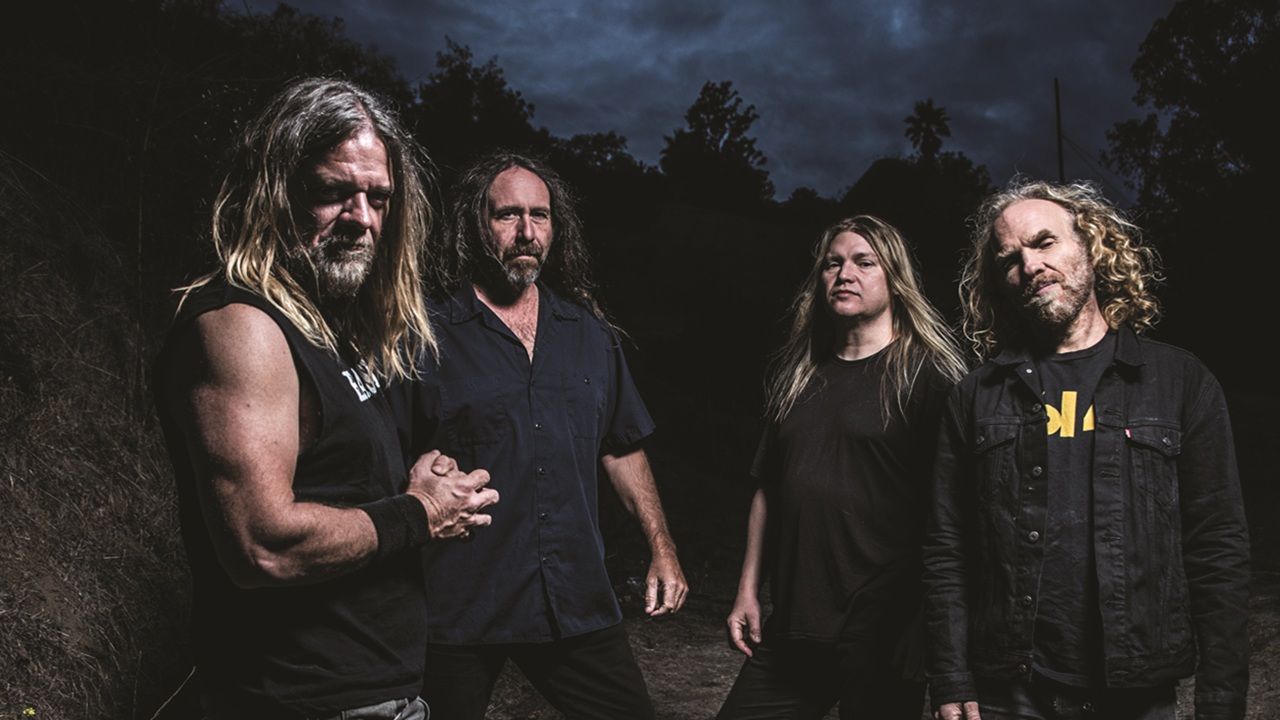
For their new album, Woody and Pepper enlisted ex-Down guitarist Bobby Landgraf for bass duties and returning drummer Stanton Moore. Written and recorded over two-and-a-half years, Good God/Baad Man is an audacious double album that touches upon almost every era of COC, showcasing yet another incarnation of this seemingly indestructible band. Pepper and Woody have been revitalised by the experience, and the future once again looks bright and very, very loud.
“Obviously I’m not 16 anymore, I’m 60!” says Woody with a chuckle. “But I still feel like a teenager, because I have fun, I enjoy it, I like making rock music and I like travelling. We make it fun, we have a blast, and I do it for the same reasons. We still don’t answer to anybody except ourselves.”
Good God / Baad Man is out now via Nuclear Blast.