
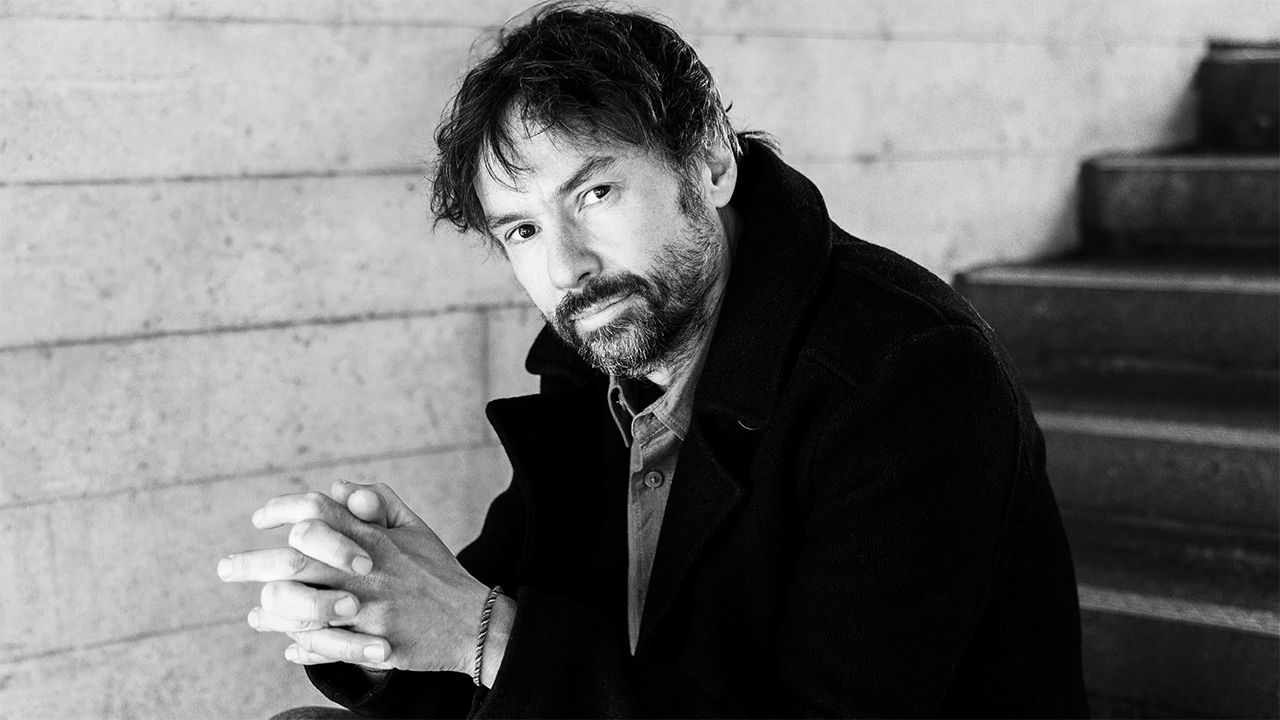
Is The Pineapple Thief’s Bruce Soord consumed by existential angst, or has he made the most quietly powerful solo music of his career? Prog takes a walk with the Ghosts In The Park.
“It started off completely different,” says Bruce Soord. Ghosts In The Park, his fourth solo studio album, is his most personal, heartfelt record yet. The songs were conceived on tour with The Pineapple Thief while he was confronting the death of his father. Writing from a place of such profound intimacy shaped the music, transforming his original vision for the album.
“I was going to do more of an electronic-backed record,” he says. “Then, when I was on tour and it was just myself and the acoustic guitar, I realised that was the real spirit. There’s this feeling where you come up with something and you know when it’s an accurate projection of what you’re thinking and feeling; then there’s a feeling when you you’re just going through the motions. It may as well be AI – you’re just putting Lego pieces together until a song pops out.”
There’s nothing mechanical about Ghosts In The Park. Sitting in a series of hotel rooms, Soord found the sounds to match the emotions he was feeling.“That’s when I realised I could do it with the melodies of an acoustic and my voice,” he says. “The hotel room is where I found it the record.”
It was such a successful experience that the album features many of the original guitar demo performances. “I was always under the impression that I was going to go back in my studio and re-record. When I did, technically it sounded better, but it just didn’t have that hotel room magic. It sounds really pretentious, but I put the new recordings in and the song lost its soul in a way.”
Perhaps it was a case of reverse red light syndrome: the absence of the pressure to capture a perfect performance that made the hotel performances special. “I was just going along with the flow, not worrying about what’s going on the record,” he says. The result is music shaped by the geography of a tour itinerary and maps of the heart and mind.
Meet Me On The Downs was written in response to the loss of his father. “This isn’t exceptional; this is a universal experience I went through. I’m not looking for anyone to go, ‘Oh Bruce, that’s terrible’ – it’s just a normal part of life,” he says. “My father suffered from dementia and had a very long and slow decline until he died last summer; and my mother has been suffering from end-stage Alzheimer’s for goodness knows how long.
When my father eventually died, I drove to the retirement home which I’ve been going to for the last seven years. I parked outside and I thought, ‘What a strange feeling this is.’ You look up at the window and think, ‘There’s no one in there any more.’ So I sat in the car and reflected on the stillness.”
The lyrics explore that landscape of loss as Soord went into his father’s flat to begin clearing it out. “All the photo albums were scattered on the floor, so that was something I put into the lyrics. I came back from the flat, went into the studio, thinking about how I wanted to remember my father. His dementia was so extreme that he was delirious, so it got quite intense.
“I didn’t want that to be my memory, so I went to the studio, I shut my eyes, and I tried to go back as far as I could, and picked out memories of when I was four or five. The more you thought about it, the further back you could go, and that formed the second half of the song. That’s just an example of how personal the record is. That might not be everybody’s thing, but for me it was a way to make it sincere.”
Conversely, The Pineapple Thief isn’t the right vehicle for such sensitive subject matter and introspection. “With them I’m still singing about similar things in terms of relationships – love and death and all that stuff – but in a much, much broader way. The solo stuff is so much more personal; I’m basically baring everything; my soul, really.”
The Pineapple Thief and Soord’s solo releases are “completely compartmentalised” in his mind, reflecting the different experiences of working alone versus in a group. “In The Pineapple Thief, we’re always together, we’re always talking about the songs together; but when I put this record together, it’s me, on my own in my studio or in my hotel room. I unapologetically made the tracks about very, very personal things.”
I’ve been to churchy venues and come away thinking, ‘That’s one of the best shows I’ve been to!’ Sometimes you don’t need all the production
He recently toured the album round small venues with TPT bassist Jon Sykes, using looper pedals to recreate the music’s layered parts. “I always had a mind to playing it live on a very intimate basis,” says Soord. “When I’m introducing the songs, it can feel like you’re having a conversation with every single person in the room.”
“I know it’s a cliché when you talk about intimate shows, but that is absolutely what it feels like. The Pineapple Thief is now this big rock show with lights, the big stage, the big, loud PA. But my solo stuff is me and Jon sat down with our instruments and that’s enough. I’ve been to some shows that have been solo or just two people in churchy venues, and I’ve come away thinking, ‘Wow, that’s one of the best shows I’ve been to!’ Sometimes you don’t need all the production. It’s just a different animal.”
Ghosts In The Park isn’t purely acoustic, boasting terrific electric guitar work in tracks like Kept Me Thinking and Pillars. “I indulged myself with some solos,” admits Soord, who names Camel’s Andy Latimer and The Alan Parsons Project’s Ian Bairnson as his six-string heroes because “they both share the ability to do melodic, hooky solos that you could sing or air guitar along to. You don’t need to widdle up and down the fretboard to come up with a good guitar solo, so I thought, ‘Let’s do that; let’s have some confidence in yourself and get the guitar out.’”
It’s also an album of rich, layered sounds and dramatic arrangements, whose grandeur belies the music’s humble hotel room origins. “I always like the drama,” says Soord, picking the title track as the song that he’s “most proud of in terms of the songwriting and arrangements.” He explains: “It gets very big and very dramatic in the silences. That’s what I’ve always enjoyed, surprising people with silence. There’s a section where it almost fades to nothing, and you’re thinking, ‘What’s going on here?’ Then all of a sudden it starts again. You can only get that kind of drama when you get that juxtaposition of intense moments and really delicate bits.”
His previous solo record, Luminescence, featured string arrangements by Andrew Skeet, but this time Soord didn’t want to go down that road, preferring an approach that he can replicate onstage. “I thought, ‘No, rather than have a string section, I’m going to have an acoustic guitar orchestra,’” he says. “The title track has sections where I’m layering – a wall of acoustic guitars – which is easy to do with a looper pedal live, so you still get that big, lush arrangement. But really, I just wanted to make the whole thing from my performance and my soul.”
I just find it very intriguing to sing about life and death and all that stuff, and try and make sense of it
All of which raises the question of what drives his urge to share such profound, personal experiences with an audience? “I still can’t really answer that,” he says. “I’m generally a very happy, positive person, but if you listen to my solo records, you probably think, ‘Goodness, is he just so wrapped up in the existential problems of being a human? is this who Bruce is all day long?’
“It’s not. I just find it very intriguing to sing about life and death and all that stuff, and try and make sense of it. It is a strange thing. It’s ridiculously personal stuff you’re sharing; it’s not like I would sit in a coffee shop and talk to people about this kind of thing. I never would.
“I’ve pondered it for many hours, and I think it’s just a cathartic thing and a way of coping with this existential issue of being a human that we all have.”
Ghosts In The Park is on sale now.