

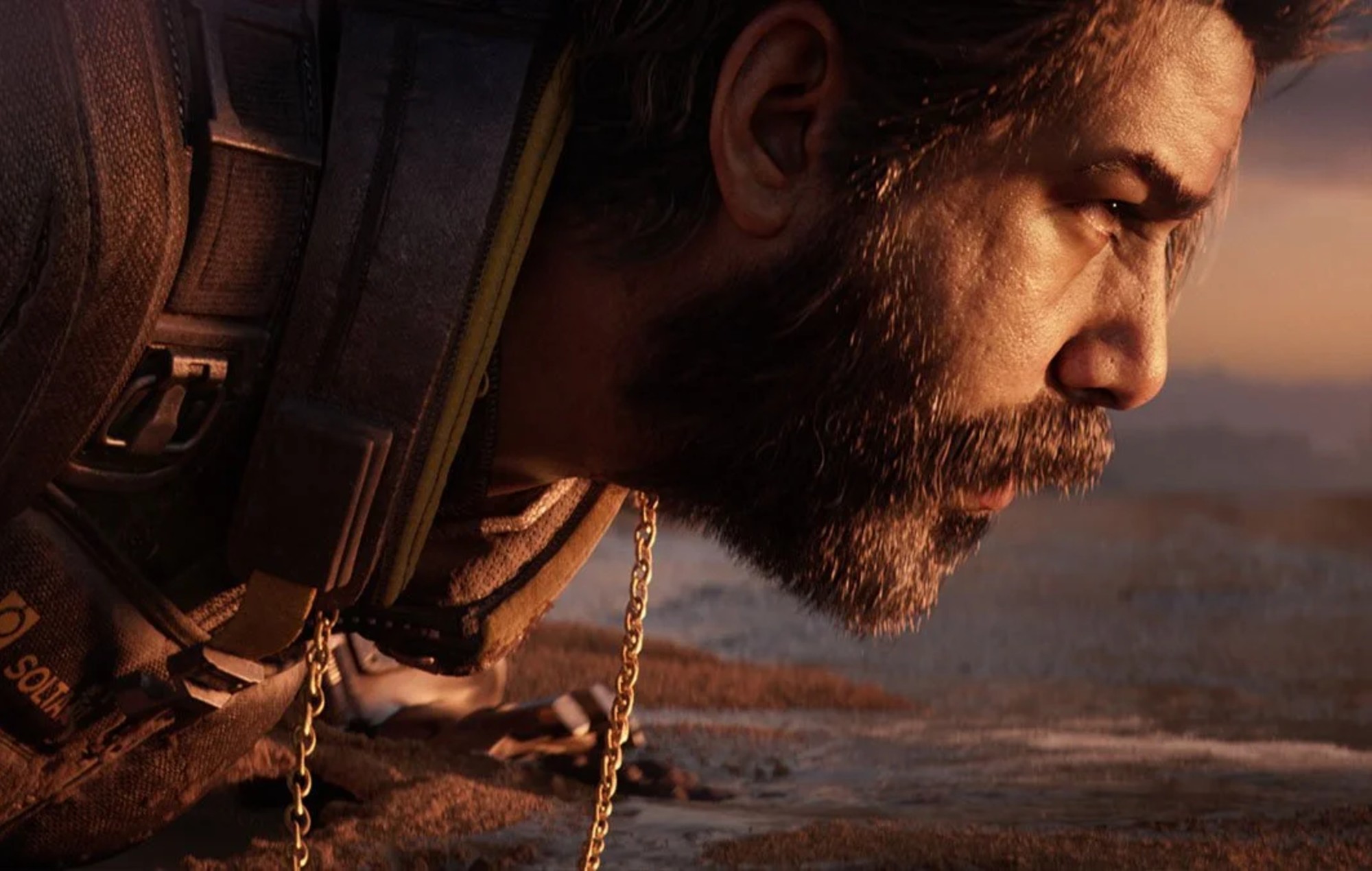
In Saros, the whole world is out to get you. Sent to a far-flung corner of space by the profit-hungry Soltari corporation, you play as enforcer Arjun – arriving on the haunted planet of Carcosa to investigate why three previous expeditions have gone quiet.
READ MORE: ‘Saros’ review: ballsy successor to modern cult classic ‘Returnal’
Standing in your way are a steady stream of horrific space monsters looking to eradicate any outsiders and former colleagues who have been corrupted by something lurking in the shadows. Then, there are the solar eclipses that make the already grumpy locals even more vicious. In fact, the only thing driving you forward is the chance to reunite with your beloved wife Nitya Chandran, a scientist who was part of the first expedition – but even that relationship has a dark side.
Your road back to Nitya is blocked by enemies flinging waves of brightly coloured energy balls at you. Your best chance of survival is to study and memorise their patterns of attack. “It’s all about finding a sense of flow,” agrees two-time Grammy winning composer Sam Slater (Chernobyl, Joker) who’s behind the deliberately intense soundtrack for the bullet-ballet third-person shooter.
Slater first got involved with the game after being invited to Sony to look at their work-in-progress projects. As soon as he saw the early concept art for the menacing universe of Saros, he knew he wanted to be involved. “I normally wouldn’t be so blunt, but I told them I thought I could do a good job with that game,” he tells NME. During a meeting with game developers Housemarque, he bonded with creative director Gregory Louden over their shared love of “terrifying metal”.
The vision was to take dark electronic music, which has been a staple for video game scores since 1993’s Doom, and combine it with ferocious drone metal, a slow-burning experimental genre that’s more focused on crushing weight and duration than catchy melodies. The end result is something that creeps under your skin and makes your hairs stand on end, all while desperately leaping clear of yet another alien assault.
“The thing about game developers is that they’re all filthy metalheads. You can’t fake heavy to them,” explains Slater, who adores the influential greats of drone – Sunn O))), Earth, Boris and Khanate. At first, he played it safe – but when those early attempts were met with a polite shrug from the Housemarque team, Slater decided to try something more extreme: “I wrote ‘go too hard’ on a huge piece of paper and hung it in my studio.” The next track he submitted received a two-word response from Louden: “Holy moly!” He’d cracked it.
To make the music sound as authentic as possible, Slater reached out to go-to metal producers Randall Dunn and Ben Greenberg. Between them, they’ve worked with Danish black metal outfit Myrkur, previously mentioned genre icons Sunn O))), gothic Swede Anna Von Hausswolff and Toronto punks Metz, all while running New York’s Circular Ruin Studios together. They helped to record a lot of the guitar on the soundtrack, which underpins everything with a menacing groan.
He wanted to do more than just recreate great drone metal though. It’s also why he avoided listening to the score for Housemarque’s previous game Returnal – a spiritual prequel to Saros that features a lot of the same game mechanics. Though don’t mention that to Slater…
“Saros is not Returnal 2. Everyone involved was trying really hard to make this world its own unique thing, without ignoring that special Housemarque style,” he says firmly. “I’m a huge fan of [Returnal composer] Bobby Krilc’s work but I have one rule when I’m working on projects like this – don’t listen to other soundtracks.”
Instead, he focused on the landscape of Saros and your gruelling battle across Carcosa. Slater even commissioned a jeweller to create an exact bronze replica of Arjun’s chunky medallion which he used whenever there was any percussion in the soundtrack. “He uses it as a reminder of the thing that he’s chasing, and I thought we should be reminded of that as well.”
Elsewhere, the music for the Blighted Marsh level (‘Red Water, Dead Leaves’) was made with wooden instruments to reflect all the dead wood you have to wrestle through and when you’re exploring the Cathedral, you can hear tuned ceramic instruments (on the track ‘Fenestra Rosacea’) because that’s what the walls of the holy place would have been made from. Shattered’s Descent’s warped, nightmarish acoustics are built around two small rocks being hit together.
“Don’t get me wrong, I love synthesisers and guitars but I wanted every single sound to be tactile and somehow relevant to the world that was being built. It was so important that music was part of the storytelling,” says Slater. “It created this strange synthesis of organic and synthetic sounds that are tearing against each other.” Perfect for a game that has you constantly fighting for your life.
‘Saros’ cover art. CREDIT: Housemarque
Still, Slater was wary of creating something so horrible to listen to that it turned people away from the brutal game completely. “That was the glorious contradiction of it all,” he grins. “How do you make a world that is hostile and kicking you away at every turn, but you still want to run through it? That question was key to every single person working on Saros.” The answer, he says, was to thread moments of “sweetness” throughout the score whenever possible. It’s why there are tracks such as ‘Sun Is Forever’, which acts as Nitya’s theme, and ‘Love Ruins’ which both feature a close-cut vocal ensemble. While all the other human voices on the soundtrack are digitally twisted beyond recognition to represent the corruption that happens after spending too much time under the planet’s yellow sun, those songs represent brief glimpses of purity. “The actual world of Carcosa is fucked but you’re chasing something you really love. In that tension, we created something really strange and wild,” he says. In keeping with his “go too hard” mantra, Slater flew to a church in Helsinki that was built into a mountainside to play the original vocal recordings over giant speakers, and then captured the majestic results.
Creating the soundtrack was a long process but “art is not about efficiency, it’s about the story and the world building,” explains Slater. With AI use within the industry becoming more common, he believes we need to “fight really hard” to preserve those ideals and, luckily, Housemarque were fully on board. “You can always default to the simple boring thing but most of the time it’s not the best option. To make something special, you have to go too far.”
‘Saros’ is available for PlayStation 5 and the soundtrack is available to stream now
The post How drone metal forged the year’s most stressful game soundtrack appeared first on NME.