

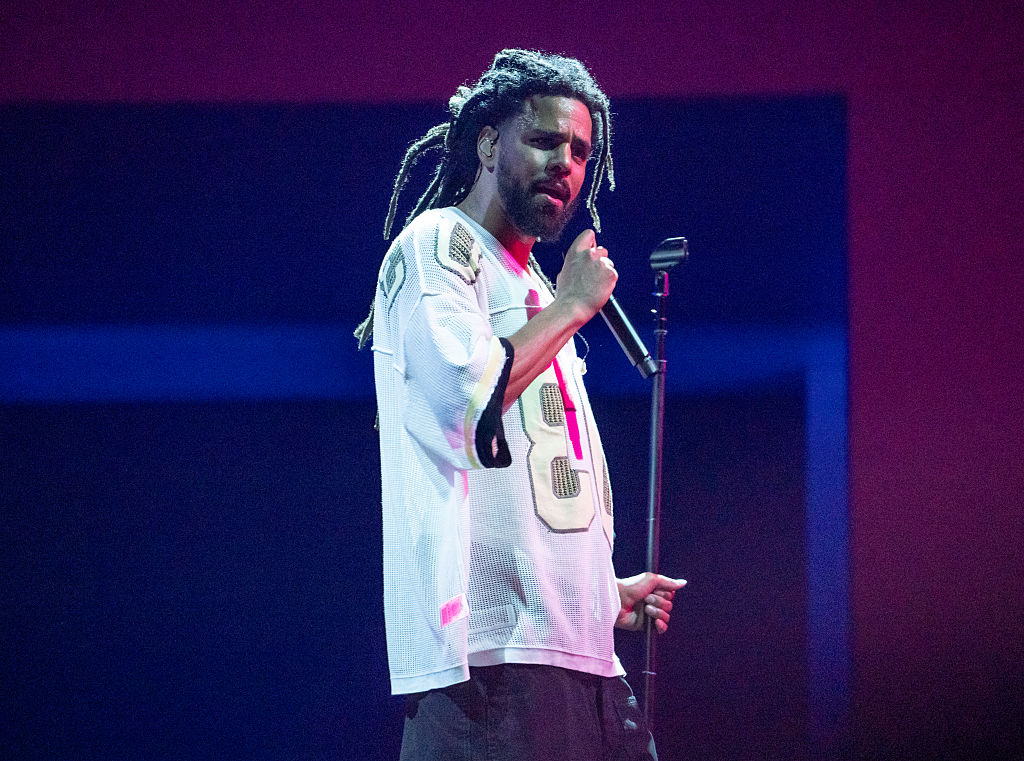
Source: Prince Williams / Getty
After years of anticipation, breadcrumbs, and moments where fans weren’t sure if it was ever really coming, J. Cole finally delivered The Fall-Off. This album has hovered over his career like a prophecy — something he’s teased, referenced, and built toward across multiple projects. Because of that, expectations were sky high, almost unfairly so. But instead of shying away from the pressure, Cole leaned into it, delivering a body of work that feels deliberate, reflective, and very aware of its place in his story.
RELATED: How Bomm Sheltuh Played A Role In J. Cole’s Early Career
From a sound perspective, The Fall-Off doesn’t chase trends or attempt to reinvent Cole into something he’s not. The production is polished yet grounded, keeping the rapping at the center. Cole sounds locked in, measured, and confident, weaving between introspection and sharp bars without forcing either. There’s a sense of control throughout the album — like someone who knows exactly when to speak and when to let silence do the talking.
Lyrically, this project feels like Cole taking inventory of everything he’s experienced: fame, criticism, praise, and the internal battles that come with longevity. He doesn’t dodge uncomfortable conversations, but he also doesn’t overexplain himself. Instead, he lets the music do the heavy lifting. It’s clear this album wasn’t rushed — it sounds like the product of years of thought, revision, and growth.
As expected, the response has been loud. Fans immediately took to social media, breaking down lyrics, ranking songs, and debating where The Fall-Off lands in Cole’s discography. Some listeners are calling it his most complete project, while others are treating it like a victory lap done with humility. Regardless of where people place it, the consensus seems clear: Cole showed up prepared, focused, and fully aware of the moment.
What makes The Fall-Off hit harder is how it feels like both a conclusion and a checkpoint. It doesn’t scream finality, but it does feel like a closure to an era — the sound of an artist who’s comfortable with his legacy but still sharp enough to compete with anyone. With that groundwork laid, let’s get into the key takeaways from The Fall-Off.
1. J. Cole Is Still An Elite Rapper
This album reaffirms that Cole’s pen is still among the best in the game. His flows are controlled, his wordplay is precise, and he sounds confident without overdoing it. This isn’t about proving himself — it’s about reminding everyone who he’s always been.
2. The Maturity Shows In Every Decision
Nothing here feels accidental. From song structure to subject matter, Cole moves with intention. You can hear the difference between hunger fueled by insecurity and hunger fueled by purpose.
3. He Embraces Legacy Without Sounding Washed
Cole openly talks about his place in the game, but never in a way that suggests he’s clinging to relevance. He sounds comfortable in his status, which somehow makes the bars hit even harder.
4. The Production Serves The Message
Rather than overpowering the vocals, the beats give Cole space to breathe. The soundscape feels curated specifically to support his storytelling and reflections.
5. Vulnerability Remains His Biggest Strength
Cole continues to balance confidence with honesty. He doesn’t shy away from doubt, mistakes, or self-questioning, which keeps the album grounded and relatable.