
Ceebo’s power lies in his ability to tell stories both specific yet universal. The 23-year-old rapper’s perceptive, raw lyrics paint portraits of very particular characters and circumstances, but contain experiences, emotions and details that resonate on a far broader scale. His lyrical lens floats from gang members tortured by guilt to uni girls stuck in cycles of self-destruction to addicts on the street. With narrative deftness, he encourages us to empathise with each and recognise ourselves as part of a “lost tribe”, “the children of postmodernity”.
His journey to uncovering these skills began when he started rapping at 16, when he was invited to a cypher on his Lambeth school’s playground. At 19, he decided to take it seriously and started recording music, often working out of his university’s free studio. His first single, ‘Zonin’, arrived in 2022, swiftly followed by his debut mixtape, ‘Bluquet’, the following year, but it wasn’t until 2024 project ‘LambethNotLA’ that he earned his breakout moment. That record put his lens on his South London upbringing, exploring the violence and struggle around him through his distinctive storytelling and dynamic flows. But he still had so much more to say.
“With the razor focus of ‘LambethNotLA’ and it being about my community specifically, it meant that there were a lot of things I was feeling and observing that I couldn’t talk about and still keep the record cohesive,” he tells NME over Zoom, during a break from rehearsals for his debut headline show. His latest mixtape, ‘Blair Babies’, released in November, became a space for him to hone these ideas.
On the electrifying mixtape, he zooms out, tackling the issues that affect his generation as a whole. Its opening track, a spoken-word piece called ‘1997-2007’ (a reference to Tony Blair’s period as UK PM), lays out how, beneath the Blairite Britpop optimism they were born into, Gen Z, especially Black Brits, have been left feeling politically nihilistic and isolated – feelings masked by what he calls “a non-stop stream of dopamine”.
For a long time, Ceebo wasn’t even sure he’d be able to make the project a reality. Despite the success of ‘LambethNotLA’, recording more music after its release seemed like a pipe dream. “I had just graduated, didn’t have a grad job, had no money,” he explains. It was only when Mimi the Music Blogger reached out to him that ‘Blair Babies’ began to feel like a possibility. She offered to executive-produce the mixtape and soon helped him find a label head who loved his music and let him record in their studios for free. They recorded the rest of the mixtape in the bedroom of Ceebo’s friend and collaborator ChefBKay, while Ceebo was scraping money together as a teacher.
“If it wasn’t for the community I had around me, I wouldn’t have been able to make ‘Blair Babies’ happen, just from a logistics standpoint, let alone musically,” he reflects now. While he was still struggling to get recording sessions, Ceebo was able to sit in on many of the studio sessions for his friend Jim Legxacy’s acclaimed ‘Black British Music’, and provided standout features on Afrosurrealist’s ‘BuyBritish’ compilation. In turn, both artists provided production on ‘Blair Babies’ and, together, encouraged each other to push the envelope with their music and feed off each other creatively.
Drawing as much from writers like Chinua Achebe, Mark Fisher and Angela Davis as from artists such as Kendrick Lamar or MizOrMac, Ceebo says, for him, the lyrics “are the easy part”. Instead, “the challenge was finding a way to embody the emotion I’m trying to get across”. To help with this goal, he and his manager scoured record shops, pulling from whichever genres they could for inspiration: “I remember one of the first records to inspire us was James Massiah’s ‘Soon Touch’. Then there was ‘Lift Me Up’ off ‘Summertime ‘06’ by Vince Staples, and the title track of ‘Ready to Die’ by Biggie, ‘All Day’ by Headie [One]. Sonically, they’re all very sparse, bleak records; they all captured that same feeling, but in different ways.”
“When things around me were changing, [my community was] always a constant”
That attention to soundscapes elevates ‘Blair Babies’ to a cinematic experience. The rapper worked closely with boundary-pushing producers to craft each track. Songs like ‘Jook’ and ‘Buzzball Summer’ would perfectly soundtrack the parties their lyrics dissect, while the gospel samples paired with blaring 808s on ‘Pentecost Of Living’ underscore the contradictions of growing up torn between school, church and road. Nowhere is Ceebo’s deft storytelling and empathy more apparent than on G-funk-coded ‘The Gospel (According To Tony Blair)’ – Kendrick Lamar’s ‘Sing About Me (I’m Dying Of Thirst)’ for a new generation, albeit with a distinctly British sensibility.
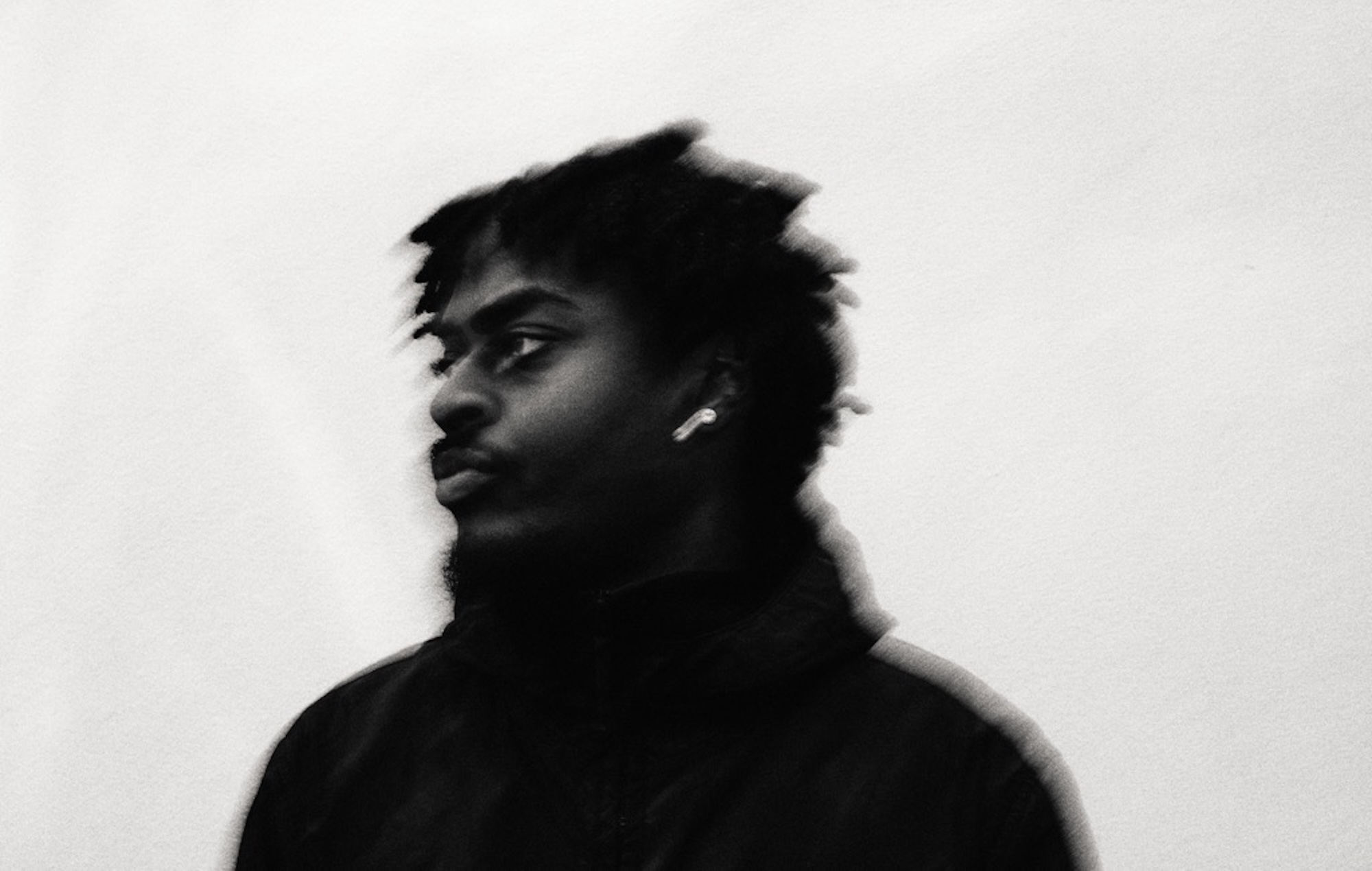
Ceebo credit: Patrick Jsr
Ceebo’s focus on style-in-service-of-story means ‘Blair Babies’ spans genres ranging from Amapiano to drill to the jerky beats of UKUG. This type of borderless fusion is something Ceebo has always appreciated. “I was raised in a household that didn’t really have any lines as to what we listened to and what we didn’t. My mum is a staunch Christian, so a lot of the time we listened to gospel from our own country – Angola or Congo,” he explains. Car journeys were soundtracked by the ‘80s ballads that dominated Smooth Radio – “I remember that’s where I first heard Tracy Chapman, even people like Spandau [Ballet] and Phil Collins,” he recalls with a smile – while his “avid rap fan” mum’s love of the likes of Tupac, Biggie, Kanye West and Nelly also had an impact.
Ceebo looks back on these early musical experiences fondly, but they also came at a tumultuous period of his life. He spent a portion of his childhood living in a hostel with his mum and little brother after becoming estranged from his father, something he raps candidly about on ‘LambethNotLA’. It was around then that the idea of community became central to his life and philosophy. “During that time I felt quite alone,” he remembers. “My one true respite was being able to go to school and hang out after with people I consider family.”
Throughout his life, this theme of community has been reinforced, whether meeting his current manager, who he says has become like a sister to him, at university in Warwick, or the help he’s received when struggling to get a project off the ground. “When things around me were changing, [my community was] always a constant, and the same remained true for the recording process of ‘Blair Babies’.” The very existence of that mixtape drives home Ceebo’s message on it: only by leaning on those around us can we face the situations life throws at us.
With the support of his friends, family and collaborators, the rapper is hoping to make 2026 his biggest year yet and establish himself “at the forefront of this new renaissance of Black British creativity”. With his drive and talent, Ceebo is well placed to turn that aim into reality.
Ceebo’s ‘Blair Babies’ is out now via Liberation Records.
The post Ceebo: the Lambeth rapper giving a voice to his generation’s struggles appeared first on NME.