In the words of one of his band’s signature songs ‘Truckin’’, the life of Bob Weir – who died Saturday (January 10) aged 78 – was a long, strange trip indeed. As co-founder, guitarist and primary vocalist with the Grateful Dead, Weir was among the key architects of the psychedelic rock movement and America’s 1960s counterculture, and his journey was one of great highs – not least the Dead becoming one of the most successful touring bands in US history – and major challenges. The loss of Jerry Garcia in 1995 left Weir the prime mover in keeping the band’s immense legacy alive, a role he accomplished with great success, from stadium-level reunion shows to symphonic reinterpretations of the band’s music.
Weir overcame significant issues from an early age. Born in San Francisco in 1947 to college student parents who later gave him up for adoption, he suffered from undiagnosed dyslexia and was expelled from almost every school he attended. For a period, he attended a school in Colorado for boys with behavioural issues. As a teen he found escape in athletics and music – inspired by a nanny’s jazz records, he tried his hand at piano and trumpet before settling on guitar at the age of 13. Under the tutelage of Jefferson Airplane’s Jerry Kaukonen, Weir leant towards bluegrass music, which would lure him towards his rock star fate. On New Year’s Eve in 1963, while wandering the streets of Palo Alto looking for a club that would admit him though he was just 16, Weir heard banjo music being played in Dana Morgan’s Music Store. Inside he met Garcia and played with him all night; the band they decided to form by morning was called Mother McCree’s Uptown Jug Champions.
Originally a jug band, the group was inspired to move towards rock’n’roll by The Beatles’ success. By 1965 they’d changed their name to The Warlocks, then Grateful Dead, just as the San Francisco counterculture scene was looking for local acts to lead the charge. The Dead’s first show in December 1965 was at one of scene fulcrum Ken Kesey’s infamous Acid Tests in San Jose. They would become something of a house band for the events, and also play at the legendary 1966 psychedelic rock weekender Trips; Owsley Stanley, who supplied the LSD for such events, became their financial backer.
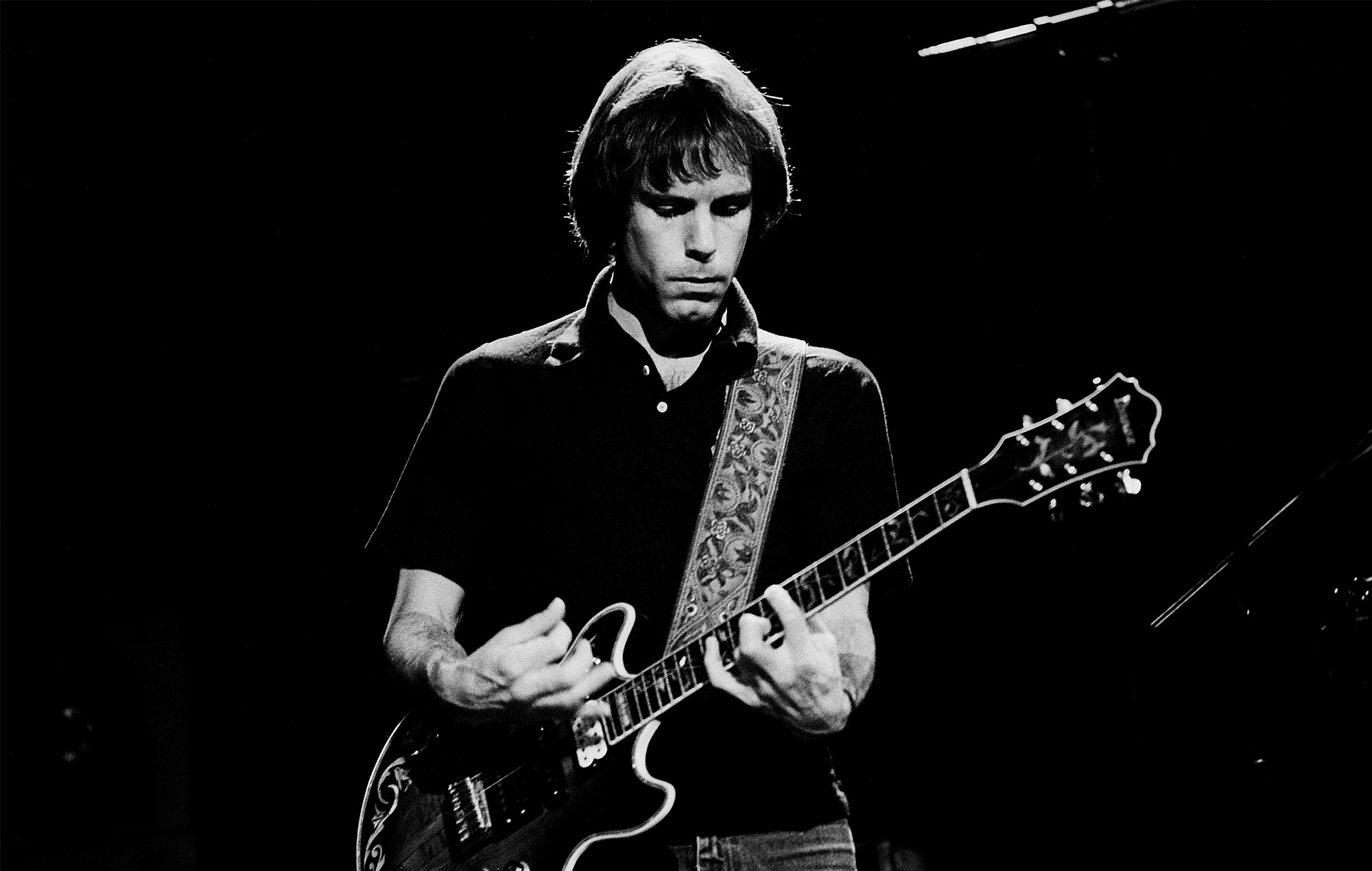
Bob Weir of the Grateful Dead performing in 1981. Credit: Ed Perlstein/Redferns/Getty Images
It was at such events that Weir and the band – rounded out in its first iteration by bassist Phil Lesh, drummer Bill Kreutzmann and keyboardist/harmonica player Ron ‘Pigpen McKernan’ – developed the improvisational leanings which would come to characterise their career as godfathers and figureheads of the jam band scene. They had an almost telepathic musical connection – “we speak a language that nobody else speaks,” Weir once told Rolling Stone. His inventive rhythm guitar work was particularly inspirational within the band, Lesh describing his playing as “quirky, whimsical and goofy”.
Over the course of the late ’60s and early ’70s, the band grew a devoted fanbase of “Deadheads” by dint of their lengthy and immersive jam shows – often stretching to four hours, with songs lasting 45 minutes or more – which they allowed their fans to freely tape and exchange between them, creating a strong community of collectors. Hence, though they scored only one hit single in their 30 years together – 1987’s ‘Touch Of Grey’ – their 22 albums, including classics such as the breakthrough ‘Workingman’s Dead’ and the double-platinum ‘American Beauty’, regularly reached the US Top 30 and they became a distinctly American live phenomenon, filling stadiums with their proudly freak-flag-flying fanbase. Their show for 107,000 fans at Raceway Park, New Jersey in 1977 held the record for America’s largest ever ticketed concert until 2024.
Weir was a versatile and creative player, embracing the band’s shift towards Americana and country rock, releasing two solo albums, 1972’s ‘Ace’ and 1978’s mainstream rock ‘Heaven Help The Fool’, and playing with offshoot act Bobby And The Midnites in the ’80s. There was little sign of dislocation in the ranks though; the Dead’s huge cult popularity carried through into the ’80s and ’90s – their highest-charting album was 1987’s ‘In The Dark’. Along the way they were plagued with the loss of band members, particularly keyboardists, to alcohol and drug issues, but it was only following Garcia’s death in 1995 that the group disbanded. As the voice behind many of their most beloved tracks such as the autobiographical ‘Truckin’’, ‘Playing In The Band’ and ‘Sugar Magnolia’, Weir became pivotal in maintaining the band’s profile and legacy in the decades that followed, performing their songs with his own bands RatDog and Furthur and joining his former bandmates for numerous reunions, playing as The Dead or the Other Ones.
Jay Lane, Bob Weir and Mickey Hart perform in Dead & Company in 2023. Credit: Miikka Skaffari / Getty Images
Despite health issues scuppering some of his live dates at the time, in 2015 Weir took part in a series of three Fare Thee Well Grateful Dead reunion shows at Soldier Field in Chicago to celebrate the band’s 50th anniversary, billed as the final Dead shows for all four surviving members: Weir, Lesh, Mickey Hart and Bill Kreutzmann. Later that year, Weir, Hart and Kreutzmann formed Dead & Company to continue playing huge shows of Dead material over the coming decade. Dead & Company became one of the highest-grossing touring acts in America and between May and August of 2024, they played a 30-date residency at The Sphere in Las Vegas, one of the most successful residencies ever played.
In the meantime, Weir released a third and final solo album ‘Blue Mountain’ in 2016, played with Lesh as Bobby and Phil, and formed a trio called Wolf Bros with Don Was and Jay Lane in 2018. In his final years he remained dedicated to the Dead’s music, playing and curating several Dead Ahead festivals in Cancun, Mexico, performing symphonic adaptations of the band’s songs with orchestras in America and London and playing his final show with Dead & Company at San Francisco’s Golden Gate Park to mark the Grateful Dead’s 60th anniversary. His long strange trip ended with characteristic hardiness: he beat the cancer he was diagnosed with in 2025, only to succumb to underlying lung issues.
Weir’s impact on subsequent generations of American rock music was perhaps best evinced by a 2015 Dead tribute box set compiled by The National’s Bryce brothers, ‘Day Of The Dead’. The set featured contributions from a vast array of intergenerational acolytes including The Flaming Lips, Sharon Van Etten, Kurt Vile, Stephen Malkmus, The War On Drugs and Perfume Genius. Freak flags are flying at half mast across rock music tonight.
The post Bob Weir, 1947-2026: indefatigable rocker who kept the Grateful Dead alive appeared first on NME.