

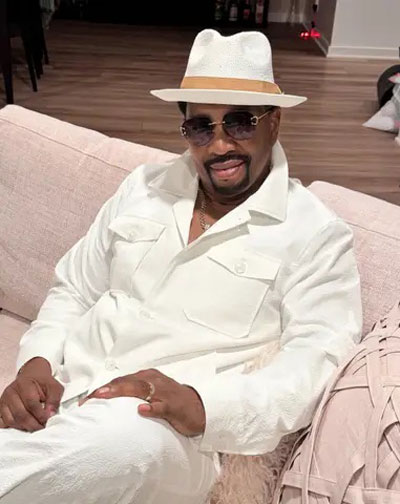
Reggie Braxton enters the music scene with the quiet confidence of an artist who has lived and breathed melody his entire life. A pianist, vocalist, songwriter, and producer, he brings a distinct sense of intimacy to his debut project, ‘The Brax-Tone Experience’ a collection that blends the elegance of jazz with the emotional richness of classic R&B. From the first note, Braxton invites listeners into a world where romance is not simply a theme but an atmosphere.
Rooted in Detroit’s storied musical lineage, Braxton carries a heritage that naturally shaped his sound. With a grandmother who sang the blues and a family tree touched by Motown history, music settled into his identity long before his first official release. His interpretation of Erykah Badu’s “Next Lifetime,” a silky and soulful curtain-raiser for the album, sets the tone for a body of work steeped in warmth, sensuality, and quiet sophistication.
What follows in ‘The Brax-Tone Experience’ is a lush tapestry of timeless love songs – both reimagined favorites and deeply personal originals. Supported by an impressive roster of Detroit talent, from R&B architect J. Poww to Grammy-recognized producers and engineers, Braxton crafts a sonic landscape designed for dimmed lights and unguarded emotion. Whether he’s breathing new life into classics or unveiling his own heartfelt compositions, Reggie Braxton makes it clear: he’s here to redefine what modern romantic music can feel like.
You come from a deeply musical family — your grandmother was a blues singer and your cousin was Melvin Franklin of The Temptations. How did their musical spirits shape your earliest understanding of what it means to feel music rather than just play it?
Reggie Braxton: I’d have to give a lot of credit to my grandmother, Glass English. She always taught me the importance of expressing a song’s lyrics in a way that lets people feel what the writer felt. She used to say, “Listen to the lyrics. Understand what you’re singing about. How can you express it if you don’t know what the song is really saying?” That lesson stuck with me, and it became one of the most important things I learned about music.
You’ve mentioned that Melvin Franklin helped you embrace your baritone voice. How did that realization change your approach to songwriting and vocal performance over the years?
Reggie Braxton: It was major to have my cousin as part of the Temptations! His distinctive bass tone made me feel better about my own voice. First and second tenors typically were the norm, getting all the attention and recognition, but Melvin showed me how to excel by stepping outside the lines. My voice was always in the baritone range with some falsetto capabilities, but because of him, I became comfortable and accepting of my own distinct gifts and was able to create my own lane.
Detroit is known for birthing legends. Growing up there, what kind of musical standards or expectations did you feel surrounded by, and how did they influence your pursuit of excellence?
Reggie Braxton: Growing up in Detroit—and especially in Detroit’s music scene—you always knew there were high standards. There was this unspoken understanding that if you were from here, you had to be great. The music we were surrounded by, the artists who came out of this city, set the bar incredibly high. That atmosphere put me in the mindset that I had to really focus on my fundamentals and work hard to reach the level of excellence we were hearing all around us. Detroit is world-renowned for its music, and being raised in that environment pushed me to pursue excellence in everything I did.
Your “village” included some incredible Detroit jazz greats. What’s one lesson or piece of advice from those mentors that still echoes in your mind every time you sit at the piano or step into the studio?
Reggie Braxton: One lesson that always echoes in my mind is simple but powerful: study and practice. My mentors drilled that into me. Study the greats. Practice. Listen to the greats. Practice. They taught me that mastery comes from constantly learning and putting in the work, day after day. That mantra still guides me every time I sit at the piano or step into the studio
The title The Brax-Tone Experience suggests not just an album, but a full atmosphere or feeling. What does the term “Brax-Tone” mean to you personally, and how did you go about crafting that signature sound?
Reggie Braxton: The Brax-Tone Experience really came out of my mind’s eye. It started as a play on my last name—Braxton becoming Brax-Tone—and honestly, I can’t take any credit for the name itself. All I can say is it feels like it was meant to be.
I’ve always been drawn to tonality—the character of a voice or an instrument, whether it’s a singer, a rapper, or anyone expressing themselves musically. Tonality is everything. So for me, The Brax-Tone Experience represents an invitation. I’m asking listeners to get ready for a musical journey that’s warm, easy-listening, and intentionally crafted with tones that are pleasing to the ear. It’s about creating an atmosphere you can feel as much as you can hear.
You describe the album as a blend of R&B and jazz — two genres that both rely heavily on emotional honesty. How did you balance sophistication and soul to keep the project both elegant and deeply felt?
Reggie Braxton: The balance came naturally because of how I grew up. The very first music I remember hearing was what my grandmother played—icons like Nat King Cole, Dinah Washington, Sarah Vaughan. Then my mother filled the house with Marvin Gaye, The Temptations, and that classic Motown sound. I fell in love with both jazz and R&B at the same time.
To truly feel the music, you have to love it. And because I genuinely love both genres, it allows me to create music that’s both sophisticated and soulful—music you can really feel. It has to be heartfelt to be heart-sent.
The project features heavyweights like J. Poww, Chris “Buddaflywolf” Bivens, and Jezreel Santos. What was it like collaborating with such accomplished Detroit talents, and how did each bring their own flavor to the “Brax-Tone” vision?
Reggie Braxton: Working with these incredible Detroit talents was truly a blessing. J. Poww and I go back over 30 years, and he brings more than three decades of songwriting and production experience—including a Billboard No. 1 hit. We’re family, and that love and respect has always been our glue. That connection made the creative process natural and powerful.
Chris “Buddaflywolf” Bivens is an amazing talent. He told me he grew up listening to Michael Franks, and since I covered some of Franks’ songs, he immediately understood my vibe. That’s why he produced the album with such a smooth, jazzy feel—even on tracks that weren’t originally written as jazz. And of course, Buddaflywolf is a Grammy-winning producer, so his musical instincts elevated everything.
Working with Jezreel Santos was also incredible. He’s a Grammy Award–winning engineer who has worked with artists like KEM and Gregory Porter, and being in his hands gave me total confidence. The more we recorded together, the easier it became to achieve the perfect mix for my sound. Each of them brought their own flavor and expertise, and together they helped shape the “Brax-Tone” vision into something special.
From “Just Like You” to “I Pray It’s You,” the album feels drenched in romance. What draws you to themes of love and intimacy, and how do you keep them authentic rather than cliché?
Reggie Braxton: Both of those songs came straight from my real experiences. I wrote them based on how I felt in those moments, and each reflects a different chapter in my life. I’m a true romantic at heart, and I’ve always wanted to fully experience what it means to love and be loved in return. That’s why the themes stay authentic—because they’re honest. I’m not writing clichés; I’m writing my truth.
You’ve said Detroiters are “music critics by nature.” Was that pressure motivating or intimidating while making your debut record?
Reggie Braxton: It was definitely motivating. Growing up around people who truly know and love music pushed me to bring my best. Detroiters don’t sugarcoat anything—they’ll tell you the truth. Instead of intimidating me, that honesty inspired me to work harder and make a debut record that could stand tall in a city with such high musical standards.
Your first release, a cover of Erykah Badu’s “Next Lifetime,” is a bold and soulful choice. What drew you to that song, and how did you make it your own while still honoring her artistry?
Reggie Braxton: First of all, I just loved this song. “Next Lifetime” is the track by Erykah Badu that completely turned me out. Her vibe, her tonality, the honesty in her lyrics—it all hit me deeply. I actually had the idea to record it back in 2012, and I started working on it with my lady at the time’s brother, Zarondae. From the beginning, I wanted to approach it from a man’s perspective.
The line where Erykah says she’s attracted to someone but can’t act on it because she’s in a committed relationship—that really resonated with me. I was in that same space in my life. I felt those emotions, but I also chose to respect the relationship I was in. That’s why I wanted to record it. It was real for me, and I wanted people to know that there are men who feel deeply, who experience temptation, but still honor their commitments. Recording it wasn’t just about covering a great song—it was about telling my truth while honoring hers.
When reinterpreting such iconic material, how do you decide where to stay faithful and where to take creative risks?
Reggie Braxton: For me, it really comes naturally. I always start by staying faithful to the original song—its message, its spirit, its intention. But if the music takes me somewhere else while I’m performing or recording, I follow that feeling. If it feels right, I trust it. That’s honestly the best way I can explain my process. It’s a balance between honoring the original and allowing my own creativity to flow.
There’s a certain warmth and elegance in your rendition — was there a particular mood or imagery you wanted listeners to experience when hearing your version for the first time?
Reggie Braxton: Erykah Badu did such a phenomenal job with this song. I wanted to honor the feeling she created, but sing it from myperspective as a man. The story was real to me—I had been in that situation before—so my hope was that listeners would feel that same honesty and tension, just coming from a male voice.
I’ve sung that song many, many times, and I always told my boy J. Poww that the song was calling me. I’m really glad I trusted my instincts, because that genuine emotion is what gives the rendition its warmth and elegance. I wanted listeners to feel that authenticity the first time they heard it.
Your originals, like “I Pray It’s You,” show a strong storytelling instinct. Do your songs typically begin with a lyrical concept, a melody, or a personal emotion you want to express?
Reggie Braxton: Thank you for acknowledging the storytelling aspect—that really means a lot. I do consider myself a storyteller, and I always hope the listener follows the journey and appreciates the musical layers along the way. The horn solo on that track was magnificent, and I approached it in the vein of Michael Franks, one of my musical heroes.
With “I Pray It’s You,” the story starts with emotion. I’m describing a moment where I see a woman I’m deeply interested in, and I’m praying to God that she’s the one. And that prayer isn’t just about me loving her—it’s just as important that she loves me too. So for me, songs often begin with a real feeling or experience, and from there the lyrics and melody grow naturally out of that emotion.
You’ve mentioned wanting your songs to be “reflections of your musical heritage.” How do you balance nostalgia with the need to create something fresh for today’s listeners?
Reggie Braxton: I believe music is in constant evolution. I love what the new artists are doing, and I hope I can connect with younger listeners as well. I draw inspiration from both the legends I grew up with and the new-school greats—artists like Lucky Daye with “Roll Some Mo,” or Drake’s “Passionfruit.”
So when I’m creating, I’m pulling from my musical heritage while also embracing what’s fresh and current. That blend allows me to honor the past without being stuck in it, and to create something new that today’s listeners can relate to.
Many of your influences — from Luther Vandross to Michael Franks — are known for lush arrangements and vocal sophistication. How have they shaped your production style and your approach to vocal phrasing?
Reggie Braxton: Luther Vandross and Michael Franks are absolutely two of my favorite vocalists. I’ve always admired how both of them are true wizards when it comes to singing beautiful, complex melodies. They stay completely authentic to their own individual gifts, and that’s something I deeply respect.
I’ve listened to those two more than just about anyone else. I’ve sung their songs over and over again, and I never get tired of the work they’ve given us. I can only hope that some of their styling, phrasing, and musicality has rubbed off on me. Their influence definitely shapes the way I approach arranging and how I deliver a vocal line—with intention, nuance, and emotion.
Detroit has always been the heartbeat of soul and R&B. What do you think the new generation of Detroit artists can learn from the legacy of Motown and its pioneers?
Reggie Braxton: I think the new generation of artists should really take the time to learn how it all began. I’d encourage them to visit the Motown Museum, listen to the stories, and understand the determination that drove those pioneers. When you hear how much artists like Diana Ross, Mary Wells, The Temptations, Smokey Robinson—and so many others—wanted to succeed, you realize how deep their passion ran.
They wanted to make music more than anything in the world, and that level of dedication is the key ingredient. That’s what today’s artists can learn from the Motown legacy: the hunger, the work ethic, and the love for the craft.
How do you hope The Brax-Tone Experience contributes to that legacy — both as a continuation and as something uniquely your own?
Reggie Braxton: I can only pray and hope that the music I’ve created and performed will be seen as something special and uniquely my own. The Brax-Tone Experience is exactly that—Reggie Braxton’s experience. It’s my interpretation of these songs, shaped by my influences, my story, and my sound.
If it can stand as both a continuation of Detroit’s rich musical legacy and an expression of my own identity, then I feel I’ve contributed something meaningful.
You’ve performed with many Detroit icons. How important is collaboration in preserving and evolving your city’s sound?
Reggie Braxton: Collaboration is extremely important. The real blessing comes when you find the right people to collaborate with—that’s a gift in itself. But if you’re genuinely committed to the music and open to working with others, the right collaborations will naturally come your way. When you look at the credits of so many great songs being made today, you’ll notice a long list of names. That’s because collaboration is at the heart of great music.
I feel blessed to have some of Detroit’s finest talent on my project. Ralph Armstrong, a world-class bassist, has played with Aretha Franklin and countless iconic artists. Gayelyne McKenny, another world-class drummer, also played with Aretha and many of the greats. Drummer David Brandon has performed with legendary groups, including The Spinners. And Dwight Adams—an incredible trumpet player from Detroit—still performs with Stevie Wonder.
All of these musicians were born and raised in Detroit. Working with them not only elevates the music, but also helps preserve and evolve the sound of our city. Collaboration keeps the Detroit legacy alive.
Now that The Brax-Tone Experience is out and “I Pray It’s You” is charting, what’s next? Are there plans for live performances, a follow-up project, or even visual storytelling to extend the album’s world?
Reggie Braxton: I’m really excited about what’s next. I’m having my record-release party on December 5th of this year, and I’ve already written a new song that’s getting a lot of attention—so definitely be on the lookout for that. I wrote and produced it myself, and I’m proud of how it’s being received.
I’m also already working on the next project. There’s a lot of new music and new ideas coming, and I’m truly excited about my future and where this journey is heading.
Finally, if someone dimmed the lights, poured a glass of wine, and pressed play on your album — what do you hope they feel by the time the final note fades?
Reggie Braxton: I’m hoping that my brothers and sisters of all nationalities, from every place in the world and every language, feel one thing in common: the desire to show love to someone who has captured their heart. If my music can be part of creating that moment—helping someone express how they feel—that means everything to me.
When the final notes fade, I hope they’re holding each other close and sharing a romantic evening. If my album can help bring two people together like that, then I feel I’ve done something truly meaningful.
Follow Reggie Braxton on Instagram at @reggiebraxton007 and on YouTube at https://www.youtube.com/@reggiebraxton1392 . Watch his “Next Lifetime” video at https://youtu.be/jOJvYGsBl08?si=keP1MJzy2qD1ql15 and listen to the album “The Brax-Tone Experience” at https://open.spotify.com/album/0a8hne2kp8qquBF8If4osO as well as your favorite streaming/download platform.