

To my surprise
The devil inside
Was nicer than I ever guessed
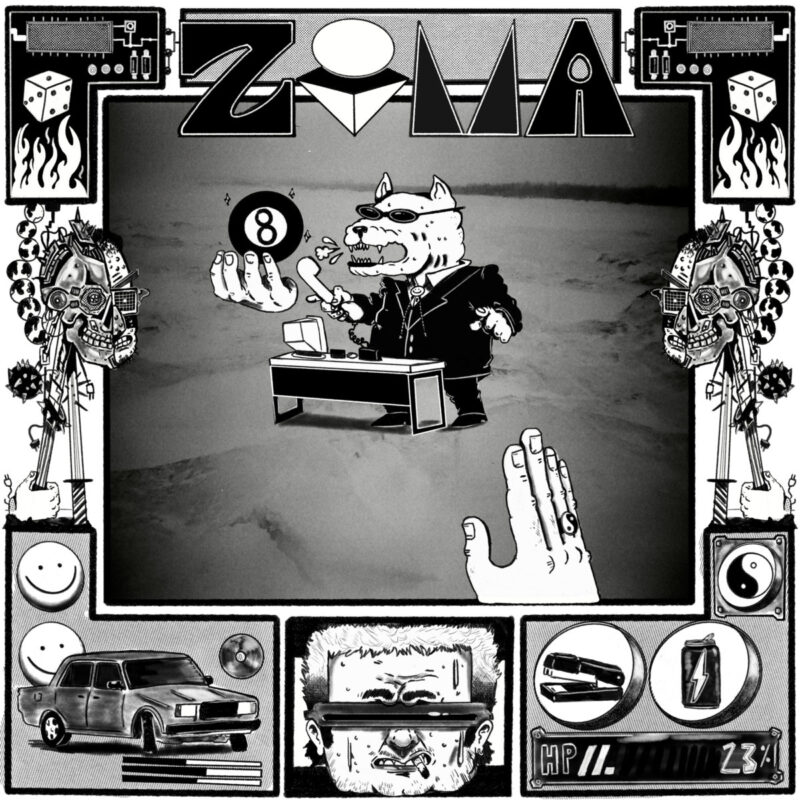
Winnipeg seems like one of those towns where winter seeps into the walls, into your molars, into your view of other people, into the private little bargains you make with yourself when the day clocks out before supper. Stephen Levko Halas, recording as Tired Cossack, understands this with the kind of bone-deep familiarity – and authenticity. On ZIMA, his third full-length, he turns that climate into character. In Ukrainian, after all, Zima means “winter,” although those of us who lived through the 90s would be delighted to crack open the beverage version while this plays. This record comes at you with cold-wave severity, post-punk tension, grunge abrasion, shoegaze blur, and the occasional folk ghost from the old country, yet it never feels like a pile of tasteful influences arranged on a shelf for inspection. It feels lived in and bruised; like somebody took a busted transistor radio, a notebook full of romantic mistakes, a bag of bad habits, and a family history that still knows the names of mountains and sheep paths, then tossed them all into the snow and hit “record.”
ZIMA never pretends misery is noble, and it never powders over its own uglier moods. Tentacles opens the album in a fit of self-recrimination and social miscalculation, a song about getting class, desire, guilt, and silence tangled so badly you can barely tell whether the worst injury came from what was said or what got swallowed. The guitars have that rangy Daniel Ash sting, and then those No Wave sax blasts come barging in like some downtown delinquent kicking open the side door at a wake. There’s chanting too, odd and unsteady, which gives the song the queasy feel of a mind talking to itself in a mirror and losing the thread halfway through.
November 14 (featuring Zagublena) lands like a public breakdown staged at the edge of a political rally. The track lurches between panic, resentment, fatigue, and a kind of spiritual dry-heaving, while Zagublena’s presence gives it extra chill and extra cut. Her vocal has that Eastern European darkwave drag to it, like it’s pulling history behind it with a rope tied round the waist. Halas leans toward Kyiv-inflected moods, and here that affinity pays off in a song that feels split between the body and the screen, between sleepless nerves and the language of public collapse.
She Was takes a hard left into remembrance and nearly steals the record by being plainspoken at the exact moment when plain speech can knock you flat. Halas writes about friendship, grief, and the afterlife of small domestic rituals. You can hear traces of that scrappy ’90s catholic taste – Eels, Pixies, Southern Culture on the Skids – in the way the song carries its ache with a sideways grin and a little slouch in the shoulders. It remembers a person by the room they lit up, the cigarettes they held, the television they watched with you, and that is often how loss arrives in real life: through furniture, stains, kitchen chatter, and the sudden vacancy inside a once-ordinary hour.
Then comes Groceries, which turns a basic errand into a harrowing trip through dependency, craving, and the hateful absurdity of having to function when your head feels like a junk drawer full of snapped wires. The screaming splits the difference between Kurt Cobain and Black Francis, and the guitars scratch and scrape with that oversized, squealing Smashing Pumpkins kind of grandeur, as if each chord were trying to chew its way through drywall. Halas catches the humiliating scale of modern distress: how stepping outside for provisions can feel like a moral trial, a relapse trigger, and an indictment all at once.
Cab has a grubby little glow to it. There’s a trace of Forest for the Trees, a little early Beck, a bit of bedroom delirium opening into something wider and stranger, and the song uses that spaciousness well. Beneath the hooks sits a portrait of debt, depletion, and the kind of self-disgust that grows best in stale rooms under bad light.
Zima is one of the album’s finest gambles because it lets heritage in through the front door. Ukrainian language and folk imagery shift the atmosphere entirely, bringing courtship and highland memory into a record otherwise packed with urban nerves and modern damage. It is catchy in the most old-fashioned sense of the word, the kind of melody that seems to have been waiting around for years in the rafters until somebody finally gave it breath.
Heaven with Adam Soloway drifts into a dazed romantic haze somewhere between Lightning Seeds sweetness and My Bloody Valentine blur, though even there the song keeps a live wire under the skin. Dexsomnia and Pines deepen the album’s nocturnal malaise, one dragging itself through chemical unease and resignation, the other seeking relief in pastoral retreat while suspecting every refuge comes with an expiration date. By Gran Turismo, Halas is staring into fluorescent vacancy, hearing engines and passing faces as if modern life were one long antiseptic hallway.
Listen to ZIMA below and order the album here.
Tired Cossack is genre-bending, although that phrase has become so overused it usually means somebody bought three distortion pedals and a Soviet synth plugin. Here, the blend makes emotional sense. The cold-wave elements carry alienation. The grunge side carries bodily disgust and blown-out feeling. The shoegaze smear gives memory its proper distance, and the Ukrainian folk current supplies bloodline, soil, and an older form of longing that indie rock usually doesn’t know what to do with. You hear a guy trying to make room for all of it at once: the family inheritance, the freezing city, the bad habits, the damaged friendships, the panic, the lust, the public noise, the private rot, the brief little jokes people tell to avoid going under.
That’s a big mess to carry into a record, which is precisely why ZIMA has such force. It sounds like a man arguing with weather, history, desire, and his own head in real time, and for forty-odd minutes, he wins often enough to make you believe there may yet be some crooked form of grace, after all.
Follow Tired Cossack:
Instagram
Bandcamp
Spotify
Apple Music
Cover Art: Aja Woodward
The post “Mountains of Grief, Life is a Game” — Winnipeg’s Tired Cossack Releases Wintry Post-Punk LP “Zima” appeared first on Post-Punk.com.