

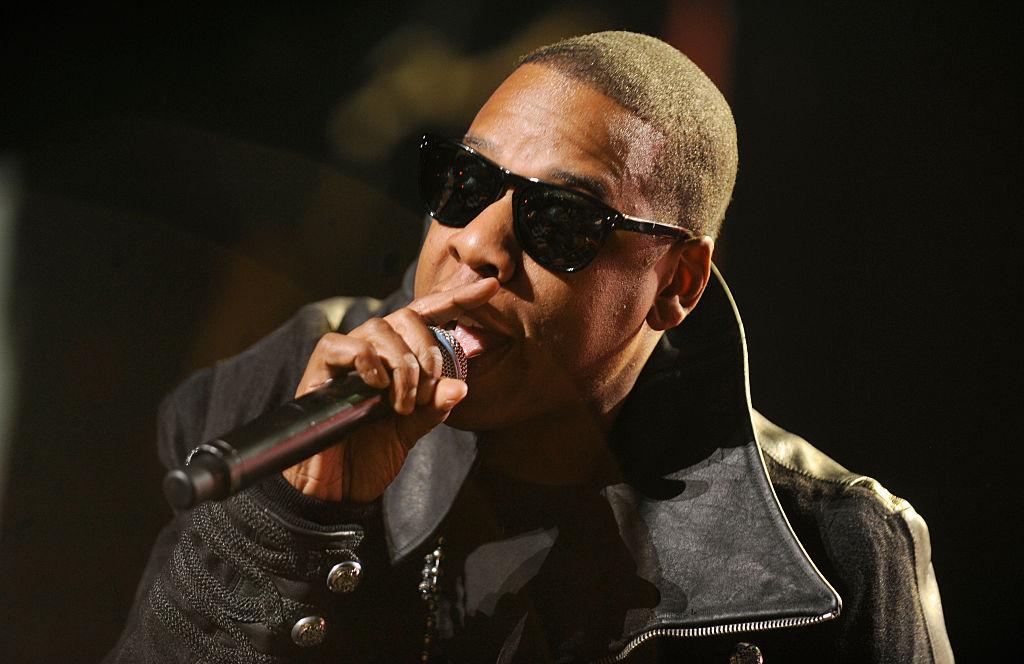
Source: Tim Mosenfelder / Getty
JAŸ-Z is having one of those reminder runs again. Between headlining Roots Picnic with The Roots on May 30, the “JAŸ-Z30” and “JAŸ-Z25” Yankee Stadium shows on July 10 and 11, plus a newly added July 12 “Extra Innings” date, Hov has been back in the center of the conversation in a very real way. Add in his new GQ cover story — his first interview in years — and it feels like the culture is taking another long look at what his career has meant, not just to rap, but to Black ambition, taste, business, and longevity.
And that career is absurdly decorated. Jay has 25 Grammy wins, is in the Rock & Roll Hall of Fame, and has spent three decades building one of the most layered solo catalogs Hip-Hop has ever seen. That is why these album debates never die. With a discography this deep, asking 10 Hov fans for their favorite project might really get you 10 different answers. Some ride for the hunger of the early years, some swear by the polished hit-making era, and some think grown man Jay is the sharpest Jay of all. So with all that summer buzz putting him back on everybody’s timeline, we figured it was the perfect time to stir the pot a little and rank every official solo JAŸ-Z album from good to absolute greatest.
13. Kingdom Come (November 21, 2006)
This is the one people usually bring up first when they want to argue that Hov’s comeback did not fully land. It has moments, and even its flaws are interesting because you can hear Jay trying to figure out what post-retirement rap is supposed to sound like for him. But next to the rest of his catalog, it feels a little too stiff, a little too self-conscious, and not nearly as sharp as the albums around it.
12. Magna Carta…Holy Grail (July 9, 2013)
There is real star power here, plus some huge records and a whole lot of luxury rap flexing. The problem is that it can feel more impressive than personal. At its best, the album sounds like a mogul giving you a tour of the penthouse; at its worst, it feels distant in a way that keeps it from hitting as hard as Jay’s more focused statements.
11. In My Lifetime, Vol. 1 (November 4, 1997)
This album lives in a weird place in the Jay conversation because it came after Reasonable Doubt, which is a brutal act to follow. You can hear him stretching toward bigger records and a more commercial reach while still holding onto the street poetry that made people believe in him to begin with. It is not his cleanest front-to-back listen, but it matters because you can hear the transition from gifted MC to full-on rap force.
10. Vol. 3…Life and Times of S. Carter (December 28, 1999)
This is one of those albums that probably gets underrated because it dropped during a run when Jay was making greatness look normal. It is packed with swagger, big energy, and the kind of larger-than-life rap-star confidence that helped define the end of the ’90s. It may not have the airtight classic feel of the albums higher on this list, but it is still a strong snapshot of Hov mastering the balance between bars and mainstream dominance.
9. The Dynasty: Roc La Familia (October 31, 2000)
Yeah, it was framed partly as a Roc-A-Fella family affair, but it still sits in the official solo-album run and deserves to be treated as if it belongs. What makes it work is that it captures Jay in full boss mode, bridging eras while helping build the myth of Roc-A-Fella as more than a label. It is not as lyrically devastating as his very best work, but the album’s influence, grit, and crew chemistry give it a lot of replay value.
8. The Blueprint 2: The Gift & The Curse (November 2, 2002)
This is probably the toughest one to place because it is bloated, uneven, and still somehow loaded with enough high points to make you defend it. When it hits, it really hits — slick production, sharp talk and peak-era superstar Jay doing what only he could do at that scale. It is not disciplined enough to crack the top tier, but there is far too much heat here to shove it near the bottom.
7. Vol. 2…Hard Knock Life (September 29, 1998)
This is the album that turned JAŸ-Z from a respected rapper into an undeniable rap celebrity. The hits are huge, the confidence is massive, and the whole project feels like a man realizing he can move rooms, radio, and the streets at the same time. It is not as lyrically intricate as some of the albums above it, but its impact is too big to ignore, and it helped define what rap superstardom looked like at the end of the ’90s.
6. The Blueprint 3 (September 8, 2009)
By this point, Jay was no longer just a rapper trying to prove he was elite — he was rap establishment, and somehow still finding ways to sound current. The Blueprint 3 gave him giant records without making him sound like he was chasing youth. That matters. There is a confidence to this album that comes from somebody who already knows his place in history and is still adding to it anyway.
5. American Gangster (November 6, 2007)
This one ages beautifully because it feels so locked in. The writing is focused, the mood is rich, and the whole project moves like Jay got inspired and refused to waste the moment. It does not always get mentioned first in casual fan debates, but people who really sit with the catalog know this is one of his most complete listens — grown, cinematic, and razor sharp.
4. The Black Album (November 14, 2003)
There is a reason this album still carries “event” energy. Jay made it like a curtain call, and you can hear that sense of finality and self-mythology all over it. The production lineup alone feels legendary, but what really makes the album last is how comfortably Jay sounds in total command of his persona, his legacy, and the room.
3. 4:44 (June 30, 2017)
This is grown man Hov at his most vulnerable, reflective, and locked in on legacy. Instead of trying to outrap his younger self in the old ways, he widened the whole frame and made an album about marriage, fatherhood, money, ego, healing, and what Black wealth means when you have actually lived enough to talk about it. Some fans still prefer the hunger of old Jay, but this album hits different because it sounds like wisdom earned the hard way.
2. The Blueprint (September 11, 2001)
For a lot of people, this is the answer, and honestly, it is hard to argue with them. The soul samples, the effortless cool, the quotables, the confidence — this is Hov making mastery sound easy. It is the kind of album that helped shape what 2000s rap would sound like, and it remains one of the cleanest examples of an artist being fully in his bag from start to finish.
1. Reasonable Doubt (June 25, 1996)
At the top, we have to go with the one that still feels like scripture to a whole lot of rap fans. Reasonable Doubt is hungry, elegant, cold, detailed, and deeply New York in a way that never gets old. It has the pain, the aspiration, the game, the paranoia, and the polish of somebody who already sounded fully formed on day one. Jay went on to become bigger, richer, and more expansive after this, but there is a reason this album still sits in the center of so many “greatest ever” conversations. It is not just a classic JAŸ-Z album — it is one of Hip-Hop’s foundational texts, period.