
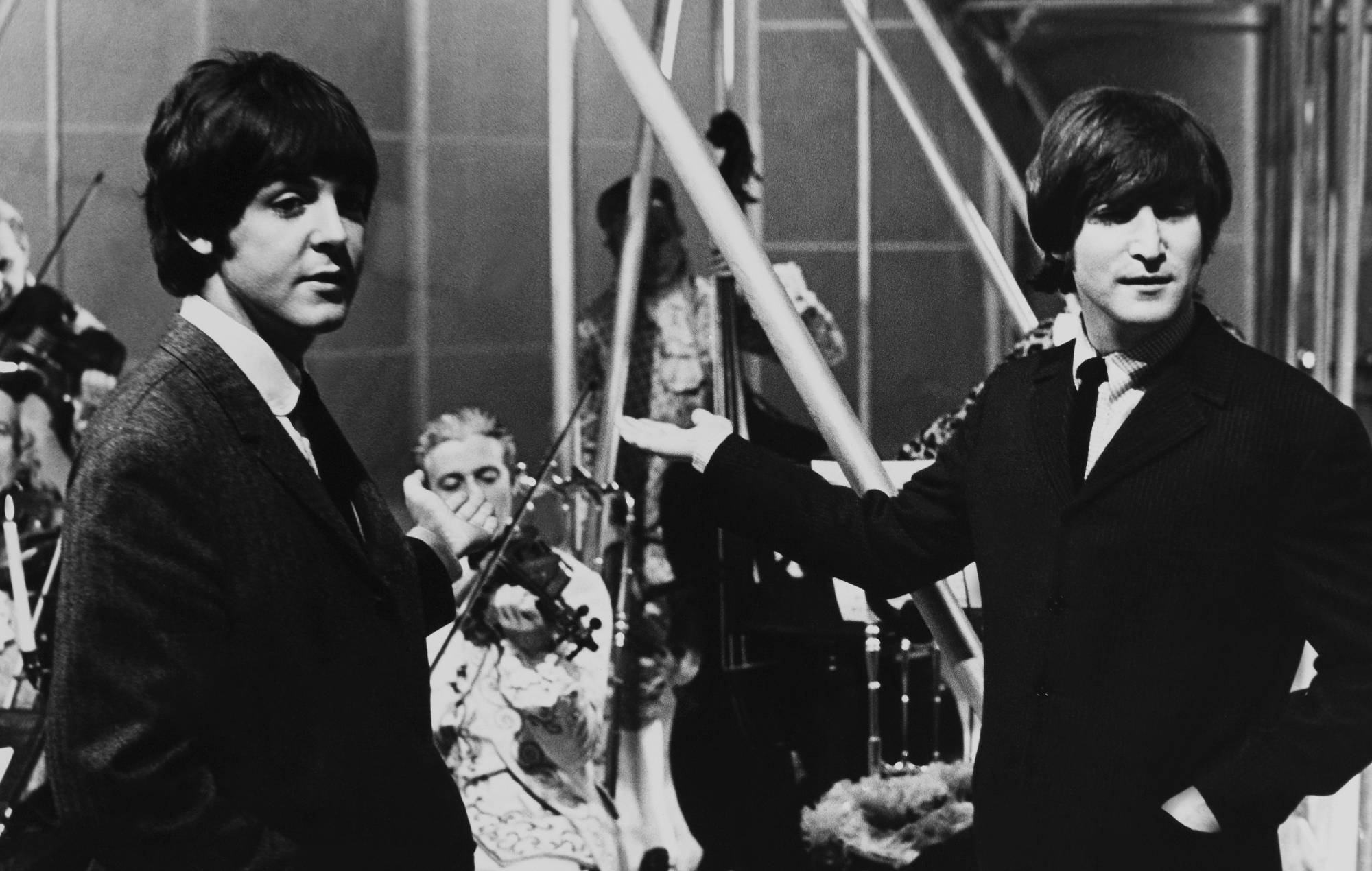
Paul McCartney revealed how he was able to rebuild his friendship with John Lennon before the latter’s death.
READ MORE: ‘Paul McCartney: Man On The Run’ review: the endearing tale of how a Beatle found his Wings
The topic came up in a new clip from the musician’s installment of the Audible series Words + Music, titled ‘The Man on the Run’. The three-hour episode features extended interviews between McCartney and Oscar-winning filmmaker Morgan Neville, as well as new performances from McCartney.
McCartney reflected on how he and John Lennon became close again in the years after the Beatles’ tumultuous split. A key point of common ground for them became fatherhood after Lennon became a parent again with the arrival of his son Sean.
He also recalled telling Lennon that he’d started baking bread and was starting to get good at it, to which Lennon enthusiastically replied: “Oh, yeah, I’m making bread!”
“The things that we had in common were just ordinary, little domestic things,” McCartney said. “Somehow that was peaceful. It was nice that we had that in common. And we weren’t fighting anymore. I would go and visit him and we had quite a bit of interaction, and the same with George and Ringo. It was all getting much nicer.”
The repair of their friendship was “the only consolation” to McCartney after Lennon’s murder in 1980. “I thought, ‘Thank God we got it back together’. I don’t know what I would have thought if we hadn’t and we were still warring.”
He added: “The guy who did it is still in New York and he’s in jail and he’s still knocking around — you can’t make sense of it. The world is a very sort of bizarre place, as we all know.”
McCartney is also at the centre of the new documentary Paul McCartney: Man On The Run. After joining Letterboxd, he wrote that watching the film was “like a period of my life flashing before my eyes.”
“It’s wonderful because it’s full of different emotions and facets. One of the big things for me is seeing so much of Linda, which is great for me and the kids,” he added.
He went on to write: There are parts that are embarrassing. I even asked Morgan Neville if we should take some of those bits out; like me doing ‘Mary Had a Little Lamb’ with a red nose on, and the band in silly outfits. I thought maybe we didn’t need that. But he said, no, that it works, and that the ups and downs make the ending feel more earned. I think he’s right.
“Overall, it’s a success story. The big question after the Beatles was: How do you follow that? Do you not bother? Or if you try, how? I think we did it in a particularly madcap way, and that’s what’s good about the film, it shows how we pulled it off.”
The documentary features archival footage alongside interviews with McCartney, Mick Jagger, Chrissie Hynde, Sean Ono Lennon and Paul’s daughters Mary and Stella McCartney.
NME gave the film a four-star review, which read: “The director does an excellent job of capturing the weight of expectations laid at McCartney’s door in April 1970, when he casually revealed that the Beatles were no more – despite the fact that John Lennon had quietly requested a “divorce” from the group seven months earlier.
“With Paul cast as the villain and a business dispute with ruthless manager Allen Klein grinding on, there’s little wonder that he retreated to a remote farm in Scotland where he worked on the gorgeous (though, again, initially misunderstood) ‘Ram’.”
McCartney also recently paid tribute to his “dear old mate” and former Quarrymen bandmate Len Garry, who died at the age of 84 earlier this month.
The post Paul McCartney says he rekindled friendship with John Lennon over parenting and baking bread before he died appeared first on NME.