

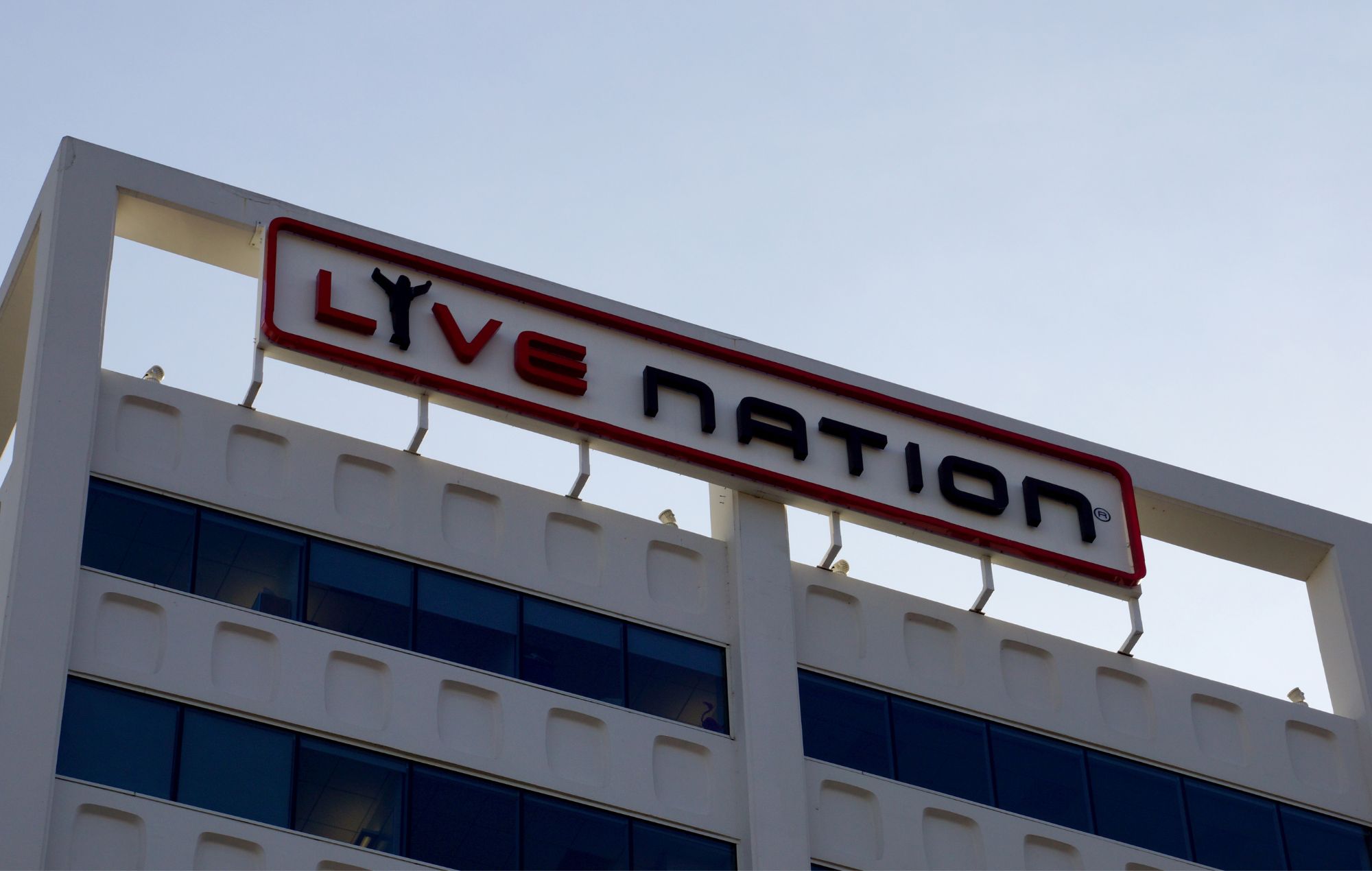
On Tuesday (March 3), Live Nation’s antitrust hearing began, with the US Justice Department accusing Live Nation of deploying a monopoly to dominate the ticketing market, and having “technology that is held together by duct tape”
READ MORE: The ticket levy that could save grassroots venues and artists: what happens next?
Both Ticketmaster and its parent company, Live Nation, are accused of abusing their power in the live events market to create an illegal monopoly. The case, filed nearly two years ago, sees the DoJ allege that Live Nation has used the monopoly to stifle competition, dominate the ticketing market, and gain money from fans via high prices and surcharges.
It is also accused by the Department of Justice of requiring artists to use its concert promotion services if they want to perform at the venues it owns, as well as dominating ticketing services through threats and exclusive contracts with major concert venues that span over years.
The hearing began in Manhattan yesterday, and could result in the DoJ arguing for Live Nation and Ticketmaster to be separated – undoing the merger which has been in place for over 10 years – or the companies paying out compensation to ticket buyers.
“We are here because they misuse their market power,” David E. Dahlquist, a lawyer for the Justice Department’s antitrust division, said in court (via The New York Times). “They earn their profits through illegal action.”
He went on to say that the case was “about power” and “the power of a monopolist to control competition”, while Live Nation disputed the claims and insisted that it does not hold a monopoly.
David R. Marriott, the lawyer representing Live Nation, argued that it has never made threats, makes minimal profits, and still has to fight for every deal it makes due to the “marketplace [being] more competitive than ever it has been before.”
“Live Nation and Ticketmaster are all about bringing joy to people’s lives,” he added. “And doing it lawfully and doing it legitimately.”
Since Ticketmaster and Live Nation united, it has been alleged that artists have on average lost more money than ever from touring, ticket prices have increased, and there are frequent complaints from rival companies that the competitive landscape is unfair.
The crowd for Sam Fender at Reading 2023. Credit: Andy Ford for NME
“Today, the concert ticket industry is broken, in fact the concert industry itself is broken. It is controlled by a monopolist. It is controlled by Live Nation,” Dahlquist told jurors in his opening statement (via The Guardian), while Jonathan Hatch, an attorney for New York state, alleged that Ticketmaster keeps more in fees than its competitors.
Last month, a judge overseeing the trial dismissed some of the accusations levied against Live Nation, including claims about how it sells tickets to the public and how it works with artists to host events in “major concert venues”. The judge, however, did reject Live Nation’s request to pause the trial to allow it to appeal.
In court yesterday, the DoJ claimed that Ticketmaster handles ticketing for 86 per cent of “major” venues and claimed that it was “not healthy competition”.
Marriott disputed this and claimed that the government was “cherry picking” venues to present a skewed representation of the ticketing landscape.
Also in their case, the government highlighted issues that arose for fans looking to buy tickets to Taylor Swift’s ‘Eras’ tour in 2022, when huge numbers of fans were shut off from buying tickets.
In his argument, Dahlquist claimed that these issues were because of the alleged monopoly held by Live Nation, which meant that they were not concerned enough with the level of technology needed to make the site run efficiently, as they did not face a major competitor.
“Their technology is held together by duct tape,” he said, while Marriott claimed that the issues with the ‘Eras Tour’ sale were because of online bots, and that the site was back up and running as usual after a few hours.
The trial continues this week, and is expected to see Kid Rock and Mumford & Sons’ Ben Lovett testify, as well as executives from rival ticketing companies, venues and more.
In September, it was reported that US regulators were suing Ticketmaster Live Nation, over alleged “illegal” tactics when reselling tickets.
The crowd at Reading 2023. Credit: Andy Ford for NME
The Federal Trade Commission (FTC), along with seven states, alleged that the entertainment giant coordinated with brokers to purchase gig tickets and sell them at a “substantial” markup. In turn, the company is accused of profiting from large resale fees and violating consumer protection law.
Those claims were wildly different from the stance held by Live Nation, with their CEO at the time claiming that music concerts are “underpriced”.
Calls for Live Nation and Ticketmaster to be broken up have been raised in the UK too, with claims of the ticketing giant having exceeded “market dominance” of gigs being raised by the Association Of Independent Festivals (AIF).
Online, the AIF claimed that “our data showed that Live Nation and affiliated companies control the majority of arena, stadium and outdoor concert tickets in 2025. The UK monopoly threshold is 25 per cent. Market dominance position is 40 per cent. Live Nation control is 66.4 per cent.”
In response, a rep for Live Nation told NME that during the evidence session, the AIF’s figures “overstated our ticket sales by 368 per cent, so any inferences drawn from this data about our market share aren’t credible and are likely to be misleading”.
The Labour government have been making efforts to tackle high costs of ticket prices, and announced back in January 2025 that they’d be looking to enforce a price cap on how much touts can re-sell tickets for, alongside an official consultation into the industry and controversial ‘dynamic pricing’ practices.
After Radiohead, Sam Fender, Dua Lipa and more led the call for them to keep their pledge later in the year – reports emerged that the government had landed on a plan after a period of consultation.
In November, the government shared that new rules will make it illegal to re-sell tickets for live music, sports, comedy and theatre events above original cost – making re-sold gig tickets roughly £37 cheaper on average and collectively saving fans £112million per year. Massive fees from secondary ticket sellers will also be stamped out.
Also in an attempt to help support grassroots spaces and help artists tour, there has been a push for a ticket levy to be introduced, which would see smaller venues and rising talent across the country receive a contribution from arena and stadium gigs to ensure their survival.
Pressure is on for the live music industry to ensure that 50 per cent of these shows are voluntarily paying in by June 2026, or else the government will step in to make it mandatory by law. Live Nation in particular has come under fire for not being as involved as other companies.
The company responded to the criticism by telling NME that they “support artists’ choices on charitable donations, and have worked with numerous artists who have contributed to the voluntary levy – from Coldplay to Biffy Clyro – and will continue to do so.”
“These companies are delivering,” he said of the likes of SJM, Kilimanjaro and AEG. “Live Nation, you know, and the whole industry knows, you are not. If the voluntary levy fails, it will not be the fault of the companies who have already embraced it, or Music Venue Trust, or the government, or any will to do it on behalf of individuals, artists, managers, agents, audiences or anyone else.”
“It will be a direct consequence of the overwhelmingly dominant force in the arena and stadium market deciding not to deliver a voluntary levy,” he added. “That’s your choice, Live Nation, and everyone in the industry hopes you make the right one.”
The post Ticketmaster’s “technology is held together by duct tape” trial hears, as Live Nation’s antitrust hearing begins: “The concert ticket industry is broken” appeared first on NME.