

Universal Music Brasil is bringing four classic albums from the South American country to vinyl. Each of the four iconic albums—Chico Buarque’s Vida (1980), Elis Regina’s Elis (1972), Gal Costa and Caetano Veloso’s Domingo (1967), and Gilberto Gil’s Louvação (1967)—represents a milestone in Brazil’s vibrant musical legacy.
Chico Buarque’s Vida marked a turning point for the 36-year-old singer-songwriter. Released in 1980 amidst a turbulent national politics, the album takes an introspective and poetic approach to social issues. 10 of the 12 tracks on Vida feature arrangements by Francis Hime, including “Bastidores” and “Morena de Angola.” Buarque and Tom Jobim wrote “Eu Te Amo” for Arnaldo Jabor’s film of the same name, with arrangement and piano by Jobim. Another classic track is “Bye Bye, Brasil,” co-written with Roberto Menescal for Cacá Diegues’ film. Unlike a funky single version released in 1979, this is a bolero-influenced version with commentary on a changing country.
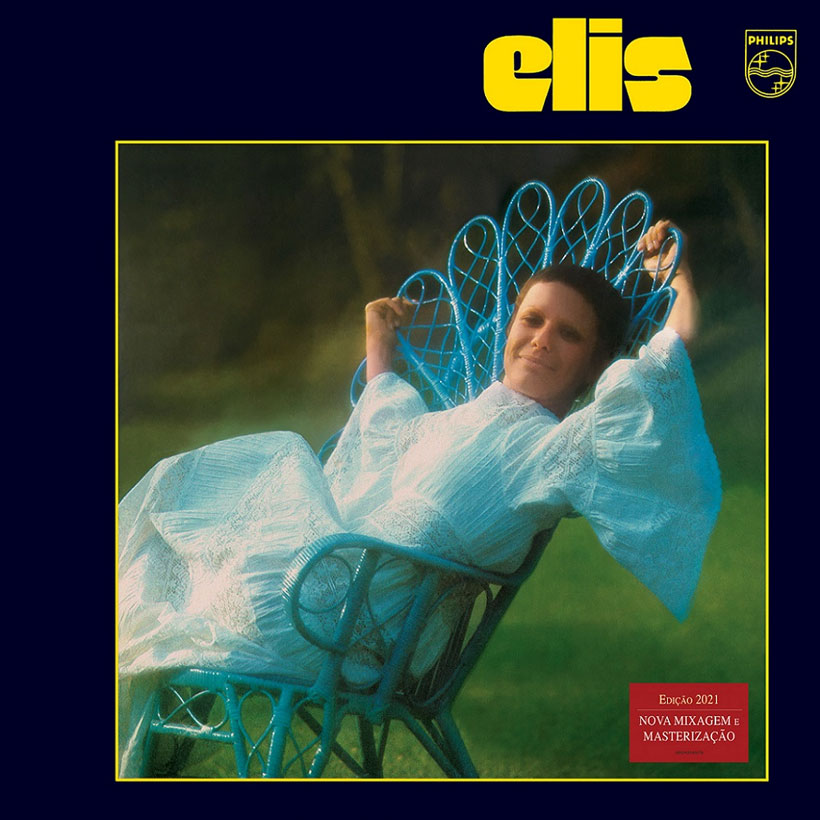
Elis is considered to be one of the best albums by the Musica Popular Brasileira star Elis Regina. Released in 1972 by Philips Records, it was produced by Roberto Menescal and features arrangements by pianist César Camargo Mariano, who would become Regina’s close collaborator and partner. Renowned musicians like Hélio Delmiro (guitar), Luizão Maia (double bass), Paulinho Braga (drums), and Chico Batera (percussion) accompany Regina on hits like “Bala com Bala,” “Nada Será como Antes,” “Casa no Campo,” and “Atrás da Porta.” João Marcello Bôscoli, the singer’s son, remixed and remastered this exceptional album.
Gal Costa and Caetano Veloso were both newcomers to the music industry in 1965 when João Araújo, director of Philips (Universal Music) record label, decided to pair the two young artists together. Domingo was produced by Dori Caymmi, who also wrote some of the arrangements, alongside Francis Hime and Roberto Menescal. The album features seven original compositions by Veloso, including “Avarandado” and “Coração vagabundo,” a duet that would become a hit. Domingo also includes three songs co-written by Torquato Neto (“Minha senhora” and “Zabelê” with Gilberto Gil and “Nenhuma dor” with Veloso. There’s also Sidney Miller’s samba “Maria Joana” and Edu Lobo’s “Candeias.”
Louvação was Gilberto Gil’s debut album, released in 1967 by Philips Records. Arrangements by Carlos Monteiro e Souza, Dori Caymmi, and Leonardo Bruno highlight Gil’s guitar. Lyrically, the album explores Brazil’s past, present, and future. In “Ensaio Geral,” the carnaval is a metaphor for social transformation while “Viramundo” and “Roda” also comment on contemporary issues. “Água dos Meninos” and “A rua” offer moments of nostalgia and the simple “Maria (Me Perdoa, Maria)” is the romantic heart.