
To celebrate Independent Venue Week 2026, artist ambassadors and performers taking part have spoken to NME about their first gigs and why these places are worth saving.
READ MORE: The ticket levy that could save grassroots venues and artists: what happens next?
Running until Sunday (February 1), the returning IVW sees over 236 independent venues putting on over 700 gigs across the UK to celebrate and spotlight the people and places that make music possible and feed into the talent pipeline.
IVW comes shortly after the Music Venue Trust revealed that over half of UK grassroots venues made no profit in 2025, with 6,000 jobs lost. There has been some relief for venues this week with the government U-turning and providing support on potentially devastating business rates, while attention now turns to upping the ante on the much discussed grassroots levy – with pressure being put on the likes of Live Nation to get more involved, as insiders offer that this could see a renaissance for live music and rising artists.
This week sees exclusive gigs from IVW’s 2026 artist ambassadors Nova Twins (for England), Brògeal (for Scotland) and Eve Goodman (for Wales), alongside the likes of Dream Wife and The Clause. Check out our interviews with them below, where they tell us about why these venues matter.
Nova Twins
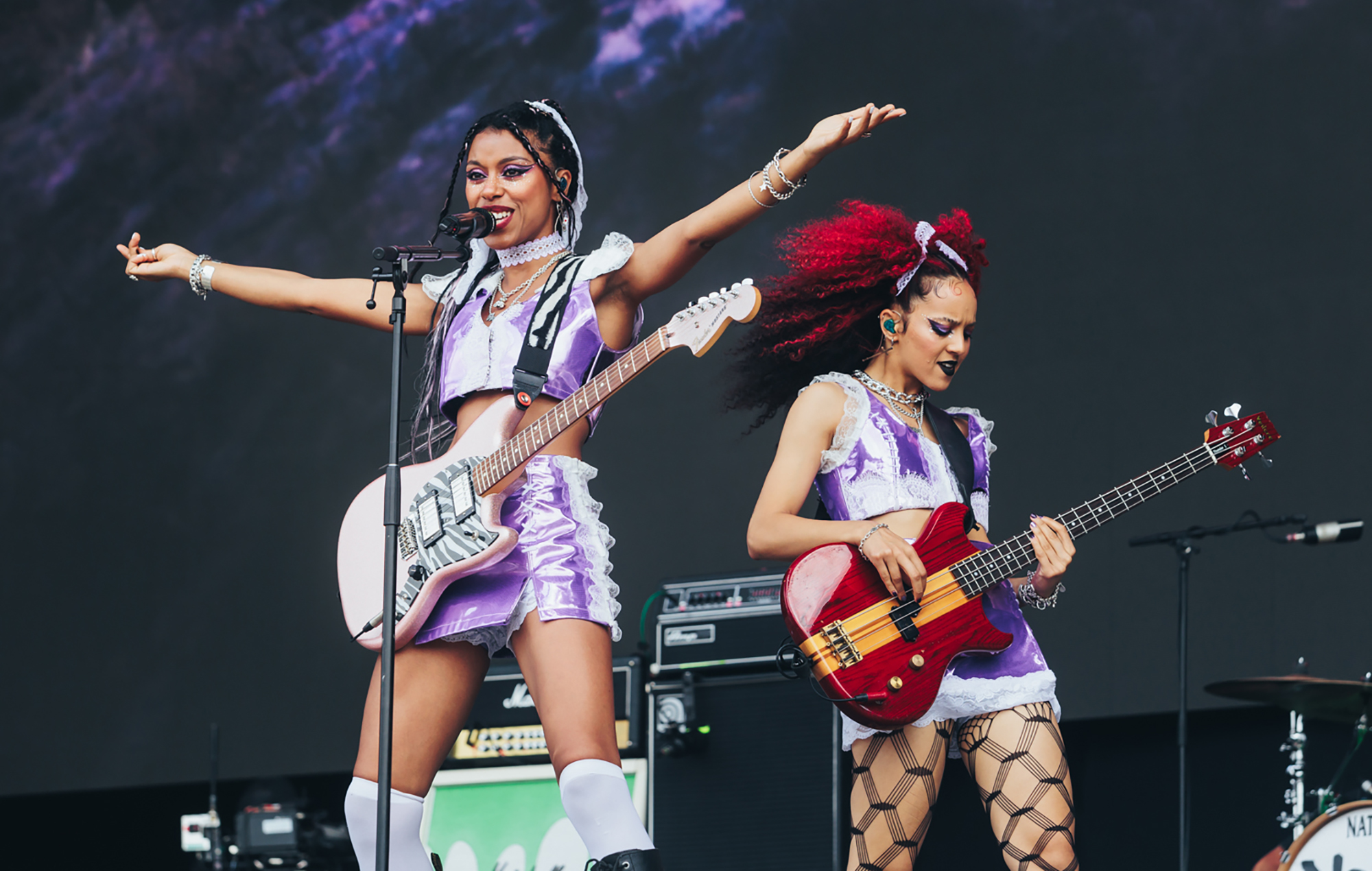
Nova Twins at Glastonbury 2023. Credit: Andy Ford for NME
NME: Hello Nova Twins. What do you remember about your first gig?
Amy Love: “My first gig as Nova Twins was at The Ravensbourne in South East London. They held an open mic there and at the time, Georgia and I didn’t even have a band name, just a few songs that we had written together. We wrote down ‘Amy & Georgia’ on a piece of paper and scratched our name out a few times due to nerves! We eventually shook it off, grabbed our guitars, asked the house drummer to play four-on-the-floor and the rest was history! We got an encore and felt so chuffed about how it all went and the crowd’s reaction! It’s sadly no longer a venue, but it was a catalyst for where we are today.”
What’s special about independent venues that you don’t get from larger ones?
Georgia South: “The intimacy that you get in an independent venue is next to none. It’s one of the only opportunities an artist gets to see their audience up close and personal and for a fan to see every expression of their favourite artist’s face without the barrier of having to squint to see them on an LED screen in an arena.
“Independent venues are very exposing for the artist, there’s nowhere to hide behind fancy production, fat PA systems or lighting shows. It’s the best way to evolve and improve in your craft with the kindness of locals cheering you on (or not) but that’s all part of the growing experience.”
What would you like you see changed in the independent scene in 2026?
Love: “I would love to see our government step up in funding grassroots venues and creatives who keep the ecosystem churning. Countries like France and Ireland have invested and we need to follow suit. Grassroots venues are like the bees of the industry – without them it will all collapse and all that will be left is AI music and 10 second TikTok clips.
“Music is our universal language, it moves you, guides you through the different chapters of your life. It brings people together, it rallies behind what is important and it finds the words when there is nothing left to say! We must continue to protect it in its truest form.”
What would you say to music fans to get them out to more shows in smaller venues?
South: “Smaller shows are so exciting. Energy is exchanged in a way where everyone in the room becomes one, sweat drips off the ceiling, you’re in on the inside jokes, you don’t have to queue for hours and you don’t pay extortionate amounts for drinks. The merch that you buy goes directly to support the artist and the drinks support the venue. Not to mention you’re surrounded by music lovers and locals, so it’s a great way to make new friends. If you’re lucky it’s a short distance from where you live, so it saves costs on travel too!”
Dream Wife
Dream Wife live at The Wardrobe in Leeds (Photo by Andrew Benge/Redferns)
NME: Hello Dream Wife. What do you remember about your first gig?
Alice Go: “Our first Dream Wife shows in venues were actually in Canada. We had like four songs that were all 10 minutes long each and traveled around on the greyhound bus, just us three and a drum machine. We were figuring it out as we went.”
Rakel Mjöll: “Besides those house parties in Brighton and when we spray-painted that hallway in our uni for the laughs – in the name of performance art.”
Go: “As a band just starting out, playing these early shows at dive bars and independent venues around Canada was so formative for us.”
Mjöll: “We were friends in uni at Brighton, and after a night out we thought it would be funny to make a band and tour Canada – without any of us having ever gone to Canada. Had a meeting the next day where we mapped out our mission; picked the band name, contacted anyone we knew in Canada or had music scene leads in Canada, wrote our first songs with a drum machine and then a few months later we were in Canada.”
Go: “We cut our teeth playing at smaller independent venues and are thankful for that time of exploration and support from people that came out to watch us even if they didn’t know our music or really knew why they were there. Without that space and time to grow in smaller venues we would not be the same band we are today.”
Mjöll: “Also shout out to Green Door Store in Brighton. When we came back from Canada our friends organised an event called Dream World (think all the bands had the word Dream in it) and it was one of the most magical, silliest, overload of creativity nights I’ve experienced – so that would have been our first sticky official UK venue show.”
What’s special about independent venues that you don’t get from larger ones?
Go: “The intimacy and the sense of community. The excitement of going down and maybe discovering your new favourite band.”
Mjöll: “I’m from Iceland and I moved to the UK because of the immersive live scene and sense of community built around many of these independent venues – luckily I landed in art school in Brighton and met my bandmates there and have been embraced into this community so beautifully.
“I feel very grateful but also so much has changed in the years since I moved here. So many venues have closed down, communities drifted and it’s now more important than ever to support grassroots and independent venues to keep the beating heart of the music scene well and alive.”
What would you like to see change for the independent scene in 2026?
Go: “More government support for venues struggling to stay open. Larger venues also engaging in the conversation; the smaller venues feed into and enrich the artists playing larger venues and allow artists that have grown on the indie scene to progress organically to bigger shows.”
Mjöll: “Music Venue Trust have been doing incredible work, which we fully support, pointing out that this isn’t a management problem but a structural problems. One of their key demands is implementing a £1 levy on arena and stadium tickets to support grassroots music.
“It’s reported that, in 2025, arena and stadium shows generated a record £8billion for the UK economy. So while these big tours are thriving, the foundations of the entire live music ecosystem are collapsing. They also demand a reform of pre-profit taxation so venues aren’t taxed before they make money. And the most vital one is permanent legal protection for venues against noise complaints.”
What would you say to music fans to get them out to more shows in smaller venues?
Go: “Nothing can compare to the live experience of music. Live music is visceral, sweaty and transcendent. Even if you go to a show by yourself, being together with others IRL feeling the vibrations and message of a song can give you a sense of human connection and community that doesn’t quite exist in the same way online.
“Supporting smaller venues and by proxy grassroots music is vital in continuing and enriching the scene. Without this we all miss out and that is incredibly sad.
Mjöll: “I couldn’t have said it better myself, Alice! I’ve met some of my best friends going to live shows. Community. Magic.”
Eve Goodman
Eve Goodman. Credit: Press
NME: Hello Eve Goodman. What do you remember about your first gig?
Eve Goodman: “My first gig was a special guest show at the open mic night I had been frequenting as a 17-year-old budding songwriter. I sang a new song I’d written about Sylvia Plath and wore a new dress that I christened my ‘gig dress’. I had a whole community around me who came to the open mic night every Thursday, so there was a great turnout of people who supported me. It was such a supportive start to sharing my stories and heart on stage.”
What’s special about independent venues that you don’t get from larger ones?
Goodman: “They feel human, can be quirky and have a personality of their own. This creates a culture of people who resonate with what the venue stands for, not just with the music they program but with the values and the fabric of the venue itself. This brings a sense of intimacy to the relationship between audience and artist- when the community surrounding a venue is strong, as an artist it feels like you’re stepping into a family.”
What would you like to see change for the independent scene in 2026?
Goodman: “Fairer business rates and rent protections. So many of these venues are cultural hubs and more often than not need financial protection to help them continue to thrive.”
What would you say to music fans to get them out to more shows in smaller venues?
Goodman: “Small venues are where the magic happens! The intimacy is unbeatable when you can hear every breath and feel every note.”
The Clause
The Cause. Credit: Press
What do you remember about your first gig?
Pearce Macca: “Frankly, not a lot. We were 17-years-old, fresh out of school with no idea of what to do with our lives, the only certainty was that we wanted to start a band. No promoter would take us on so we decided to take matters into our own hands and put our own gig on in Birmingham, our hometown.
“We crammed 150 people, made up of our teenage mates and complete strangers into the cellar of a pub called The Rainbow in Digbeth and had one of the best nights of our lives. The room was dark, sweat dripped from the walls, the sound was awful and we probably weren’t much better, but nobody cared. We were all there for live music and a big night.
“It’s all a bit of a blur now, all we have to reminisce are some old grainy phone videos, but that night sparked something for us, since then we’ve never looked back. It’s the kind of magic you could only find in a small independent venue like that.”
What’s special about independent venues that you don’t get from larger ones?
Macca: “There’s a certain level of intimacy that you can only find in an independent venue. Having a couple hundred people arm-in-arm, crammed into one room and all sharing a love of music is something you just can’t recreate. Standing up on stage, being able to look into the whites of everyone’s eyes and feel the buzz in the room is a feeling I wish I could bottle up.
“Sometimes, you walk into an independent venue and you can feel the history in the walls. You see your favourite bands names etched into the dressing room wall, photos of famous gigs and memories that have happened there over the years. Then you get to go out and create your own, it’s special.”
What would you like to see change for the independent scene in 2026?
Macca: “I think it’d be great to see some more media hype surrounding the independent scene, championing the acts playing on these circuits and shining the spotlight on them. Having been there, it can feel like you’re shouting at a brick wall sometimes, fighting to be heard and trying to break through the noise.
“There are so many unreal underground artists that just don’t ever see the light of day, if there was more noise in the media it’d uncover so many hidden gems and give the scene the attention it deserves.”
What would you say to music fans to get them out to more shows in smaller venues?
Macca: “Where would music be without these venues? We for one definitely wouldn’t exist. Oasis, Arctic Monkeys, Fontaines D.C., Sam Fender, all these artists started by playing in tiny venues, sometimes to almost nobody. Without these smaller, independent venues they wouldn’t exist either.
“It’s no secret that these places are feeling the pinch at the moment. A lot of the first venues we ever played in are now boarded up, which is gutting. We’ve got a duty to keep these places alive, so go out and be a part of it because the next big thing is out there and that’s where you’ll find them.”
Brògeal
Brògeal. Credit: Press/Sal Redpath
NME: Hello Brògeal. What do you remember about your first gig?
Aidan Callaghan: “Brògeal looked very different five or six years ago. The line-up at our first couple gigs would have just been the three of us rather than the five you know now. We would have played traditional Irish and Scottish folk songs with a minimal set up. Often this was at the back of some pubs, but mostly in the restaurant Rialto, that a few of us worked in.
“Admittedly we were getting to know our instruments back then but all the while we did so in front of small groups of people. We really cut our teeth in these venues. By playing in them every weekend, it gave us the confidence to begin writing with our newly learned instruments… then there were five.”
What’s special about independent venues that you don’t get from larger ones?
Callaghan: “Independent venues have an open door policy. I think in our experience, independent venues welcome you and sort of say, ‘The floor is all yours’. They’re not necessarily going to dictate how you use the time and space that they’ve given up for you. On some occasions it’s really, ‘Make do with what you’re given’ and you’re almost expected to set up sound systems and mix the gig while you play – which we’ve done, but only on a handful of occasions, and without regret.
“It should be said that you’ll learn the most valuable lessons in independent venues. You get your firsthand experience of building professional relationships with venue owners, promoters, engineers, bar staff and even the other members of your band. You’ve got to learn to appreciate all the work that goes into a good set and when that much effort has been invested in it – from yourselves and the people you get to work with – it can be truly gratifying when you see the results. And when it’s all said and done, you get a pat on the back and stick around after your set and stop for a blether. And you use that whole experience as momentum to do it in another independent venue across the road.”
What would you like to see change for the independent scene in 2026?
Callaghan: “The independent scene deserves its flowers. Every act that you’ve had the opportunity to see has started their journey and worked their way through independent venues in your city. Some acts truly wish to be live performers rather than just songwriters that take to the stage every once in a while. It really is important that we do our bit to support our local venues when they need it most. In return, independent venues should make it apparent that everyone, from all walks of life, is welcome in and encouraged to weave their way into the fabric of a cities’ culture.
“We need these venues to form ideas, whether they’re musical, political, personal or common and in the times we live in currently, we need this more than ever. It’s in these venues where the story of communities can thrive and cultivate, if they’ll let us have them.”
What would you say to music fans to get them out to more shows in smaller venues?
Callaghan: “Move your arse? Independent venues are where you gain inspiration. To continue working or making art you need to witness these things yourself. If you’ve ever had the notion to start a wee art project or so and so forth, it’s during these events that you could meet collaborators or reaffirm that you could do the whole thing yourself without anybody’s input.
“Also, gigs in smaller venues tend to be the more memorable ones as you’re face to face with the crowd that you’re playing for or vice versa. Whereas in the big venues, it’s almost too formal and we all waddle in like a herd of sheep to watch the show for an allotted time to then just waddle back out the way you came in, unscathed.”
Independent Venue Week continues until Sunday February 1. You can find all the details about events and participating venues on the IVW website.
The post Artists on their first gigs and why independent venues matter: “It’s where you’ll learn the most valuable lessons” appeared first on NME.