
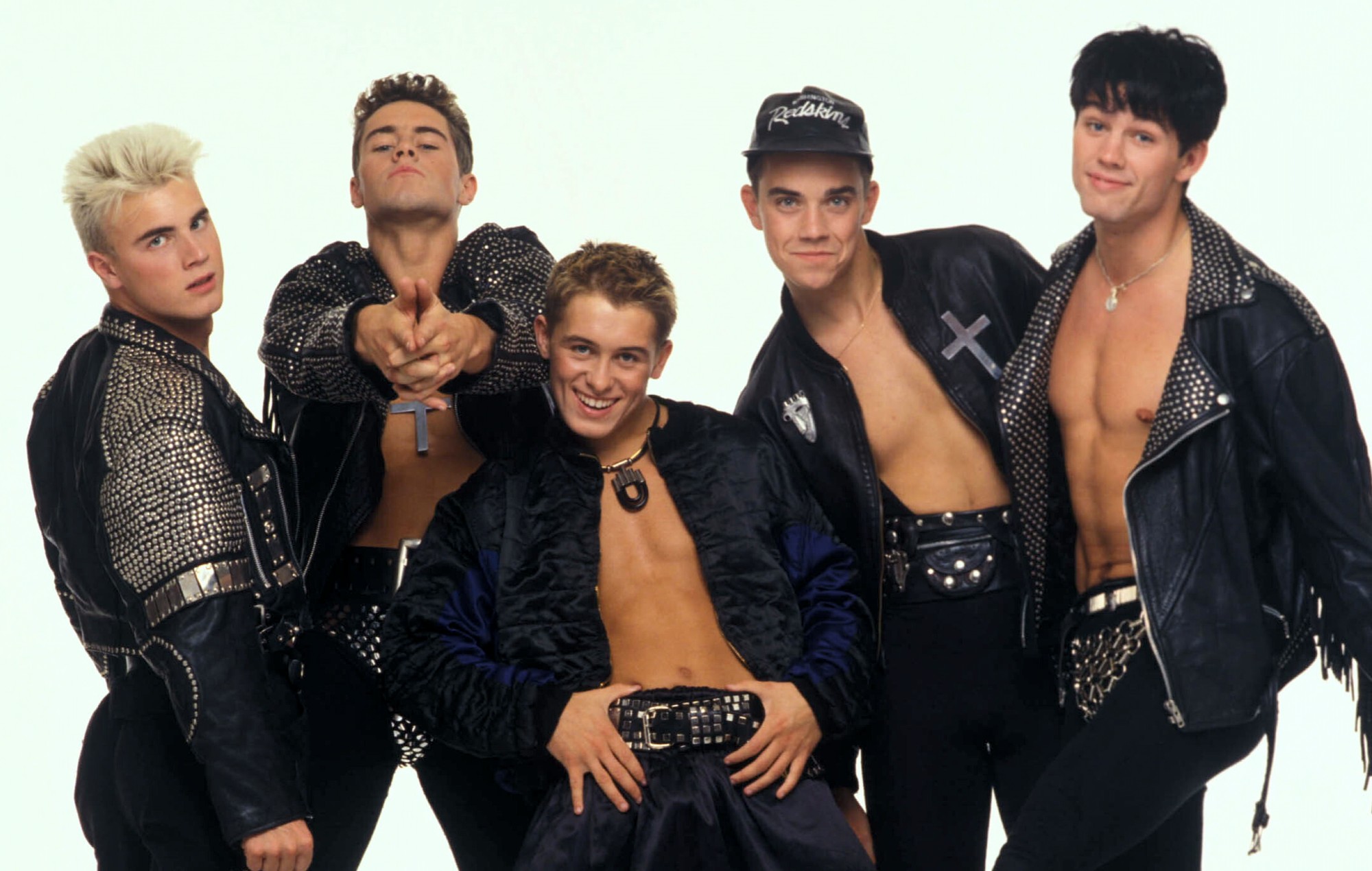
Netflix‘s documentary series about Britain’s best-ever boyband benefits from fortuitous timing. Just four days ago, the group’s prodigal son Robbie Williams broke The Beatles‘ all-time record for the most UK Number One albums – he now has an astonishing 16. It’s a handy reminder of Take That‘s enduring appeal and lofty place on the pop landscape.
READ MORE: Robbie Williams – ‘Britpop’ review: a love letter to the ’90s and bid to live forever
Directed by David Soutar, who’s previously made decent docs about Bros and Ed Sheeran, this three-parter tells their story chronologically. Audio interviews with the band members are laid over archive footage and scrapbook-style visuals that evoke the ’90s Smash Hits era that Take That dominated. This may well be a stylistic choice but it also feels like a practical one. While the band’s current three-member line-up – Gary Barlow, Howard Donald and Mark Owen – recorded new interviews for the series, Williams and fellow departee Jason Orange did not. Their recollections are all sourced from the archive.
The first episode zips through the group’s rise so briskly that it risks becoming boring – quite an achievement given that Take That’s first music video, for 1991’s dance flop ‘Do What U Like’, involved jelly, mops and band members baring their buttocks. A little more of the group’s spiky svengali Nigel Martin-Smith would be nice but there are some sweet and revealing moments. “Myself and Howard, we were the dancers, we just made up the numbers at the back,” Orange recalls self-deprecatingly. Barlow, who set himself apart from his bandmates by penning early signature hits like ‘Back For Good’ and ‘Pray’, says in a very old-before-his time way: “I always dreamed of a [songwriting] copyright.”
The second episode is more compelling, sensitively covering their breakup. An increasingly erratic Williams – by this point, he’s sinking neat vodka in his hotel room – quits in 1995. The remaining band members go their separate ways a year later after a valedictory eighth Number One single. Barlow was famously tipped to become the next George Michael but after a wobbly start, Williams comprehensively eclipses him. Barlow struggles with an eating disorder and low self-esteem as a result, while his former bandmates also flounder: Owen is dropped after his first solo album sells poorly and Donald feels so directionless that he contemplates jumping into the Thames.
Take That have shared these harrowing stories before but Soutar does a good job of placing them in the context of a more overtly cruel media climate. Asked about his bandmates’ solo prospects at a press conference, Williams quips: “Jason will be a really good painter and decorator, I’m sure.” It’s hard to imagine any pop star making such a dig now. The final episode is just as illuminating, reminding us that Take That’s triumphant 2005 comeback – as a four-piece without Williams – was no foregone conclusion. It also reveals that Orange, once there to “make up the numbers”, grew into a source of soft power. It was he who pushed for Barlow to start sharing songwriting duties (and royalties) and for Williams to return to the fold for 2010’s ‘Progress’ album and tour.
Smartly, Soutar frames this as the series’ dramatic crescendo, because from this point on, Take That’s story becomes less interesting. Williams leaves to resume his solo career, Orange beats a retreat from the public eye, and Take That settle into an extended third act as a beloved legacy act – the odd alleged tax discrepancy aside. Fittingly, the series ends with the three-piece singing one of Barlow’s wisest lyrics: “Never forget where you’ve come in from.” After all of Take That’s ups and downs, you don’t doubt they believe it.
‘Take That’ is available to watch on Netflix now
The post ‘Take That’ review: Britain’s greatest boyband get the moving documentary series they deserve appeared first on NME.