

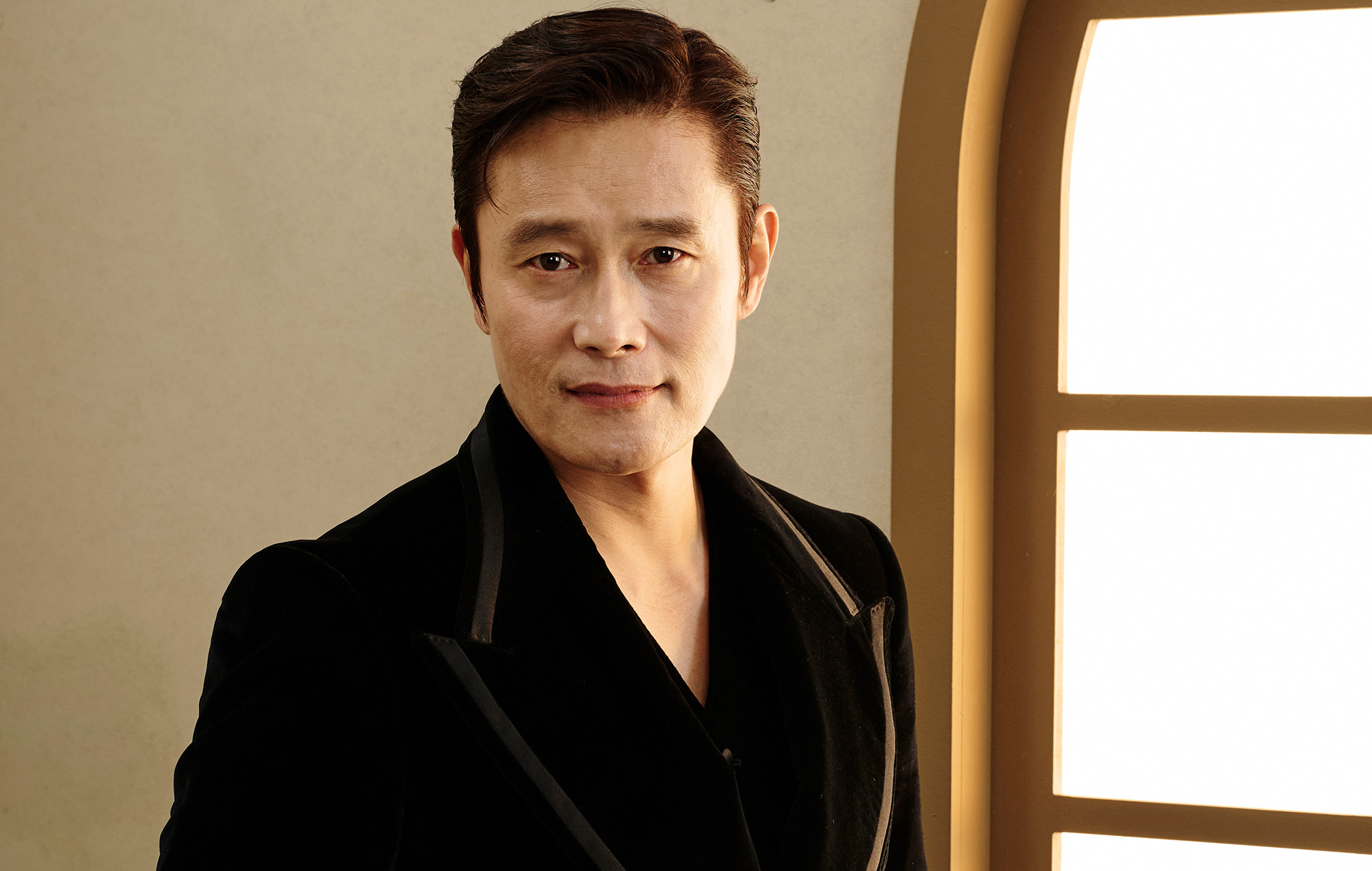
In 2016, riding high on Hollywood roles in G.I. Joe: Retaliation and Terminator Genisys, Lee Byung-hun made history as the first South Korean actor to present an Academy Award. However, this seasoned veteran of over 50 film and TV roles truly went supernova in 2021 when he portrayed the mysterious Front Man in Netflix‘s Squid Game. Lee’s unflappable baddie pulled the strings of the deadly survival contest, but the series ended with a chilling hint that he wasn’t the only villain in town.
Read more: Squid Game season three review: Netflix’s biggest show ends with a brutal bang
Now, he’s showing a flair for jet-black comedy by playing a bumbling antihero in No Other Choice, the latest film from South Korean auteur Park Chan-wook (Oldboy, The Handmaiden). Lee has already earned a Golden Globe nomination for his performance as Yoo Man-su, a seemingly meek middle manager who turns to murder when his corporate job is abruptly terminated. It’s a bleakly surreal, sometimes very funny film that poses timely questions about gender roles, social status and the rise of AI.
Here, Lee talks about No Other Choice, the end of Squid Game last year, and his villainous voice role in another Netflix phenomenon, KPop Demon Hunters.
So, what intrigued you about No Other Choice? Were you on board as soon as the role was offered?
Lee: “Honestly, I actually heard the story from the director a long time ago. About 15 years ago, he mentioned to me that he was preparing to make it as an American film. But later, when he changed his mind and decided to make it as a Korean film, he suggested that we work together. That felt very novel to me even before I read the script. And of course, working with Park Chan-wook was a very exciting prospect for me.”
Lee Byung-hun in ‘No Other Choice’. CREDIT: MUBI
What do you think the film tells us about masculinity and the male psyche?
“This film has a universality that will resonate with people from all over the world, but I think when the director decided to make it into a Korean film, the aspect you mentioned – masculinity – did get strengthened. Throughout the film, there are remnants of Korea’s patriarchal history in the way that the male characters feel that they’re responsible for everything. This attitude can be felt like an underlying current, which leads to [the male characters] making foolish decisions and making things worse for themselves. It deals with a serious social issue in a very comedic manner.”
As you say, the film is filled with surreal humour, but can we also see it as a tragedy?
“Some people have said that Man-su doesn’t get enough punishment for his actions, but for me, this film ends with a huge tragedy. Even though the family may seem like they’re happy on the outside, all their souls have been eaten away. Man-su’s wife and son know about the terrible things he has done, so their family is now broken in an irrevocable way.”
We’ve also heard you recently as the voice of Gwi-Ma, the king of demons, in KPop Demon Hunters. Did you have any idea it would become such a global phenomenon?
“It was four years ago that we had our first meeting with Sony. There really was nothing on the table at the time other than the subject: they wanted to do something with K-pop and had the intentions of making it a very simple story. We agreed to continue having these meetings, but I still had a bigger question and a doubt: ‘Will this actually work?’
“On the other hand, I’m always cognisant that my children can’t really watch any of my films. I wanted to make a film that my kids could see, so that was a big motivator for participating. But after several years of being in communication [with Sony] – and even after the voice acting had been completed – I could never imagine that it would be such a global phenomenon.”
Lee Byung-hun in ‘Squid Game’ CREDIT: Netflix
Squid Game was also a bona fide global phenomenon. Did you appreciate the fact that Front Man got to show a more compassionate side in the final season?
“Hwang Dong-hyuk is very famous in our industry for creating great stories, but I really think he peaked with Squid Game. As soon as we finished season one, he vowed never to make another season because he didn’t have the energy or strength to continue. He actually lost seven or eight teeth while we made season one!
“But when Squid Game became so beloved all over the world, he came up with more stories to tell, which I’m very admiring of. And thankfully, in seasons two and three, we really saw more of Front Man’s background, which I was grateful for. I think the ending was quite unexpected. It seemed like the final end to the series, but yet it left the door open for something more, which was quite surprising.”
Has Squid Game changed the roles you’re offered? Is Hollywood always calling now?
“Sure, there are new projects that people will approach me with. Sometimes they can be from Hollywood, but there hasn’t been a project [from Hollywood] yet that has really, truly moved me and that was subjectively entertaining enough for me to participate in. However, I’m always open to that idea if I feel I can express the character being offered.”
Finally, what do you think the legacy of Squid Game will be?
“It’s probably a bit too early to tell, but what I can say for sure is that in Korea especially, there’s been a change of thinking. Previously, everyone had Hollywood in mind as their final destination [and saw it as] the biggest market you could enter. But now, with streaming services, anyone from any country can tell a good story that’s well-made and highly polished and have it released to greater recognition all over the world. That’s a big change.”
‘No Other Choice’ is in UK cinemas from January 23
The post Lee Byung-hun’s next step after ‘Squid Game’ and ‘KPop Demon Hunters’ is a gamechanger appeared first on NME.