

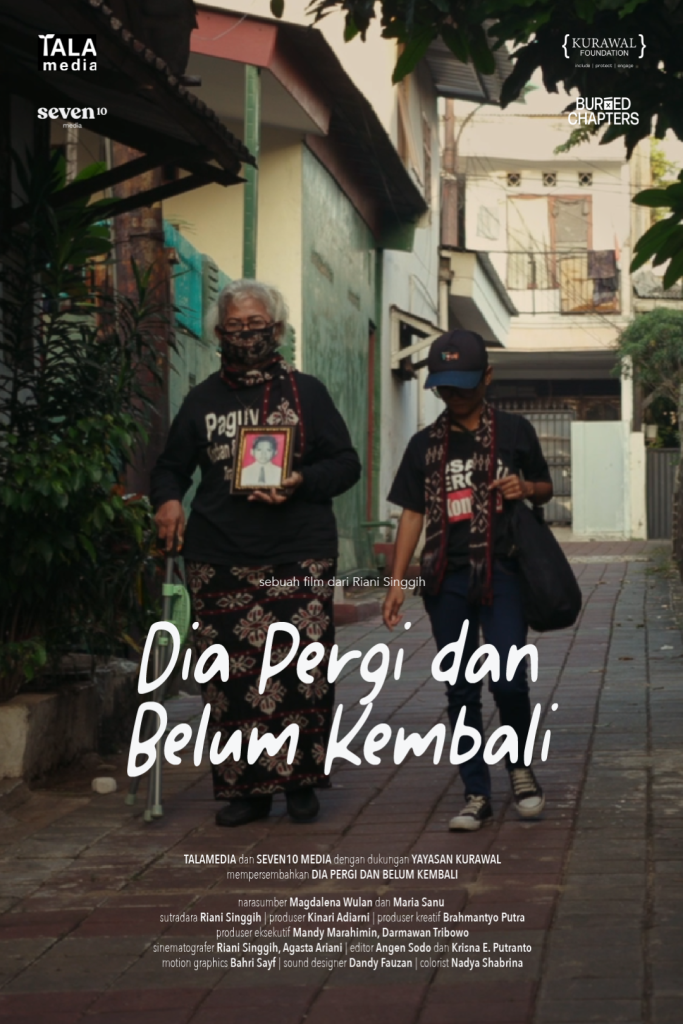
“Where is the justice?” is the question that builds the foundation of filmmaker Riani Singgih’s documentary short Traces of My Brother / Dia Pergi dan Belum Kembali, which screened at the 2025 Minikino Film Week in Bali, Indonesia.
On May 15, 1998, a sudden fire swept through Yogya Mall, Klender East Jakarta. As the fire quickly spread through the busy shopping center, the over two hundred inhabitants inside rushed in panic to escape, only to find the exits barricaded from the outside, trapping them. Witnesses reported seeing groups of men believed to be agitators taking part in looting during one of the nearby riots, heading towards the busy shopping center just before the fire started. These riots which had been taking place all across Jakarta and Sumatra, initially sparked off as a result of students and civilians protesting the Suharto dictatorship and New Order regime, and its targeted racism towards those of ethnic Chinese identity at that time.
Hundreds of people were killed and hurt during encounters with violent rioters, soldiers and , in other malicious acts of arson in different cities across Indonesia
One of the people trapped in what is now known as the Klender Mall fire, was 16-year-old Stevanus, the son of Maria Sanus and brother of Magdalena Wulan. Since that day 25 years ago (Traces of My Brother was filmed in 2023), Maria has asked when her son will return and when she will receive answers and justice from a government that remains silent. For almost three decades, she has wept bitter tears of grief at the injustice of not knowing exactly what happened to Stevanus. Did he indeed die in the fire, or was he disappeared like thousands of others during the many years of government oppression, civil unrest, and genocides throughout Indonesia’s tumultuous history?
For Wulan, the question of Stevanus isn’t only a query about a brother she knew only for a brief moment in time; it’s a mandate to seek justice inherited from her mother. Like so many other families who’ve lost loved ones in various tragedies, such as the 1989 Talangsari Lampung incident, the 2001 military emergency case in Central Aceh, northern Sumatra, and the violence of colonial oppression still happening to the indigenous people of West Papua, Wulan is desperate for her and Maria to receive signs of accountability from the Indonesian government. To date, there has been no serious indepth official investigation into the fire, and identification and prosecution of the perpetrators who killed hundreds of people and forever changed the lives of their families that fateful day.
At the age of 17, Wulan wrote an essay to Stevanus asking where he was, if he was happy there, and when he would return. The essay is poignantly simple letter to a brother long gone and a prayer to God to protect him, and guidance for Wulan on this long arduous journey set forth by her mother.
For Riani, this letter becomes her narrative guide in how to follow Wulan’s thought process in figuring out how she can best be of service to her mother’s cause and how tragedies like the fire reshape and change a family and its individual members. Throughout the film, Riani uses an interesting visual motif of superimposing passages from the essay, notes Wulan makes to herself, and her daily schedule on the walls of the family’s home. ”
Riani employs this creative technique very well to highlight how Stevanus still has such a strong presence in the family home and Wulan’s life. As Maria ages, she has less energy to attend meetings organized by Kontras, the Commission for Missing Persons and Victims of Violence in Indonesia, so Wulan attends the sessions in her place. But they both go to every rally showing their dedication to the lost son and brother whom they both speak of in both the past and present tense.
There are various scenes of Wulan tending to her mother, playing football with neighbourhood boys—much as Stevanus would’ve done when he was alive, visiting the grave site for the victims of the May 14th tragedy, and attending Kontras meetings. But curiously, there are none with Wulan just having a day all to herself, or with other young women her age enjoying each other’s company, and you can’t help but ask the question, “Who is Wulan when she’s not being a daughter or a sister?
Riani understood that in making this film about the 1998 fire, it was important to create space in the narrative and editing process for audiences to understand that this event is inextricably linked to the Indonesian government’s failure to serve and protect its citizens for decades. Recently, this has become all too clear for the world to see in the lack of effective emergency response to the devastating December floods in Sumatra that killed over one thousand people, and destroyed tens of thousands of homes, schools, medical facilities, and community centres.
The flood’s destructive force was in part exacerbated by the wanton destruction of millions of hectares of precious forests and wildlife habitats, to be replaced by palm oil plantations, logging sites, and mineral mines operated by foreign companies.
In making a documentary centered on a traumatic event that still has a profound impact on the families of victims, Riani’s film style is far from intrusive. She wanted Wulan to be present in the film in ways that accommodate her comfort and moments of deep introspection.
Traces of My Brother / Dia Pergi dan Belum Kembali carefully centres a young woman who seems almost sidelined in her own life, carrying a mantle placed on her shoulders by her mother, on behalf of a brother whose absence is almost tangible. Riani’s approach was imperative with a story not only about personal loss and grief, but also the communal tragedy of governmental violence, neglect, and apathy.
In my interview with Creative Producer Brahmantyo Putra at MFW11, we discussed the fine balancing act he and Riani achieved in their responsibility as filmmakers with a story to tell, and their responsibility to protect Wulan’s emotional and mental wellbeing as a person and film subject. We also spoke about making short film documentaries in Indonesia, and how they obtain funding for their production house Seven10 Media.
*All images courtesy of Seven10 Media.
Carolyn Hinds
Freelance Film Critic, Journalist, Podcaster & YouTuber
African American Film Critics Association Member, Tomatometer-Approved Critic
Host & Producer Carolyn Talks…, and So Here’s What Happened! Podcast
Bylines at Authory.com/CarolynHinds
Twitter & Instagram: @CarrieCnh12
#MinikinoFilmWeek11 #TracesOfMyBrother #BrahmantyoPutra #CreativeProducer #kcrush #filmfestival #interview #kcrushinterview #kcrushmagazine #kcrushamerica #filmmakerRianiSinggih #internationalfilm #DiaPergidanBelumKembali #Bali #Indonesia #documentaryshort #YogyaMall #KlenderEastJakarta
The post Minikino Film Week 11 – KCrush Interview with ‘Traces of My Brother’ Creative Producer Brahmantyo Putra appeared first on K Crush America Magazine.