The most radical thing Wicked Forever does is begin quietly.
Not with flying, not with fire, not with rebellion – but with Glinda, standing inside the world she worked a decade to protect, asking herself a question musicals rarely dare to ask:
What if happily ever after… wasn’t enough?
Currently in development as an online novel paired with an original musical album, Wicked Forever is not a stage production—at least not yet. What exists now is something rarer: a living story, unfolding in real time, guided by a complete narrative roadmap and released chapter by chapter.
Four chapters of the upcoming online novel are already live, and they’ve done something few legacy continuations dare to attempt: they’ve destabilized Oz without undoing it. Readers already know that Madame Morrible is back, that new antagonistic forces known as The Ever Still and The Still One are emerging, and that something called Anima Nexus quietly binds every living soul in Oz together.
What they don’t know – what no one knows yet – is how the music sounds.
I do.
I’ve read the full story notes. I’ve seen where the narrative is heading. And I’ve heard two unreleased songs from the companion musical album: Glinda’s “Almost Enough” and Elphaba’s “Emerald Green.” No tracks have dropped. No previews exist. The music lives entirely behind closed doors.
What makes Wicked Forever compelling isn’t nostalgia. It’s consequence. And by the time the final notes of “Emerald Green” faded out, one thing was undeniable: Wicked Forever doesn’t extend the story of Oz—it completes it.
Most stories end when the curtain falls.
Wicked Forever begins there.
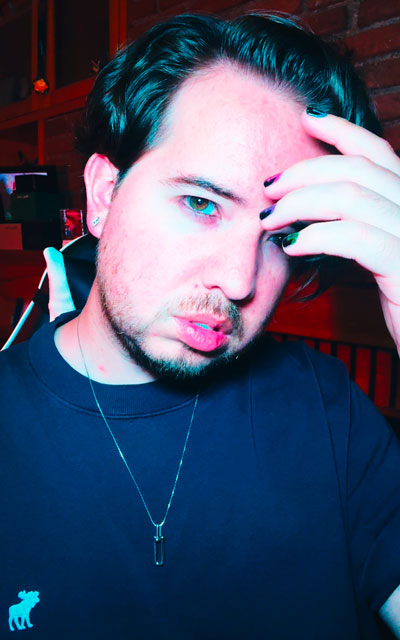
I sat down with Ricardo Padua, composer and writer of the story, to talk about consequence,
corruption, and why Oz may be more afraid of Glinda than it ever was of Elphaba.
Jonah:
Four chapters in, it’s obvious this isn’t a comfort read. Oz feels… unstable.
Ricardo Padua:
Yes this new chapter in Wicked is all about consequences, because peace doesn’t necessarily mean wholeness.
Oz survived, but it never processed what it went through.
That instability has a name now: Anima Nexus.
From what’s been revealed so far, Anima Nexus isn’t a villain—it’s a truth. A metaphysical bond that connects every person in Oz at a soul level. When one part of the system fractures, the damage ripples outward. Magic, memory, identity—nothing is isolated anymore.
Which makes manipulation far easier.
Jonah:
Morrible’s return feels different this time. More insidious.
Ricardo:
Morrible doesn’t destroy things. She reframes them. She knows how to manipulate people, she speaks like a true political figure.
She convinces people they’re becoming what Oz needs.
And nowhere is that more chilling than in her relationship with Glinda.
Publicly, Glinda is still the symbol of order. Privately, she is exhausted. Ten years of leadership, of compromise, of carrying expectations she never asked for—those years weigh heavily in the chapters already released. Morrible doesn’t arrive as a threat. She arrives as reassurance.
And slowly, Oz begins to see Glinda differently.
Not as Glinda the Good.
But as something dangerous. Something necessary.
Jonah:
This is where “Almost Enough” comes in — and I want to be very clear about how big this song is.
Ricardo:
Yes it is, I wanted to write a big “I want” song for Glinda but she doesn’t really want anything, because in the eyes of every other person she already has everything. But she feels it’s not enough. So the music is a big show-stopping Broadway “I want” song but the lyrics speak the truth about Glinda.
Here’s what I can say without exaggeration: “Almost Enough” does sound like a massive Broadway I Want song. It is powerful, uplifting, forward-moving. The orchestration swells with confidence. The melody opens wide. Everything about the music says triumph.
And the lyrics quietly undo all of it.
Glinda isn’t wanting more. She isn’t dreaming bigger. She’s standing in the center of everything she worked for and asking why it still feels unfinished.
“Almost Enough” is an I Want song without wanting more.
That contradiction is its genius.
Jonah:
The music feels victorious. The words feel unsettled.
Ricardo:
Because Glinda knows how to sound fulfilled. She knows how to lie, she knows how to hide emotions, we’ve been aware of that since her days at Shiz. She’s been performing that role for a very long time.
The song doesn’t break Glinda open. It exposes a blind spot. And that blind spot becomes narratively dangerous. When Anima Nexus begins to strain and Oz starts to fracture, Glinda’s quiet dissatisfaction becomes something Morrible can shape, weaponize, and reframe.
The music lifts her up.
The truth leaves her exposed.
But when Elphaba enters the story the energy shifts completely.
Jonah:
We’ve talked a lot about “Almost Enough,” but I want to spend more time on “Emerald Green.” I’m going to say something bold, and you can push back if you want. That song feels like it could become a new Elphaba anthem.
Ricardo Padua:
I don’t really want that, I didn’t write it thinking about that and that thought absolutely terrifies me.
Jonah:
Terrifies you how?
Ricardo:
Because I’m not trying to compete with “Defying Gravity.” You don’t compete with that song. You don’t outdo it. You don’t replace it. That song is lightning in a bottle—it’s history.
Jonah:
I need to say this plainly: “Emerald Green” knocked the air out of me.
Ricardo:
I’m very happy to hear that, I wanted to write something powerful and meaningful for Elphaba. She’s very important to me.
That distinction matters.
“Emerald Green” doesn’t chase flight. It doesn’t reach for rebellion or ignition. Instead, it feels like the sound of gravity after it’s been defied—the weight that comes with surviving your own myth.
The song is piano-driven, densely orchestrated, and emotionally muscular, leaning closer to a rock power anthem than a traditional Broadway showstopper. The piano doesn’t embellish; it insists. Each strike feels deliberate, grounded, almost physical. The orchestra swells not to lift Elphaba away, but to surround her with memory, consequence, and time.
It’s not loud for the sake of being loud.
It’s powerful because it refuses to look away.
Jonah:
What struck me is that the song doesn’t feel like it’s trying to prove anything.
Ricardo:
Because Elphaba doesn’t need to anymore. This song exists because she’s already lived. She is happy, but when Glinda asks her about if she ever thinks of returning to Oz, Elphaba has to be true to herself and admit that deep inside her, The Emerald City still calls to her, Oz is and has always been her true home.
That’s what makes “Emerald Green” feel dangerous in a quiet way. It’s not about becoming who you are—it’s about carrying who you are after the world has already decided what you mean.
If “Defying Gravity” was about ignition, “Emerald Green” feels like resonance—the sound that lingers long after impact.
There’s something that needs to be said plainly about “Emerald Green.”
This song is not “Defying Gravity.” It isn’t trying to be.
And that restraint is exactly what gives it power.
Where “Defying Gravity” is ignition, “Emerald Green” is aftermath. Where one is about flight, the other is about weight. You don’t hear Elphaba breaking free here—you hear her standing still long enough to tell the truth.
Musically, “Emerald Green” leans into piano and orchestration with a near–rock intensity, not to chase spectacle, but to ground emotion. The piano strikes don’t lift her into the air; they anchor her to memory, to history, to everything she’s carried since leaving Oz. The orchestra swells not to declare victory, but to hold space for reflection.
If “Defying Gravity” was the sound of becoming, “Emerald Green” is the sound of living with what you became.
It doesn’t replace a legacy. It answers it.
And in doing so, it becomes something rarer than a showstopper: a song that doesn’t need to fly to be unforgettable.
Jonah:
I’ll say this carefully: it feels like the song people don’t know they’re waiting for yet.
Ricardo:
That’s scary to hear. But I understand it.
Jonah:
Why do you think you understand it?
Ricardo:
Because I’ve always seen myself in Elphaba.
This is where the conversation shifts.
Jonah:
In what way?
Ricardo:
I’ve always been the loner. The misfit. The one on the outside looking in. Growing up, I related to Elphaba not because she was powerful, but because she was other. She didn’t belong easily. She paid a price for being honest and not wanting to agree to something she knew it was bad just to be accepted.
That never stopped resonating with me.
Wicked Forever didn’t begin as an exercise in continuation. It began as an act of identification.
Jonah:
So why do this at all? Why step into such sacred territory?
Ricardo:
Because I love these characters. I love Elphaba, she is very important to me. And because the story never felt finished to me, not emotionally.
I wanted to complete it. Not to improve it. Not to fix it. But to walk it to its natural end. For her. For Elphaba.
That love is audible in the music.
“Emerald Green” doesn’t posture. It doesn’t announce itself as important. It feels like something that had to be written once the story reached a certain emotional depth. A song that only exists because everything else broke first.
I have to ask the question everyone’s thinking but no one wants to say out loud. What if this somehow reaches the eyes of Gregory Maguire… or the ears of Stephen Schwartz?
Ricardo Padua:
I’d be absolutely terrified. Are you kidding? I’m definitely scared of that happening haha
Jonah:
Terrified in what way?
Ricardo:
Because those are the people who built the ground I’m standing on.
Gregory Maguire gave these characters their depth. Stephen Schwartz gave them their voices. The idea of either of them seeing what I’m doing…it’s overwhelming.
Stephen Schwartz listening to something I wrote would be one of the greatest honors of my life… and also one of the scariest moments imaginable. Not because I’m afraid of criticism—but because I respect him so deeply. His music has been so important in my life, plus I know he understands music so much better than I do, so yes I would be honored but also so scared of him listening to these new songs I’m writing for these characters.
Jonah:
So what would you hope they hear, if they ever did?
Ricardo:
Love. Pure love, love for the music, for the story and for these characters that are so important to me.
Not imitation. Not competition. Love.
I’m not trying to outdo anything, I would never try to do that nor I think I would be capable of writing something better than what Mr. Schwartz did with Wicked. I’m not trying to rewrite history. I’m trying to listen to it—to follow the emotional thread they started and see where it naturally leads. If they ever encountered Wicked Forever, I’d want them to hear reverence. Fear, too. Because fear means I care.
If I wasn’t scared, I’d be doing something wrong.
That fear actually makes the project feel more legitimate.
Ricardo:
Exactly.
You don’t approach a story like this casually. You approach it knowing you’re touching something sacred—and hoping you’re worthy of the conversation.
Jonah:
What about the fans? The die-hard Wicked fans who know every lyric, every beat, every version of Oz. Are you worried about them?
Ricardo Padua:
Terrified. Completely. I actually think that’s the part that scares me the most about releasing Wicked Forever.
Jonah:
Terrified of what, exactly?
Ricardo:
We as fans don’t just love Wicked—we live in it. For a lot of people, like myself, that story isn’t just a musical. It’s an identity. It helped us survive things. It made us feel seen when we didn’t anywhere else.
I know that feeling, because I’m one of them.
And If I were to read a new chapter of Wicked written by some random guy, with NEW MUSIC…I would be super critical about it, I would like to know why he is doing this. Is he doing this just for clout? To go viral? Or because he actually understands and loves the characters enough to be doing this.
So how do you write something new without betraying what already exists?
Ricardo:
By not treating the fans like an obstacle. By not doing this to get views, get clout or fame. I’m mainly doing this for myself, because I want to do it for her, for Elphaba. If this story gets heard by 10 people, I’m fine with that, because I’m not chasing numbers, I’m doing this out of love for the story but again, mainly for the love I have for Elphaba.
I’m not trying to shock the fans or “subvert expectations.” I’m trying to be honest with the story we already love.
This isn’t about rewriting Wicked. It’s about respecting its emotional truth and asking what happens next. If a fan comes into Wicked Forever expecting spectacle or nostalgia, they might be surprised. But if they come in expecting heart, consequence, and love for these characters—I think they’ll recognize it.
Jonah:
That’s still a big risk.
Ricardo:
It is.
But I’d rather risk disappointing someone by being sincere than play it safe and say nothing at all. Fans can tell when something is made from fear—and they can tell when it’s made from love.
I hope they feel that I’m not talking over them. I’m talking with them.
Jonah:
And if some of the die-hard Wicked fans don’t like it?
Ricardo Padua:
I’d completely understand.
No resentment? No frustration?
Ricardo:
None.
That’s just the reality of touching something that means this much to people.
Wicked isn’t just a musical—it’s a part of who a lot of us are. When something helps you survive, when it shapes how you see yourself, you protect it fiercely. I do too. I’m a die-hard fan myself.
So if someone reads Wicked Forever and says, “This isn’t for me,” that doesn’t feel like rejection. It feels honest.
Jonah:
So how do you make peace with that?
Ricardo:
By remembering why I’m doing this in the first place.
Not to please everyone. Not to replace anything. But to continue a conversation I already love.
Some fans will connect with it deeply. Some won’t. That’s okay. When a story belongs to millions of people, it’s impossible for one continuation to belong to all of them in the same way.
What matters to me is that it’s made with respect—for the characters, for the world, and for the fans who care enough to disagree.
Jonah:
That’s a very grounded answer.
Ricardo:
It has to be.
If you’re not ready to accept that not everyone will follow you, you shouldn’t take a step forward at all.
Four chapters of Wicked Forever are already live. The music remains unheard. Morrible is reshaping the narrative. Anima Nexus is tightening its grip. Glinda is carrying more than she realizes.
Elphaba hasn’t returned yet.
But somewhere in the future of this story, a piano is waiting to strike the first note of “Emerald Green.”
And when it does, it won’t be competing with history.
It will be answering it.
Wicked Forever doesn’t feel reckless. It feels reverent—and brave enough to ask harder questions than the original story ever needed to.
Nothing about this feels accidental.
Musically, it may already contain one of the most emotionally complete Elphaba anthems since Defying Gravity — precisely because it refuses to compete with it.
And when the music finally drops—when the world hears “Almost Enough” and “Emerald Green”—people won’t be asking whether Oz needed another story.
They’ll be asking how we ever believed it was finished.
I don’t know when the public will hear “Almost Enough” or “Emerald Green.” But I do know this: when they do, they won’t be listening to nostalgia.
They’ll be listening to aftermath.
And Oz, once again, will feel alive.