
The world so small
Like a shadow play
My hesitating steps are vectorized
My face high-res scanned
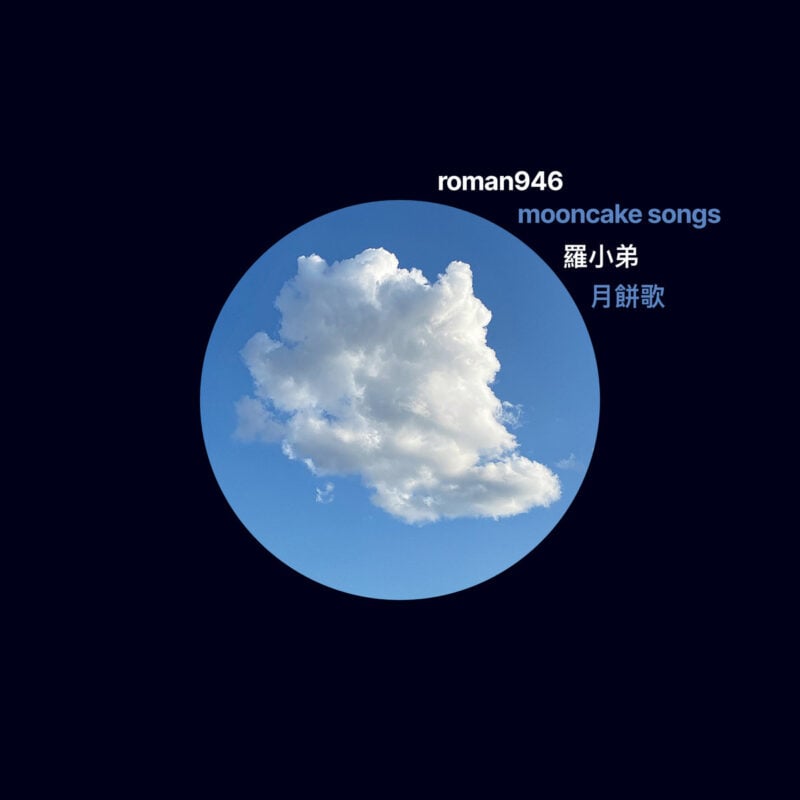
roman946 is the long-running alias of Roman Wilhelm (羅小弟), a Berlin-based graphic designer, academic, and musician whose work has unfolded quietly over more than thirty years. mooncake songs 月餅歌 brings together material written during extended stays in Beijing, Shanghai, and Hong Kong, later finalized in Berlin, with some ideas taking decades to reach their recorded form. The album carries the weight of that time: patient, slightly worn, attentive to detail rather than spectacle.
The music is primarily electronic, but it never feels sealed off from touch. Wilhelm’s palette draws from post-punk, Krautrock, goth, and folk, with clear lines back to artists who treated structure and voice as tools for observation rather than release. You can hear the plainspoken authority of Laurie Anderson in the delivery, Nico’s emotional distance in the phrasing, and the measured severity of Einstürzende Neubauten in the way space and repetition are handled. Can and Kraftwerk surface in the sense of forward motion, systems humming along without regard for the individual caught inside them.
Synthesizers form the backbone, joined by guitar and, crucially, accordion – an instrument Wilhelm treats less as folk ornament than functional machinery. “It was the closest acoustic equivalent to a synth that I had access to,” he says. Its push and pull gives the songs breath and friction, grounding the electronics in something physical, closer to lungs than laptops. There are moments where Bach and Beethoven’s sense of structure peeks through, not as quotation but as discipline: themes stated, worried over, and returned to with altered weight.
589 captures the first shock of arrival in Shanghai during a bus ride through the city. Crowded vehicles, heat, caffeine, and constant motion create a fragile sense of belonging. There’s a faint echo of Bowie’s Station to Station in its forward momentum, but the emotional logic feels closer to Kraftwerk’s fascination with transit as lived experience. A sudden hush on a bridge offers relief, quickly torn open by sirens, and the city carries on.
Luó xiaoméi (Sister Luo), sung entirely in Mandarin, turns toward office life and its quiet futility. Workers sit in meetings, scrolling images of wealth, travel, and leisure while their own efforts disappear unread. The song’s gentle, robotic calm recalls The Magnetic Fields at their most deadpan, its repetition flattening emotion into habit. Hypnosis arrives not through beauty, but through routine.
Kāi kāi kāi (Drive Drive Drive) maps Beijing via its ring roads, looping endlessly through checkpoints, tunnels, and rain-slick reflections. It reads as a free citation of Kraftwerk’s Autobahn, filtered through Wilhelm’s own lived geography. Surveillance, tanks, and traffic compress life into motion without destination. The texture carries a hint of Einstürzende Neubauten’s industrial patience and early Fad Gadget’s unease, softened by a slightly fogged perspective.
Written in 2007, Sportfest (Sports Day) takes aim at the spectacle of mass sporting events under totalitarian rule. Its satire has only sharpened with time. Lists of activities pile up — drills masquerading as games — until participation feels compulsory. The song aligns with the Legendary Pink Dots’ ability to turn absurdity into threat, showing how enthusiasm becomes rehearsal for obedience.
Laowài (Foreigner) stages a tense, faintly comic exchange between an expat and a Beijing local, sung in a blunt Berlin dialect. (“老外 laowài” literally translates as “Mr. Outside.”) The rhythm leans toward Eastern European folk, with a crooked, conversational quality that brings Tom Waits to mind: awkward, raw, even abrasive. Hostility softens into an offer to drink together; not resolving difference, but making space for it.
The satirical Shopping responds directly to the behaviour of mainland Chinese tourists in Hong Kong after the Umbrella Movement. Buying becomes escape, motion, justification, all set to a pounding backbeat and hypnotic chant. Suitcases fill; courtesy dissolves; crowds compress. There’s a trace of Pet Shop Boys’ wry detachment to the rampant consumption standing in for freedom. It will absolutely get stuck in your head.
蘿蔔絲 luóbosī (Shredded Carrot) is the album’s most overtly post-punk moment. Daily life fractures under surveillance, power displays, and historical anxiety. Ideals scatter “like a tipped-out Lego box.” The mention of a virus leaving Wuhan lands with uncomfortable clarity, hindsight turning observation into weight. Irony remains, but it’s strained.
The album closes with Mooncake Song, featuring a cello solo by Shenggy Shen (深靜 Shen Jing) of Elephant House and former Hang on the Box drummer. Folk ritual meets airport reality: lanterns, baggage scales, excess fees. Eating becomes ballast, a way to carry comfort forward when objects, cities, and certainties must be left behind.
In all, this is a truly unique collection of songs with clever experimentation, biting wit, and bizarre twists and turns.
Listen to mooncake songs below and order the album here.
Follow roman946:
Website
Typography
Bandcamp
YouTube
Instagram
The post Berlin-based Artist Roman946 Wraps Layers of Krautrock and Post-Punk Experimentation in “Mooncake Songs” appeared first on Post-Punk.com.