
Getty Image/Derrick Rossignol
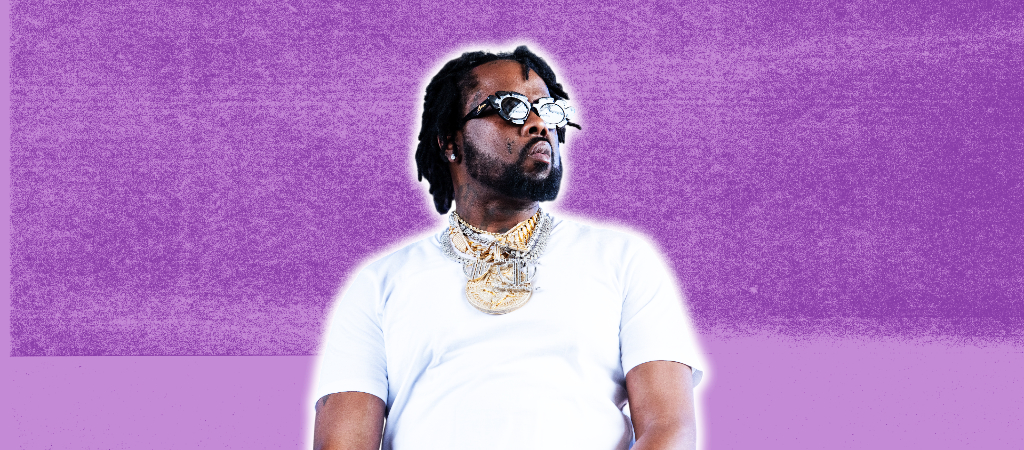
Delta Sky Club, Miami-bound for Art Basel, and Conway The Machine still moves like the world is trying to catch up. Airports are loud, frantic, impatient — he’s the opposite. Cool. Focused. Carry-on confidence. I’ve watched this man’s rise from close range through three Rap Radar Podcast conversations — the moments where his ambition spoke louder than his voice, the times he broke down how loyalty and legacy don’t come cheap. This isn’t a casual catch-up — it’s a checkpoint.
You Can’t Kill God With Bullets isn’t just an album title — it reads like his résumé. He was shot several times in 2012 resulting in a facial paralysis condition called Bell’s Palsy. Built from Buffalo with Westside Gunn and Benny The Butcher, Conway helped Griselda become a global force. Now, today he steps forward independently with his own imprint, Drumwork, and a newly sharpened set of personal goals.
Conway isn’t chasing culture — he’s curating it. Fashion moves. Art explorations. A quiet media play looming. And still rapping the grimiest gospel over beats that crack like broken glass windows.
Every bar, every decision, every pivot carries intention. Conway didn’t just survive. He evolved. Now he’s blueprinting his legacy — architecting a future on his own terms.
Pretty powerful album title. What inspired You Can’t Kill God With Bullets?
It started as a feeling before it was ever a title. I’ve been through a lot these last couple years — injuries, business stress, people switching up, the internet talking crazy. And on top of that, I literally survived being shot in the head. The words just hit me one day. It summed up everything I’d been carrying. That energy inspired the whole album.
This album feels different — darker but more focused. What space were you in?
A grateful one, honestly. Some days were rough mentally, but being forced to slow down taught me who’s really in my corner. It taught me how to lock in again. That’s why this album is so sharp. I feel reborn creatively. It’s revolutionary energy. It’s “I’m alive and inspired” energy.
On the project, you imply that people moved on from you, treated you like you were done. Did you really feel that?
Absolutely. I felt counted out. Like people found their new favorites and tossed me aside. But that’s cool — it motivated me. I’m still here. There’s only one Machine. Like I say on the album: It is he who remains.
You called out the competition on “Otis Driftwood.” Why step into that arena?
Because I want all the smoke. It’s one of the best years for rap in a long time — Slick Rick, Ghost, Rae, Wes, Nas and Preemo cooking up, Clipse… it’s crazy. I’m honored to be in that class. I’m not ducking anybody. I feel like I dropped the best album out.
The record with Tony Yayo gives G-Unit-era vibes. What was that like having the “Talk Of New York” as your hypeman?
Nostalgia. Shout out Yayo, Whoo Kid, 50, Uncle Murda. I’ve been around them a lot but never for clout — we just kick it. When I heard that beat, it felt like ’04 energy. I tapped into that bag. Yayo is really my guy — it was fun.
Then you got a Timbaland record. How did “Crazy Avery” happen?
Tim randomly hit me: “I need you to smoke this beat.” It was supposed to be for his EP. I recorded it, held onto it, then checked in, and he was like, “You ain’t use that yet?” So I threw it on the album. I didn’t know it had that Jay-Z “It’s Hot” resemblance — that was all Tim.
In that song, you talk about building an artist ecosystem. What do you mean by that?
Artists chase streams and forget impact. Meanwhile, somebody like Alchemist built a whole ecosystem — loyal fans, consistent art, real connections. That’s what I’m focused on. Not fake numbers. Not online noise. I like being hands-on with the fans. They’re the ones paying for your shows, merch, tickets. That’s who matters.
Now that the original Griselda trio — you, Westside Gunn, and Benny The Butcher — are on separate paths, what’s been the hardest adjustment building your company, Drumwork?
Seeing how people disguise personal wants as “work.” They say “Let me work with you,” but they really want me to fund their lifestyle. And when I don’t, I’m the villain. That part’s tough. But it made me sharper as a businessman.
The outro of your album, “Don’t Even Feel Real,” is emotional. Were you carrying that heaviness?
Not really the betrayal stuff — that rolls off me now. What weighed on me was expectations. Once you get successful, everybody wants something. Meanwhile, I’m dealing with depression, loss, pain. The last two, three years were dark. Nobody stops to ask how you’re doing. They just reach.
You still reflect on the 2012 shooting on “BMG.” Do those wounds ever really heal?
Nah. I accept it, but I haven’t fully healed. My face changed forever. Every morning, I look in the mirror and it hits me: “Damn, they shot me in my head.” Two times. And I’m still here rapping like this? That’s God. During the pandemic, I didn’t even want to record — I was basically retired. But avoiding it wasn’t healing me. I had to face it, accept it, and move forward. That got me back in the booth.
“Diamond” with Roc Marciano feels like a moment. Why was he the right feature?
I sat on that song for months. Sent it to the team, sent it to Benny, Wes — nothing came back. Maybe they weren’t feeling the beat, maybe they were busy. Me and Roc always talk. I realized I never heard him do a real back-and-forth. Once he heard my idea, he loved it. Sent the verse in two days. Then we shot the visual. It came out special.
The video was fly. Fans have noticed you stepping into Paris Fashion Week, popping out in a new way. What sparked this new fashion-forward direction?
That was my stylist, Jannique, and my team pushing me. “People need to see you in different lights.” Courtside is cool, but there’s a whole world out there. I’m usually the hoodie-and-fatigues guy, but they expanded my vision. I’m having fun with it.
On “Nu Devils,” you say, “You want to be Jordan — Mike had to punch a teammate in his face.” What does leadership look like for you?
I was literally watching The Last Dance. That moment where Jordan tells Steve Kerr, “I just want to win.” That mentality stuck with me. Being Jordan ain’t just about being nice — it’s about pushing your team, challenging people, sometimes being the bad guy. Greatness comes with uncomfortable moments.
Do you see this album as a new chapter, or the closing of an old one?
Both. It closes an old chapter and opens a new one. I’m launching my podcast, Talking Sideways, under The Machine Network. No rap talk — I’m a space nerd, I love sports, weird videos, random conversations. More like Joe Rogan vibes. This album unlocked that confidence. I used to hate interviews and photos. Now I’m leaning into it.
You’re branching into film, too, right?
Yeah. I’m working on a short film right now. And next year with the music, it’s The King with Justice League, Lulu 2 with Alchemist, then Reject 3 and Reject 4. Reject 3 should hit around March or April.
How will the podcast work? Guests? Just you talking?
Mostly just me talking shit, reacting to stuff, exploring topics I’m into. I might bring guests sometimes, but it’s about letting people see who I am off the mic. Fans don’t really know me — they know the rapper. This is a chance to show the person.
When you’re not making music or working, how do you stay grounded?
Silence. Literally silence. No music, no noise, no lights. Reading. Writing. Thinking. That’s my peace. I take time to be completely still. That’s how I recharge.
You’ve talked about battling depression and feeling isolated. How have you grown through that?
The last two years changed me. I learned so much about myself. I always isolated thinking it was healing, but it was depression. Now I still take time to think, but I don’t avoid my problems. If something bothers me, I address it. I communicate. I’m processing differently now. I’m healthier.
It feels like this album is the most honest, strengthened version of you.
Exactly. It’s me being vulnerable, confident, spiritual, aggressive — all at once. It’s pain and growth. It’s me realizing my power. You can’t kill God with bullets. That’s the message. A real message.
Playlist:
You Can’t Kill God With Bullets is out now via Drumwork. Find more information here.