
Black Rebel Motorcycle Club’s Robert Levon Been has spoken to NME about the 20th anniversary of their Americana-inspired album ‘Howl’, along with plans for new music, their thoughts on ‘indie sleaze’, and recent spat with US Homeland Security.
READ MORE: Black Rebel Motorcycle Club – ‘Howl’ review
The San Francisco garage legends are well underway with celebrating the 2005 album – with a box set reissue coming in January and an ongoing UK and European tour playing the record in full for the first time.
‘Howl’ marked a milestone for BRMC, with the band subverting fan expectations by leaning away from the gritty rock sound that put them on the map, and exploring more stripped-back, folk territory. Speaking to NME, singer and guitarist Robert Levon Been shared how the record was born at a tumultuous time for the band, and is now finally getting its flowers.
“It’s been 20 years, which is a nice round number, but also it’s strange because the album never got a fair shake when it first came out, it was more of a slow burn,” he said. “We were dropped from our label after our second album [2003’s ‘Take Them On, On Your Own’], so ‘Howl’ was like this Hail Mary to see if anyone gave a shit anymore… and every label passed on it. RCA only signed us with the stipulation that they’d put out a small amount in boutique stores if we promised to put out a rock record next.”
He continued: “Then the album came out and it didn’t really get a real tour. We’d play some of the songs, but we didn’t learn how to play most of them. We also felt like we were apologising to fans for it being quieter, [so] our shows at the time were like a confused version of the record.
“But then people came around to it over time and embraced it just as much as our first record [2001’s ‘B.R.M.C’], so now was time to give ‘Howl’ a little bit of respect and actually get around to learning how to play the songs. It’s 20 years late, but better late than ever!”
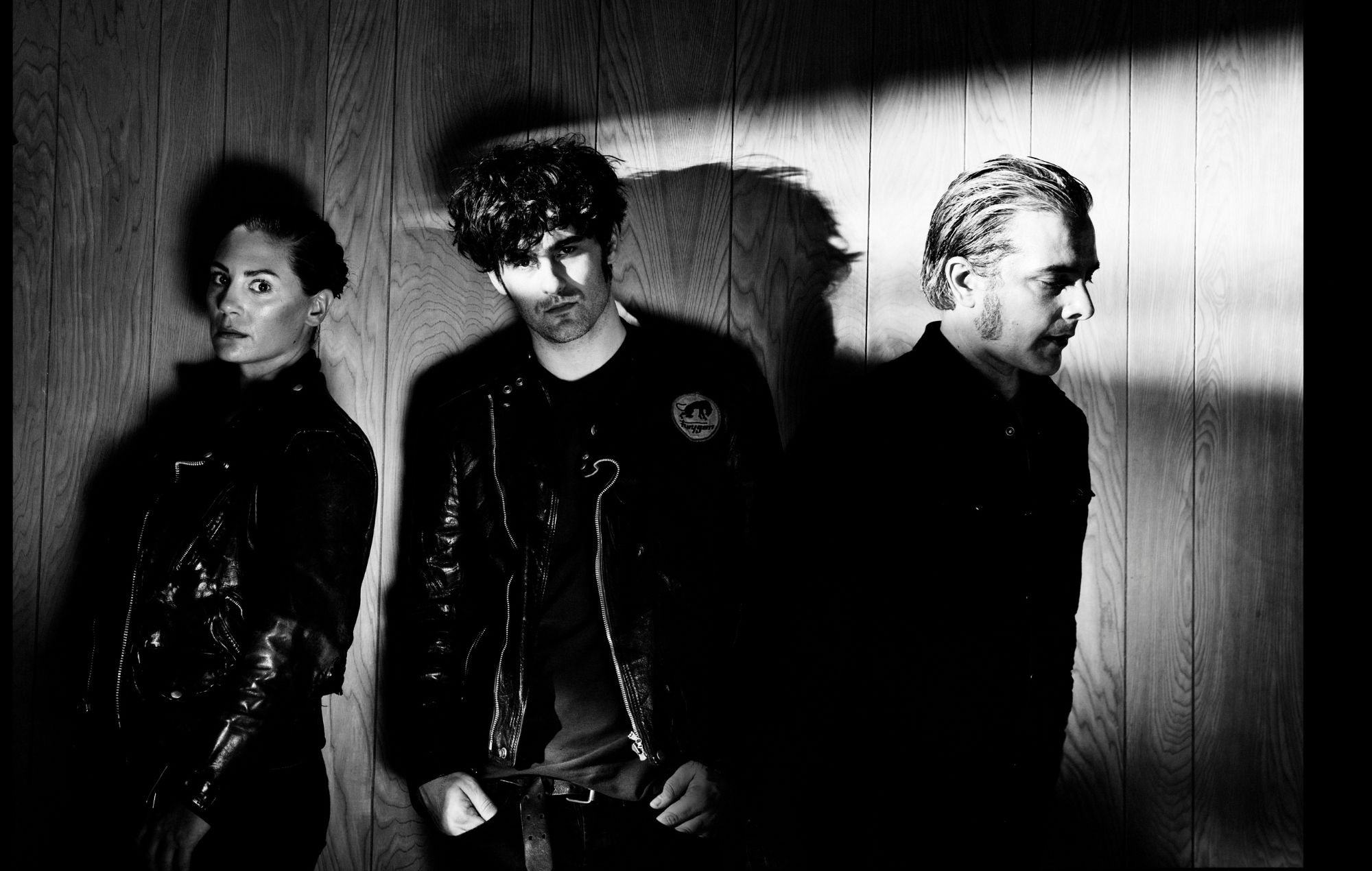
Black Rebel Motorcycle Club. CREDIT: Tessa Angus
Check out the full interview below, where Levon Been also opens up about plans for new music, calling out US Homeland Security online, his love of Fontaines D.C. and Geese, and hopes for emerging artists to push boundaries.
NME: Hi Robert. ‘Howl’ saw you shift away from the sound that people were expecting. What was your mindset going into the writing and recording process?
Robert Levon Been: “Scared and in survival mode! At the time we had a falling out with the drummer and with the label, then we got hit with the sophomore slump. We loved the second album, but it was definitely a learning period, so felt like we fucked up and we didn’t meet anyone’s expectations.
“It felt like panic, but to be honest, that was good because that’s when we do our best work. We wrote more furiously than ever and were thinking, ‘If this is going to be our last thing that anyone hears from us again, then we should just be proud of it, even if they slam the door behind us.’ We didn’t know if we’d get to tour it at all, so that’s why we put trombones and timpani and every instrument we could find on it. We were like, ‘Well, they’ll never ask us to actually play any of that, so we can just do what we want and pretend we’re in fantasy land’.”
What is it like to now finally be playing these songs live 20 years on?
“It feels like it’s not just about the songs anymore. There is history to it and we’re seeing the relationship that people have had with our music over time. It doesn’t feel like it is about us personally or even just about the album, it’s another entity that we serve. So it’s a lot less pressure.
“Touring used to feel different. It used to feel like we’re trying to fight our way in the door and prove ourselves, but now it’s about showing up for the songs because they are waiting to be heard by somebody.”
‘Howl’ arrived at the height of the 2000s indie explosion where you had bands like The Strokes headlining festivals and a new wave of artists coming through. Did you feel like you were part of that scene?
“People tried really, really hard to fit us into that, and I guess we stole a lot of our audience from that kind of scene – but we were always like dark chocolate there. We were just a little too intense for some people. It was a palette that was very digestible and nice and kind of cute, but we were the band that was a little too serious for the situationship that they were trying to put us into.
“Deep down we’re sweet as can be, but whenever someone tries to put us in a box, we get really uncomfortable and try to sabotage our careers by doing the opposite. Doing the opposite of what people want or expect just comes naturally to us. It’s not to be the cliche rebel, it’s more self-sabotaging.”
What do you make of the recent term ‘indie sleaze’ to describe that time in music?
“Well, we were sleazier than most in actuality. Those other bands [in that category] definitely knew how to shower and do things properly. They were more business-minded than we were. They could definitely sell themselves, but we were more genuinely fitting of whatever the hell that term means.”
Things have changed since 2005. Do you think a band like Black Rebel Motorcycle Club could reach the same heights if you were starting out now?
“There is a need for more medicinal music now. People need it in their lives because it has a lot of properties that people don’t fully understand. It has magic woven in and that, at a time like this, is crucial. There is a sea of white noise from all forms of media, and it’s coming at you from every possible angle.
“There is an illusion of connectivity and community through the internet. It’s a complete lie. You have to go out and really play your instruments and go and find actual people in the real world [to play for]. You can use the tricks on social media, but you still have to be doing the other work. When it comes to practicing, you have to really love it and put in the time in.
“The fucking scary part, though, is that there’s no money in it. There’s no middle class anymore, and it feels like the extremes of hyper wealth and hyper poverty. So for bands to grow and find their way in the middle class is gone. The place where [new talent from these backgrounds] can be fostered is now like a Mad Max wasteland. But the good news is people need these artists, and they really want them. I’m terrified that it’s just going to be all trust fund fuckers [in the industry soon], because they’re going to be the only ones that can make any music.”
Black Rebel Motorcycle Club. CREDIT: Tessa Angus
Are there any emerging artists who have caught your eye lately?
“Everyone’s been sucking Geese’s dick all of a sudden, so I really hesitated bringing them up at all, but at the end of the day Cameron [Winter, frontman] and the band deserve serious props. They’ll only get better as the years go by.
“Fontaines D.C. too because they have that thick Irish swagger in both their records and live shows. From what I can tell, they do ‘Brat Summer’ but for boys who should probably know better. But part of what I dig is that they don’t really care. They’re mostly nondenominational when it comes to the choice of seasoning.”
Earlier this year the band called out US Homeland Security for using your music without permission. Why was it important for you to share that post?
“We just wanted to let people know what was happening, because you shouldn’t let [the government] constantly get away with whatever the fuck they want. It’s illegal. They are breaking the law constantly and using a lot of different artists’ property that shouldn’t be exploited. We were just acknowledging that it was crossing the line and it’s wrong.
“I actually wanted to have a follow-up post about what they wrote to us from their supposed-legal side, because the administration sent this reply that sounded like an ex-girlfriend. It didn’t sound like a legal [reply] or anything official. It was this really weird message like, ‘Don’t bother us with your complaints. You got attention and media from just being associated with us, and so you should be grateful.’ And this is from the homeland legal department!
“The next response would’ve been to say, ‘We’ll see you in court then’, but platforms like Instagram and Facebook actually removed [the post containing the unauthorised song] promptly and acted more professionally than the actual government itself, which is bizarre.
“What I wanted was for more bands and organisations to know that like if you actually get through to the final boss stage, it’s just a complete joke. It’s just all smoke and mirrors. I knew that in theory, but actually seeing it from the horse’s mouth, it was bonkers. It brings it down to size. It’s not as intimidating as what they want you to believe. That’s all I would like people to know. If bands get fucked with or anything that like this happens to and they feel too scared to say anything, you shouldn’t. Take them, take them to the mat all the way.”
Back in 2001, BRMC’s own Peter Hayes told NME that “the whole point of art is to question what’s going on”. Is that something that you think the band are still doing now?
“It is different points of view. Pete’s always good with catchy bumper sticker [quotes], and that’s why he writes most of the choruses, because he can get something tight and concise. I’m the rambly one who will write all the verses and confuse the hell out of people. Pete simplifies it by making it a bite-sized statement like that. I don’t believe in bite-sized statements.”
Is there any artist at the minute who you think is doing a particularly good job of speaking up for what they believe in?
“What music represents at the minute is going through a rapid redefining. Not to pass the buck, but I get angry at like the boomers who branded, sold and made a lot of bite-sized statements out of ‘It’s all gonna be all right’ and ‘Peace and love’. Then they all came out with their biopics which had neatly and nicely told stories with cutie Patootie Timothée Chalamet [playing Bob Dylan] and Jeremy Allen White [as Bruce Springsteen]. It’s very easily packaged, but music is one of the most malleable elements in the universe, so it can be whatever you need it to be. It can be formed and shaped into nearly anything, but if it’s in the hands of fools, then it’s going to take on that form.
“If you just want music as background noise for your workout, or for a playlist, or a nice little Christmas music biopic, it’ll be exactly that. For those of us that would like it to be something else, we have to privatise that and keep it closer to the heart.”
It’s been seven years since your last album, ‘Wrong Creatures’. What can you tell us about new material?
“We never stopped writing. We took a break from the nonstop world of write-record-rinse-repeat-tour around COVID and we all did different things in that time. I did like a film score and wrote with other people, and Pete did the same. So this tour is like the first time where we’ve locked back in and gotten back on save wavelength.
“We don’t have a plan from there yet, but we never really have a plan. I guess we’re back on the ‘no-plan plan’. But everyone’s getting along for once and so I figure that’s a good sign.”
The deluxe 20th anniversary reissue of ‘Howl’ is available from January 20 via PIAS – pre-order your copy here. Their anniversary tour dates will continue in the UK this month, visit here for any remaining tickets and more information.
The post Black Rebel Motorcycle Club on 20 years of ‘Howl’: “When someone tries to put us in a box, we try to sabotage our careers by doing the opposite” appeared first on NME.