

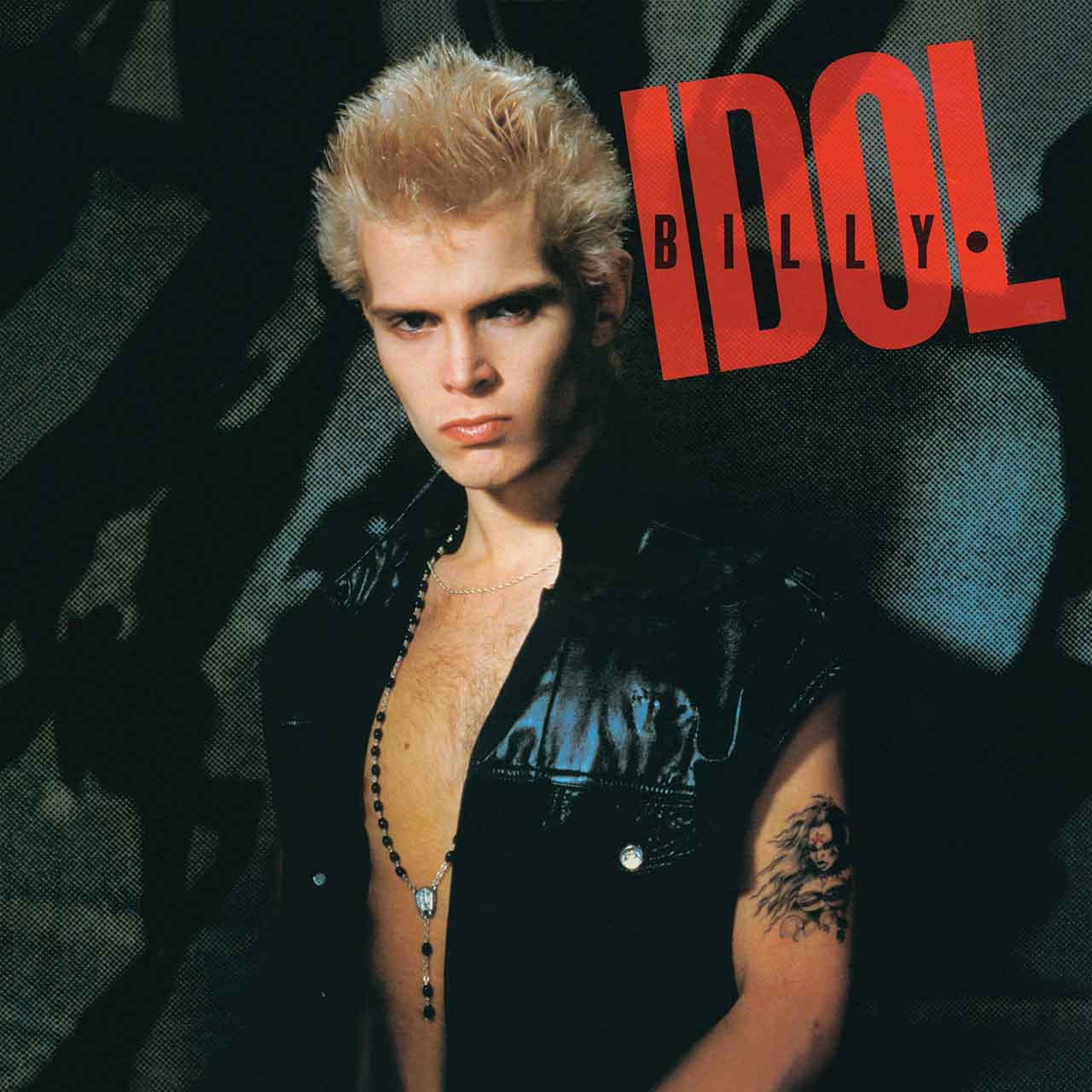
With his defiant sneer, open-chested leather vest, and spiked, blond hair, Billy Idol made sure the cover of his self-titled debut album screamed “icon.” His beginnings in Great Britain’s punk scene with Generation X – one of the first bands declared as “sell-outs” by the subculture when they appeared on Top of the Pops and asked for a large bonus from their record company – indicated that Idol had the tenacity to achieve major pop success.
When Idol split from Generation X in 1981, he moved to New York, signed with Bill Aucoin – the manager behind the success of KISS – and signed with Capitol Records. Teamed with producer Keith Forsey (Donna Summer, Sparks), he began recording new material, which spawned his first solo statement, Don’t Stop, a four-song EP that was released in October. He and Forsey continued recording material for a full-length debut while the EP did the work of reintroducing Idol to the public as a singular entity.
“Hot In The City,” the first single from the not-yet-released Billy Idol, hit airwaves and clubs in the early summer of 1982, a radio-ready slice of ear candy prepared with the perfect recipe of 80s synthesizers, rock guitars, and Stephanie Spruil’s soulful background vocals. As the single climbed the Hot 100, Capitol wisely shot a video to get the photogenic artist on the ground floor of the increasingly popular MTV. When the full-length album was released in July, the public was primed and ready for him.
The album’s second single, “White Wedding,” evidenced the power of MTV. Capturing the mystique of gothic glamor with candles and crucifixes, the video benefited from a Satanic panic controversy, with one critic noting that the video contained “all the makings of a black mass.” While it didn’t chart as high on the Hot 100 as “Hot In The City” (which peaked at #23), “White Wedding” was in such high rotation at MTV that it remains the hit by which he is still most identified.
“If Marc Bolan were alive today, this is the kind of album he would probably be making,” Billboard raved, noting the gold-selling album’s AOR direction and cross-market accessibility. Comparing him to David Bowie, Variety praised his “subtly techno-flavored dance-rock tunes” and his “sardonic new-age stance.” Album tracks like the driving “Dead On Arrival” and “Nobody’s Business,” which most leaned away from the pop polish of the rest of the album, were critics’ favorites, while “Love Calling” and “Shooting Stars” took the edge off.
Some critics at the time intimated that Idol was the invention of label executives and managers. This couldn’t be further from the truth, according to Billy himself. As he told Night Tracks, “I’m pretty much in control of what I do, even though other people tried to thwart me. That’s why I decided to call my first album Billy Idol, because it was my attempt to free myself of a lot of rubbish you can get mixed up in in the rock & roll world. That [album] was my restart.”
Order the expanded edition of Billy Idol’s self-titled album now.