

My favorite thing to watch when I first got into K-dramas was rom-coms: cute, comforting stories that took me to a world where the CEO falls in love with the clumsy part-timer girl; a world full of giggles, misunderstandings, and love-at-first-sights. These shows offered the perfect escape which was light, fun, and so dreamy for a teenager like me. But much like fast food, they’re satisfying in the moment and often don’t leave a lasting impression. Except for a few major ones, I barely remember any of the rom-coms I’ve watched. Not because they weren’t fun, but because what they offered was very cliché and repetitive; something that feels good in the moment but, of course, doesn’t stay in your memory for long.
Over time, though, my taste, along with that of many viewers, began to shift. As life got more complicated, I found myself drawn to stories that were grounded, emotionally rich, and often a little messy. These dramas didn’t just show love in its brightest moments, but explored it in its most fragile, unexpected, and human form.
This shift is well represented in dramas like Twenty Five Twenty One, which inspired this article. A coming-of-age show that explores self-growth, dreams, and friendships, all with some bittersweet nostalgia that aches in the best way. Na Hee-do (Kim Tae-ri), a 19-year-old fencer, is forced to let go of her dreams due to the IMF crisis, as society blames it all on “the times.” She meets Baek Yi-jin (Nam Joo-hyuk), a 22-year-old whose life is also changed by the same crisis. Together, they help each other become the best versions of themselves.
Their bond is so deep it defies definition — eventually romantic, but never solely about romance. The show offers a reflective look at love and ambition, and how both can build and break a person at the same time. By showing Hee-do letting her daughter read her diaries years later with a mix of fondness and regret, the drama focuses on how fleeting youth is.
Stories like Twenty Five Twenty One, Past Lives, or Youth of May present love as something that finds you at the right moment and leaves when its purpose is served. Characters fall in love in the most fragile periods of life, and the outcome of these stories is what makes them linger. These dramas don’t promise happy endings, but what they do offer is emotional honesty.
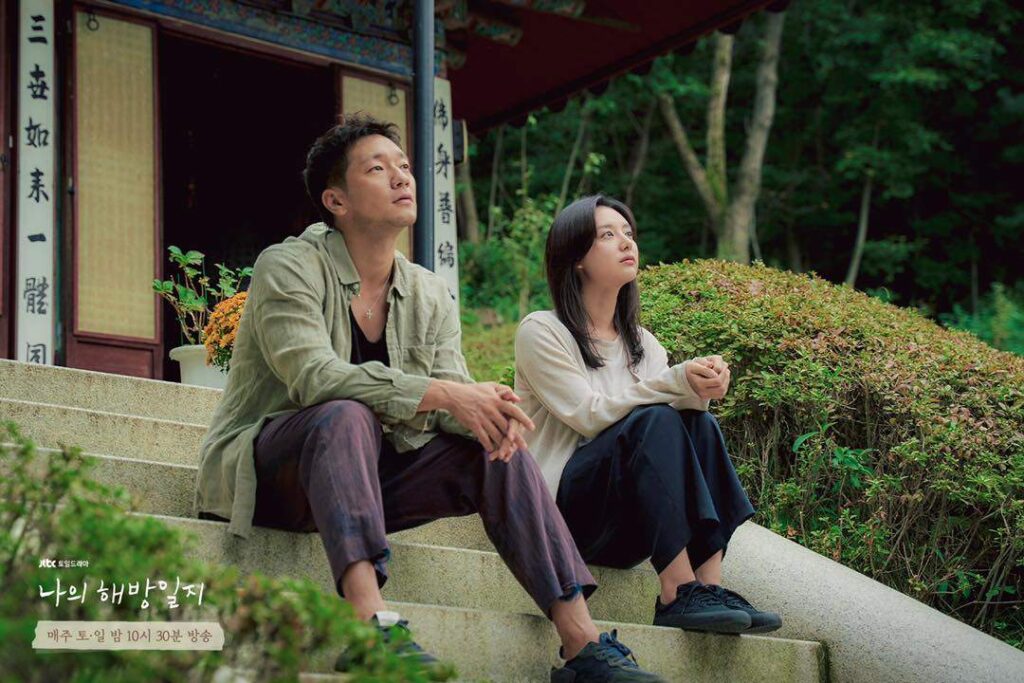
The desire for more grounded stories is evident in My Liberation Notes and Summer Strike. These are two quietly powerful series that resonate with those at a low point in their lives and become a source of deep comfort. Mi-jeong (Kim Ji-won), Gi-jeong (Lee El), and Chang-hee (Lee Min-ki) are three siblings in My Liberation Notes who try to find fulfilment in their monotonous adulthood. Things don’t take a drastic turn when Mr. Gu (Son Suk-ku), an employee of their father, gets involved with Mi-jeong, but that’s the point of this show. The realism of how slow things can be and how the healing process works is the main theme. The portrayal of yearning, isolation, and the search for the meaning of living by the three siblings feels very relatable. Romance in this show isn’t dramatic; it’s subtle, slow, and healing, portrayed by Mi-jeong’s wish for Mr. Gu to “worship” her. By seeing Mi-jeong and her siblings taking small yet deliberate steps toward self-liberation, viewers are left with a hope of their own “happy ending”.
In Summer Strike, Yeo-reum (Seolhyun), who suddenly meets a dead end in life after losing her mother and getting dumped by her boyfriend, quits her job. It’s her way to “strike” and throw a tantrum at life. Eventually, she finds herself satisfied with the life she lives in the countryside and gives that feeling the title of happiness. This show gives you a reminder that happiness can find you in many unexpected ways; you just need to wait for it with open arms.
But it’s not just about ideal love — there are some K-dramas that are more about acceptance, telling us that it’s okay to be who we are. Shows like Run On and It’s Okay to Not Be Okay explore this beautifully. Run On is an amazingly written show that explores themes of change, self-love, and growth, and it’s as realistic as it can be. Ki Seon-gyeom (Im Siwan), a track star who has everything in life but is always second on the track, finds out what he really missed in life after connecting with his translator, Oh Mi-joo (Shin Se-kyung).
“Out of all the things I’ve loved, why have I never loved myself?” says Seon-gyeom after realizing how he’s been living. This show isn’t dramatic — it’s very slow, peaceful, and moves at a realistic pace. Seon-gyeom and Mi-joo are very different people and often misunderstand each other, with very different beliefs. But love is sometimes not understanding, just acceptance; that’s what viewers pick from this show.
While It’s Okay to Not Be Okay is more on the darker side, it focuses on deeper issues like mental health, healing, and trauma, all blended in a fairy-tale-like manner. Ko Moon-young (Seo Ye-ji)and Moon Gang-tae (Kim Soo-hyun) who had an ill-fated relationship in childhood, together with his autistic brother Moon Sang-tae (Oh Jung-se), they each find their own ways of healing and moving on in life — side by side, yet on their own. While Moon-young fights with loneliness and the trauma related to her mother, Gang-tae finally feels worthy of living life on his own terms, and the show ends with Sang-tae finally breaking out of his shell of “being a kid whose soul never grows.” Both shows present romance as something that can exist alongside pain and growth, not separate from it.
Even lighter, more conventional stories in K-dramas reflect realistic situations that can hit deeper than obvious slice-of-life shows. Something in the Rain is a strong example. A special mention to its soundtrack because the show is grounded in a very mundane everyday setting with workplace hierarchy, family tension, and societal expectations, but every moment feels deeper and more poignant thanks to the OST. Yoo Ji-ah (Son Ye-jin) reconnects with her best friend’s younger brother, Seo Jun-hee (Jung Hae-in), after a long time. She finds herself falling in love with someone she always thought of as a little brother, soon after a messy breakup with her ex. This love story, being so unconventional, is disapproved of by their families, so for a major part of this show, viewers enjoy the thrill of a secret relationship. Deeper issues like workplace dynamics, misogyny, and stereotypes are also tackled alongside the romance, adding a meaningful layer to the show.
But is love all that the viewers want to see? Well, maybe — because in life, there are times when you feel lonely, and all you want is to feel loved or see people fall in love. But that comfort can also be found in companionship, a type of love that’s fully platonic and gives you more than any romance ever could. My Mister is a standout in this regard. It follows Park Dong-hoon (Lee Sun-kyun), a man in his late thirties, and Lee Ji-an (Lee Ji-eun), a temp at the same company in her early twenties, both weighed down by life and struggling in their own ways. They find comfort and the strength to endure through companionship. The show doesn’t have a very interesting plot, but the actual cinema is found in its direction and script. Each dialogue leaves a huge impact. This story shows that life doesn’t get easy on its own, but it definitely feels better when you have someone with you.
So, why do these stories linger long after the last episode ends, when at the end of the day, it’s the same romance? Perhaps it’s the hope of your own happy ending that feels possible even if distant. Perhaps it’s the kind of low they portray — raw, difficult, yet very, very real. These shows mirror what many people have gone through, be it heartbreak, healing, or the comfort of being seen, and that’s what stays with the viewers.
These dramas don’t just entertain; they teach: the lesson of giving yourself time for healing (It’s Okay to Not Be Okay and Run On), the lesson that things will get better, and you just need to work a little for it (Summer Strike and My Liberation Notes). And the reminder that you don’t have to be alone and endure everything on your own (My Mister), the lesson of living your life to the fullest because youth is temporary (Twenty Five Twenty One), and that just because it’s a little unconventional doesn’t mean it’s wrong so, if you love someone, you’ve got to fight for it (Something in the Rain). Often, these lessons carry more emotional weight than anything learned in a classroom. And these stories fill the hearts of viewers with comfort, reflection, and even motivation.
Interestingly, many of these shows are often categorized as “underrated” or “slow-burn shows you need to watch,” slipping under the radar compared to more popular dramas. But maybe there’s something about these shows being a little less known that makes them even more special when you discover them naturally. When you watch something that wasn’t overhyped, that you had no expectations for, and it turns out to be so moving, it creates a deeper and lasting impact. These shows aren’t made for virality, but for vulnerability.
At the end of the day, it’s not about how much of the plot one remembers, but more about how it made you feel. The K-dramas that understand this are the ones that keep you up thinking at 3 a.m. after the screen fades to black. Perhaps what gives them staying power is exactly this: They don’t try to shine by fitting into the standards, but they sit with you in your deepest, darkest, and lowest moments. And maybe, in a world that moves too fast, this kind of stillness is what we remember the most.
Garima Chhabra is an Indian writer drawn to introspective storytelling that explores love, emotion, and the quieter sides of life. She writes poems, music, and essays that reflect on feeling deeply and thinking inward. Inspired by Korean R&B and dramas, her work often finds beauty in stillness, vulnerability, and emotional nuance. More of her writing can be found on Substack @garimachhabra.
(Images via: JTBC, tvN, ENA.)