

In celebration of the existence of Opeth, El Cuervo and I continue our rankings of Opeth from worst to best. You can find the previous rankings here: 13-9. And you can find the review of The Last Will and Testament here.
Happy complaining!
Angry Metal Guy
Mediopeth cont.
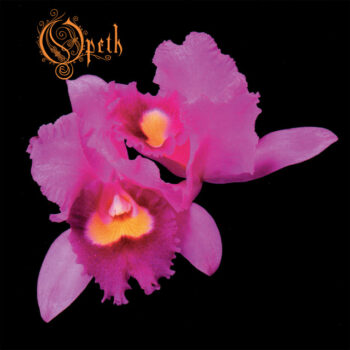
#8. Orchid (1995). Oldepeth gets far too little respect around here. And even I feel guilty dropping Orchid in at number 8. But for me, Orchid has long been the ‘forgotten’ album. My first exposure to Opeth was Morningrise, which I still consider the start of the band’s truly dominant, scene-defying (and scene-defining) run of perfect albums. But while it was the first one I purchased, their most recent record was My Arms, Your Hearse, which then was quickly followed by Still Life and Blackwater Park. While I was cutting my teeth on the ’90s Scandy scene, I didn’t have time to look backward. There was so much exciting music coming out and I was reveling in what I had in my hands. Yet, over time I have come to appreciate Orchid’s charm. The record is chock full of ideas and you can see the ways that Opeth becomes Opeth through moments: the use of volume swells in “In Mist She Was Standing,” which would eventually transform into Peter Lindgren’s eBow by Still Life and Blackwater Park. The moody, harmonized acoustic passages sounded a lot more like Metallica than the fingerstyle that Åkerfeldt would come to be known for by My Arms, Your Hearse. Even the use of nylon string acoustic guitars throughout is a charming feature of Opeth’s sound in 1995. The result is a kind of Protopeth that stands as a testament to sticking to your guns and just making the music you want to hear. And every song on here is a banger. Opeth is one of those bands where the debut stands up well, even if it isn’t entirely representative of the juggernaut they would become.
#7. Damnation (2003). Damnation is a brilliant album; a tour de force of sadprog. The songs boiled down the essence of the Opethian acoustic prog into a rich depression-flavored paste (with umami overtones). It’s almost impossible to pick the most iconic moment from Damnation, is it the introduction of the keys for the first time? Is it López’s deft, groovy performance? Is it “Closure”?1 Or maybe it’s Åkerfeldt dropping the best acoustic material he’d written to date? Working with Steven Wilson on this record was the right choice as he was able to get the best out of the band, while offering vocal harmonies and even lyrics. And as a defining Opeth album, Damnation trafficked in exquisite morosity from the opening guitar on “Windowpane” to the “Ending Credits” and beyond. That said, Damnation lacked the thing that made Opeth unique; its upper range. Deliverance, which was the weakest heavy record to date, was always marred by having the least interesting clean parts. And it’s hard not to blame the strong twin that got all the good genes, or in this case, Damnation. A track like “Closure” is just begging for another 8 minutes of Åkerriffs and growls. Damnation also exposed Opeth lyrically,2 I’m struck every time I listen to Damnation just how diaphanous and hollow these lyrics are.3 But that doesn’t stop me from belting them out while I’m writing this blurb. In its totality, Damnation is an excellent record from a band that wasn’t even firing on all cylinders at the time. Every song gives me the feelz, and it showed the world what Opeth could be without its death metal side—purveyors of excellent sadprog.
#6. Pale Communion (2014). Pale Communion is the album that Heritage should have been. While Heritage may have been the album Åkerfeldt wanted to write after years of playing music he didn’t really want to be playing anymore—an album constructed “of interesting but perverse musical ideas deliberately directed at fans expecting more death metal” to quote El Cuervo‘s excellent summation—Pale Communion felt like Opeth. Sure, it was an undeniable homage to the brilliant ’70s prog that Åkerfeldt loves (“River,” or “Goblin”). But Pale Communion is different from the other records in the Newpeth era in that it feels very much like an extension of Ghost Reveries. With classic Opeth riffing and eBow (“Cusp of Eternity,” “Moon Above, Moon Below”), the album felt like the perfect blend of classic Opeth and the more ’70s rock and prog vibe they were going for. There are two other reasons why Pale Communion is a triumph. First, the composition—the voice of Opeth—is on par with anything Åkefeldt had written to date. The re-emergence of beautiful, thoughtful transitions was notable, of course, and it made Pale Communion feel like an album that had real love and care taken with the writing process. Second, Pale Communion is the best-sounding Opeth album ever produced. Clocking in at a DR11 and with a pristine mix by Steven Wilson, Pale Communion is the kind of album that is just a pleasure to listen to. My one niggling complaint is that sometimes when the band crescendos into Åkerfeldt belting monotone melodies over heavy riffs, I think: “Why not just growl there?”
Perfectopeth
#5. My Arms, Your Hearse (1998). My Arms, Your Hearse marks the start of Opeth’s iconic lineup and sound. With the introduction of López on drums—fresh off his stint in Amon Amarth—this record was recorded with Fredrik Nordström with Åkerfeldt playing bass because Méndez didn’t have time to learn the songs. Unique in the band’s discography, My Arms, Your Hearse was the first proper concept album they recorded. Åkerfeldt started this record by writing lyrics and he composed the songs around them, with the last line of each song being the title of the next song. The result was a tight and cohesive album that felt revolutionary for their sound at the time. While Morningrise and Orchid had a meandering and acoustic feel—a naturalness if you will—My Arms, Your Hearse leaned more into a slicker production. It’s notable how much atmosphere reverb on Åkerfeldt’s more compressed vocals gave My Arms, Your Hearse its most polished sound to date, and Nordström’s production choices define the album in ways that people underestimate. But the shorter songs, the tighter lyrics, and the overall vibe made for an album that properly consumed is heard with headphones and listening to it from start to finish.
Going back and revisiting these records in order, My Arms, Your Hearse also shows real evolution in terms of Mikael’s fingerpicking work (“The Amen Corner”), and his compositional habit of falling into a pleasant 6/8 swing (like the outro to “Demon of the Fall,” and “Credence” which follows). That 6/8 swing is Opeth’s gallop, and it is the key to Still Life and Blackwater Park’s iconic sound. And though it should be consumed as a whole, I vociferously contest the idea that My Arms, Your Hearse is somehow a letdown or packed with filler. Tracks like “When,” “Demon of the Fall,” “Credence,” “The Amen Corner,” and honestly I could just list the entire album here, are classics that I would love to hear live. This record is one of the best records I own and it is somehow my fifth favorite album in Opeth’s discography.
#4. Still Life (1999). Loads of ink have been spilled over the reason that we should all like Still Life better than other Opeth albums—particularly Blackwater Park. Those who know me might think that it’s one of the reasons that I—a rugged individual and the figurehead of my eponymous blog—buck the revisionist historians by placing it at #4. But, those who know me would be wrong. I first learned of Still Life’s existence because I was one of the lucky people who got to see Opeth play their first show in the USA.4 The boyish Swedes played Milwaukee Metalfest in August of 2000—making those who saw it less lucky because we paid to be at Milwaukee Metalfest—and despite the logistical nightmare due to the infamous cheapness of the skeezy arranger, Opeth played an unforgettable set. Mikael started that set by saying “We’re going to start by playing a song from our new record which many of you don’t have,” before kicking off with “Moonlapse Vertigo.” In 1999 and 2000—for the babies whose first record was Watershed and are very upset that I didn’t make it #1 even though it has two good songs and they really really really like it!1!—one did not just get albums that weren’t released in the USA without luck and huge fees. I even asked at my local record store after Metalfest—who really were good at getting me obscure stuff—and they couldn’t find a copy of it. It would take another six months for Still Life to be released in the USA. This means that Blackwater Park, which was released on March 12th, 2001, was released exactly two weeks after Still Life and to much more fanfare. So, as an 18-year-old who kept up with metal releases via the Unholy Metal Usenet group, I purchased Blackwater Park and never realized that Still Life had been released.
It would be a couple of years before I made it back to Still Life. And my journey back started with hearing “Godhead’s Lament” live. That sent me on to a six-month binge where I listened to nothing but Still Life. The album had everything that I loved about Blackwater Park but was slightly rawer in its sound. It contained some of the best riffs that I had ever heard and I found myself learning and aping those unique Åkerriffs in my composition. But despite its excellence—its perfection, really—Blackwater Park had been the kind of revelation for me (and I’d wager many other American fans) that Still Life could never end up being. It’s hard to argue, however, that Still Life is anything other than enormous and that it probably should have been the album that broke them in the US. The band continued to develop its acoustic chops, Åkerfeldt’s writing continued to tighten, and the mournful melodies that were so key to their sound at the time were perfectly united with the slick Nordström production and those undeniable riffs. In retrospect, this is also where someone finally cracked the nut of how to produce Åkerfeldt’s growls, which I think are still some of the best in death metal. This album is a triumph and there are still three to go.
El Cuervo
#8. Watershed (2008). Watershed divides the ‘excellent’ and the ‘slightly-less-excellent-but-still-very-good’ on this ranking. While Watershed enjoys incredible high moments, it also demonstrates the first point at which I noticed unwieldy songwriting in the Opeth discography. The songs are varied but the transitions are stark,5 resulting in a release that noticeably and bluntly chops and changes. Despite its accomplished compositions and exemplary instrumental performance, the flow of the album is more jagged than anything. Yet the unexpected, off-kilter interludes paired with some brutally heavy passages super-charge these songs into some of the most head-turning, arresting music in the band’s career. And though he may have been best known for a brief stint in Arch Enemy, the deft hand of Fredrik Åkesson proved an excellent addition to the band’s roster; he sounds bold and technical in a way that wasn’t apparent previously. It may not all hang together perfectly but it’s hard to ignore Opeth on Watershed.
#7. Orchid (1995). To be a fly on the wall with a group of teenagers in a Stockholm suburb, deciding to embark on an extreme metal journey for which Scandinavia was becoming renowned. The difference for these teens was that they wanted to fuse progressive rock and acoustic guitars into that. While fusing death metal with ’70s prog may be commonplace now, it certainly wasn’t then, and Orchid is a landmark release for this reason. It’s just as raw and unrefined as you would expect. Åkerfeldt’s growls have a jagged edge, the guitars saw in the Swedeath style, and the overall mix has the bass-light, lo-fi buzz of the then-recent Norwegian wave of black metal. Despite the nascent nature of Opeth, Orchid was far better than it had any right to be. While unrefined by their own standards, some bands never achieve the sophistication of what’s achieved across this unexpectedly beautiful death metal, packaged in remarkably robust production.
#6. Pale Communion (2014). If Heritage marks the last major fold in the Opeth discography—The Last Will & Testament pending—then Pale Communion is easily the best output of their modern era. In no small part, this flows from my bottomless well of love for ’70s prog rock. Pale Communion is, in some ways, the least inventive Opeth album given how strongly it draws from a specific scene at a specific point in history. You can hear a clear admiration of classic bands like Camel, Jethro Tull, and Goblin across the warm production, mellotrons, and bluesy guitars. Nonetheless, the clearest influence remains Opeth themselves. If this album was the natural culmination of Åkerfeldt’s desire to convey how much he liked a specific sub-genre then I’m happy that he was able to do so in a way that sounds completely himself too. While it may not be the most daring of Opeth’s releases, Pale Communion succeeds because it orients around one key quality: lush, exciting songs.
#5. Damnation (2003). Faced with the impossible task of a label that wanted them to reproduce Blackwater Park but a muse leading them down a lighter path, Opeth made the bold decision to record and release Damnation as an album twinned with Deliverance. While Deliverance is ultimately my favorite of the two, Damnation has a raw potency that indicates a deep emotional investment on the part of the band. Stripping back the heavily distorted guitars and growled vocals exposes an exquisitely despondent album of lilting rhythms and gentle acoustic melodies. Its emotion is palpable, expressing pure isolation and sorrow. While the astute listener might have predicted a soft Opeth album, it was the first (and the better) of two sudden stylistic shifts in their career and demonstrated that they were not satisfied to rest on their laurels following a couple of progressive metal’s most treasured releases. It was high risk but high reward.
#4. Blackwater Park (2001). A victim of its own success, I find myself pushing Blackwater Park down despite its wide acclaim as the pinnacle of Opeth’s career. While it would be easy to attribute this to my insatiable contrarianism, it’s not this. This album is everything from the Opeth sound until 2001 boiled down to a delicious, smooth compote. It finds the optimal blend of dark and light in its sound, fusing delicate acoustic prettiness with brutal, riffing heaviness. Its longest songs are real stand-outs, with excellent leads, flawless compositions, and jaw-dropping transitions. And yet I find it wanting. Everything before Blackwater Park still had the raw edge of ’90s death metal, conferring on them a savage bite, while everything after saw the band beginning to experiment more widely; from Damnation’s dramatic shift away from metal to Ghost Reveries’ jazzier keyboards. Blackwater Park is the natural climax to that point but I find it too predictable as a result. And yet the power of Opeth means it’s still an El Cuervo 4.5 and one of the jewels in metal’s crown.
The post Opeth from Worst to Best: 8-4 appeared first on Angry Metal Guy.